
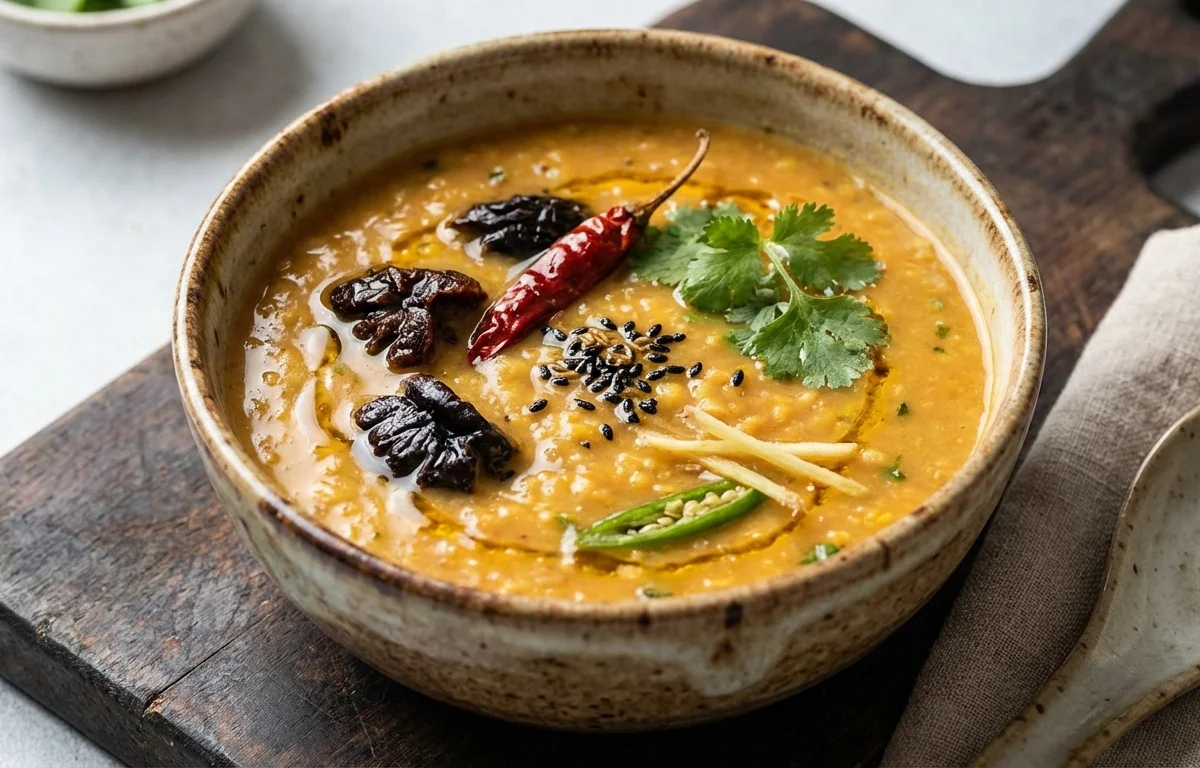
Thekera Tenga Dali
A classic Assamese sour lentil soup, this Thekera Tenga Dali gets its signature tangy kick from dried Garcinia pedunculta (thekera). It's a light, comforting, and soupy dal made with red lentils, traditionally served with steamed rice for a wholesome meal.
For 4 servings
Prepare the Lentils and Thekera (Approx. 5 minutes + 15 minutes soaking)
- Rinse the masoor dal under cold running water until the water runs clear.
- In a separate small bowl, soak the dried thekera pieces in 1/4 cup of warm water. Let them soak for at least 15-20 minutes to soften and release their flavor.
Pressure Cook the Dal (Approx. 15 minutes)
- Transfer the rinsed dal to a pressure cooker. Add 4 cups of water, turmeric powder, and salt.
- Add the soaked thekera pieces along with their soaking water to the cooker.
- Secure the lid and pressure cook on medium heat for 3-4 whistles, or for about 10-12 minutes, until the dal is completely soft.
- Allow the pressure to release naturally before opening the lid.
Prepare the Tempering (Tadka) (Approx. 2 minutes)
- While the pressure releases, heat the mustard oil in a small pan (tadka pan) over medium heat until it becomes fragrant and slightly smoky.
- Reduce the heat and add the panch phoron and dried red chillies. Allow the spices to crackle for about 30 seconds, being careful not to burn them.
- Add the grated ginger and slit green chillies. Sauté for another 30 seconds until the raw aroma of the ginger disappears.
Combine and Finish the Dal (Approx. 3 minutes)
- Open the pressure cooker and give the dal a gentle stir. If it seems too thick, add a little hot water to reach a thin, soupy consistency.
- Carefully pour the hot tempering over the cooked dal. Stir well to combine.
- Bring the dal to a gentle simmer and cook for 2-3 minutes on low heat to allow the flavors to meld together perfectly.
- Garnish with freshly chopped coriander leaves and serve hot.
What to keep in mind.
5 tips from the recipe — small details that make a real difference to the final dish.
- 1For the most authentic flavor, use mustard oil and heat it until it's lightly smoking before adding spices. This removes its pungent raw taste.
- 2Do not overcook the dal in the pressure cooker, as masoor dal cooks very quickly and can turn mushy.
- 3The sourness of thekera can vary. Start with 2-3 pieces and adjust in the future based on your preference.
- 4If you don't have a pressure cooker, you can cook the dal in a pot. It will take about 25-30 minutes for the lentils to become soft.
- 5Lightly mashing the dal with the back of a ladle after cooking can give it a slightly thicker, more homogenous texture.
Adapt it for your goals.
Lentil Variation
You can make this recipe with toor dal (split pigeon peas) instead of masoor dal. Note that toor dal will require a longer cooking time.
Vegetable AdditionVegetable Addition
Add chopped bottle gourd (lauki) or elephant apple (outenga) along with the dal in the pressure cooker for added nutrition and texture.
Souring AgentSouring Agent
If thekera is unavailable, you can use tamarind pulp or a few pieces of dried kokum for a similar tangy flavor profile.
Garlic FlavorGarlic Flavor
For a different aromatic note, add 2-3 cloves of crushed garlic to the tempering along with the ginger.
Why this is on our healthy list.
Rich in Plant-Based Protein
Masoor dal is an excellent source of plant-based protein, which is essential for muscle repair, cell growth, and overall body function.
Aids Digestion
The high fiber content in lentils promotes healthy digestion and regular bowel movements. Ginger is also known for its digestive properties, helping to soothe the stomach.
Heart-Healthy
This dal is low in saturated fat and cholesterol. The fiber in lentils can help lower cholesterol levels, contributing to better cardiovascular health.
Boosts Immunity
Spices like turmeric (containing curcumin) and ginger have anti-inflammatory and antioxidant properties that can help strengthen the immune system.
Frequently asked questions
Thekera is the dried rind of the Garcinia pedunculata fruit, native to Northeast India. It provides a unique, deep sour flavor. If you cannot find it, you can substitute with a small amount of tamarind paste, a few pieces of dried kokum, or a squeeze of lemon juice added at the end.