
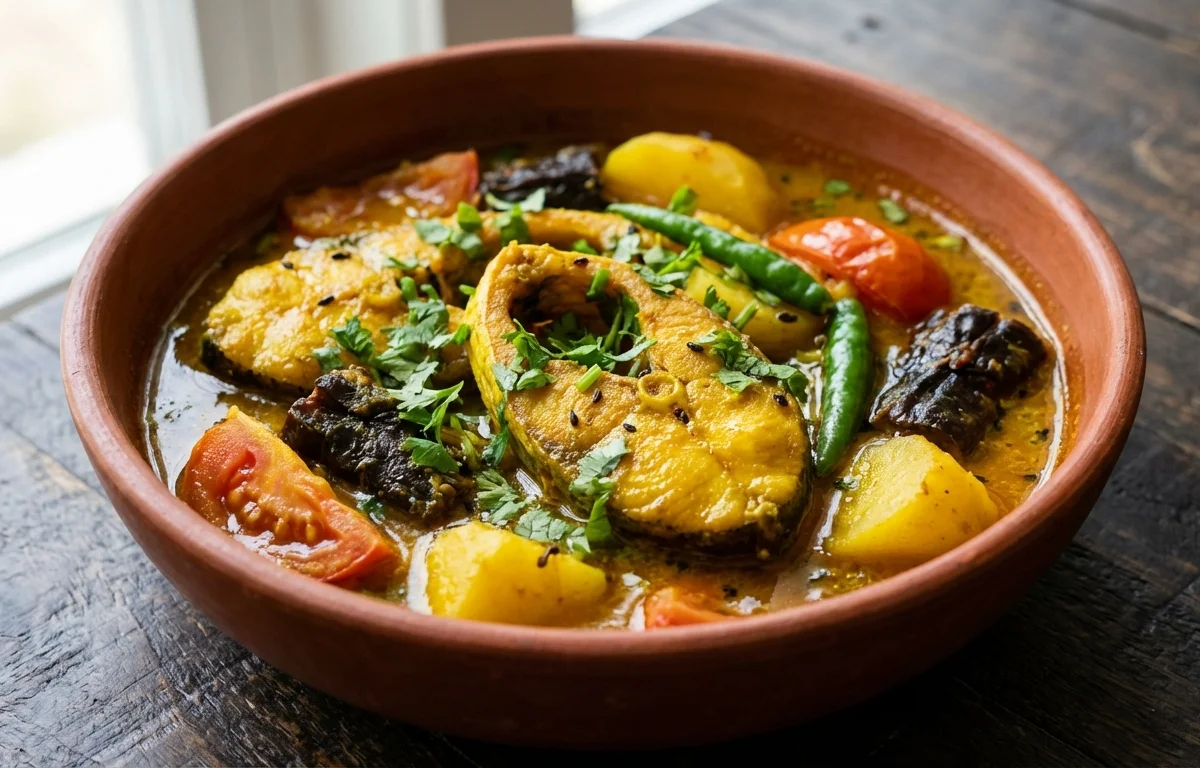
Thekera Tenga
A classic Assamese sour fish curry, Thekera Tenga gets its signature tangy flavor from dried mangosteen. This light, soupy curry with tender fish and potatoes is a comforting meal, best enjoyed with steamed rice.
For 4 servings
Prepare Fish and Thekera
- Thoroughly wash the fish pieces and pat them completely dry with a paper towel.
- In a mixing bowl, marinate the fish with 1/2 tsp of turmeric powder and 3/4 tsp of salt. Ensure each piece is evenly coated. Let it rest for 10-15 minutes.
- Meanwhile, soak the thekera pieces in 1/2 cup of warm water for at least 15 minutes to soften them and release their flavor.
Shallow-Fry the Fish
- Heat the mustard oil in a kadai or a deep pan over medium-high heat until it just begins to smoke. This step is crucial to remove the oil's raw pungency.
- Carefully slide the marinated fish pieces into the hot oil, ensuring not to overcrowd the pan. Fry in batches if necessary.
- Fry for 2-3 minutes on each side until they are light golden brown and slightly crisp. Do not overcook them.
- Gently remove the fried fish with a slotted spoon and set aside on a plate.
Prepare the Curry Base
- In the same oil, lower the heat to medium. Add the panch phoron and let the seeds crackle for about 30 seconds until fragrant.
- Add the slit green chilies and cubed potatoes. Sauté for 3-4 minutes, stirring occasionally, until the potatoes are lightly golden at the edges.
- Add the chopped tomatoes, the remaining 1/2 tsp of turmeric powder, and the remaining 3/4 tsp of salt. Cook for 4-5 minutes, until the tomatoes break down and become soft and pulpy.
Simmer the Curry
- Pour in 3 cups of water. Add the soaked thekera along with its soaking water to the pan. The soaking water is rich in tangy flavor.
- Stir well to combine all the ingredients and bring the mixture to a rolling boil.
- Once boiling, reduce the heat to a low-medium, cover the pan, and let it simmer for 8-10 minutes, or until the potatoes are fork-tender.
Add Fish and Finish
- Gently slide the fried fish pieces into the simmering gravy. Swirl the pan gently to submerge them.
- Continue to cook, uncovered, for another 4-5 minutes. This allows the fish to absorb the tangy flavors of the curry without breaking apart.
- Taste the gravy and adjust the salt if necessary. The curry should be light, soupy, and pleasantly sour.
- Turn off the heat, garnish with freshly chopped coriander leaves, and serve hot with steamed rice.
What to keep in mind.
5 tips from the recipe — small details that make a real difference to the final dish.
- 1For the best flavor and texture, use fresh river fish like Rohu, Catla, or Borali.
- 2The sourness of thekera can vary. Start with the recommended amount and you can add more of the soaking water if you prefer a tarter curry.
- 3Heating mustard oil until it's lightly smoking is essential to mellow its pungent flavor.
- 4Be very gentle when stirring after adding the fish to the curry to prevent the delicate pieces from breaking.
- 5This curry is traditionally a 'jhol' or thin soup. Avoid over-reducing the gravy to maintain its authentic consistency.
Adapt it for your goals.
Souring Agent
If thekera is unavailable, you can use 2-3 large, sour tomatoes (bilahi) or a small amount of tamarind pulp for a different but still delicious tangy flavor.
Vegetable AdditionVegetable Addition
Add pieces of bottle gourd (lau) or elephant apple (outenga) along with the potatoes for added texture and flavor.
Lighter VersionLighter Version
For a quicker and lighter version, you can skip frying the fish and add the raw marinated fish directly to the boiling curry, letting it poach until cooked through.
Spice VariationSpice Variation
A small amount of ground black pepper can be added at the end for a subtle hint of heat that complements the sourness.
Why this is on our healthy list.
Rich in Omega-3 Fatty Acids
The use of river fish like Rohu makes this curry an excellent source of Omega-3 fatty acids, which are crucial for brain health and reducing inflammation.
Anti-inflammatory Properties
Both turmeric (containing curcumin) and mustard oil are known for their potent anti-inflammatory effects, which can help in managing chronic inflammation.
Aids Digestion
Thekera (Garcinia pedunculata) is traditionally used in Assamese cuisine not just for its sour taste but also for its digestive properties, helping to soothe the stomach.
Good Source of Lean Protein
Fish is a high-quality, lean protein source that is essential for muscle repair, growth, and overall body function, making this a nutritious and satisfying meal.
Frequently asked questions
One serving of Thekera Tenga contains approximately 350-400 calories, primarily from the fish and mustard oil. The exact count can vary based on the type of fish and the amount of oil used.