
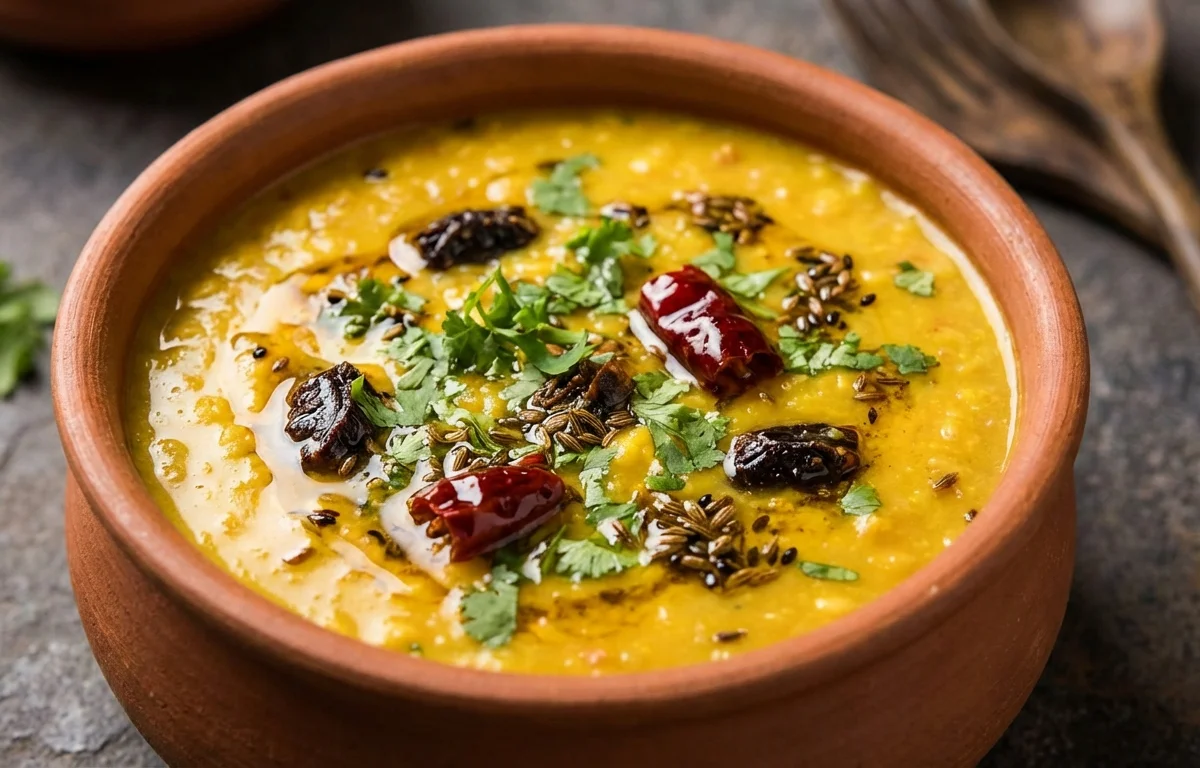
Thekera Di Dali
A classic Assamese sour lentil soup made with masoor dal and tangy thekera. This light and flavorful dal has a unique tartness, perfectly balanced with a simple panch phoran tempering. A comforting dish from Northeast India.
For 4 servings
Prepare Dal and Thekera
- Rinse the masoor dal under cold running water until the water runs clear. Drain well.
- In a small bowl, soak the dried thekera slices in 1/2 cup of warm water for about 15 minutes. This helps soften them and release their tangy flavor.
Cook the Dal
- In a pressure cooker, combine the rinsed masoor dal, 4 cups of water, turmeric powder, and salt.
- Secure the lid and pressure cook on medium heat for 3-4 whistles, or for about 10-12 minutes, until the dal is soft and fully cooked.
- Allow the pressure to release naturally before opening the lid. Whisk the dal gently to ensure a smooth consistency.
Prepare the Tempering (Tadka)
- Heat the mustard oil in a separate pan (tadka pan or small kadai) over medium-high heat until it just begins to smoke. This removes its pungent raw smell.
- Reduce the heat to medium, add the panch phoran and dried red chilies. Allow them to splutter for about 30 seconds, being careful not to burn them.
- Add the finely chopped onion and sauté for 3-4 minutes until it becomes soft and translucent.
- Add the grated ginger, minced garlic, and slit green chilies. Sauté for another minute until the raw aroma disappears.
Combine and Simmer
- Add the soaked thekera slices along with their soaking water to the tempering pan. Cook for 1 minute.
- Carefully pour the cooked dal into the tempering pan. Stir well to combine all the ingredients.
- Bring the dal to a gentle simmer and let it cook on low heat for 5-7 minutes. This allows the flavors to meld together.
- Check the seasoning and adjust the salt if necessary. If the dal is too thick, add a little hot water to achieve your desired consistency.
Garnish and Serve
- Turn off the heat. Garnish with freshly chopped coriander leaves.
- Serve Thekera Di Dali hot with steamed rice (bhaat) and a side of pitika (Assamese mashed potatoes) for an authentic meal.
What to keep in mind.
5 tips from the recipe — small details that make a real difference to the final dish.
- 1The sourness of thekera can vary. Start with 2-3 pieces and add more if you prefer a tarter dal.
- 2Using mustard oil is key for the authentic Assamese flavor, but you can use any neutral vegetable oil if unavailable.
- 3Ensure the panch phoran splutters well in the hot oil to release its full aroma, but be careful not to burn it.
- 4For a creamier texture, you can lightly mash some of the dal with the back of a ladle before adding the tempering.
- 5Thekera pieces are usually not eaten. You can remove them before serving if you prefer.
Adapt it for your goals.
Souring Agent
If you cannot find thekera, you can use 1-2 teaspoons of tamarind paste or a few slices of dried raw mango (amchur) for a similar tangy flavor.
Lentil TypeLentil Type
While masoor dal is traditional, you can also make this recipe with toor dal (arhar dal) or a mix of masoor and moong dal. Adjust cooking time accordingly.
No Onion/GarlicNo Onion/Garlic
For a simpler version, you can omit the onion and garlic. The tempering with panch phoran, ginger, and chilies will still provide a wonderful flavor.
Why this is on our healthy list.
Rich in Plant-Based Protein
Masoor dal is an excellent source of plant-based protein, which is crucial for muscle building, tissue repair, and overall body function.
Aids Digestion
The high fiber content in lentils promotes regular bowel movements and supports a healthy gut microbiome. Thekera is also traditionally used to aid digestion.
Heart-Healthy
This dal is low in saturated fat and rich in fiber and folate, which help in managing cholesterol levels and supporting cardiovascular health.
Packed with Micronutrients
Lentils are a good source of essential minerals like iron, which prevents anemia; magnesium, important for nerve function; and folate, vital for cell growth.
Frequently asked questions
Thekera, or Garcinia pedunculata, is a sour fruit native to Northeast India. The sun-dried slices are used as a souring agent in Assamese cuisine, particularly in dals and fish curries, lending a unique tangy flavor.