
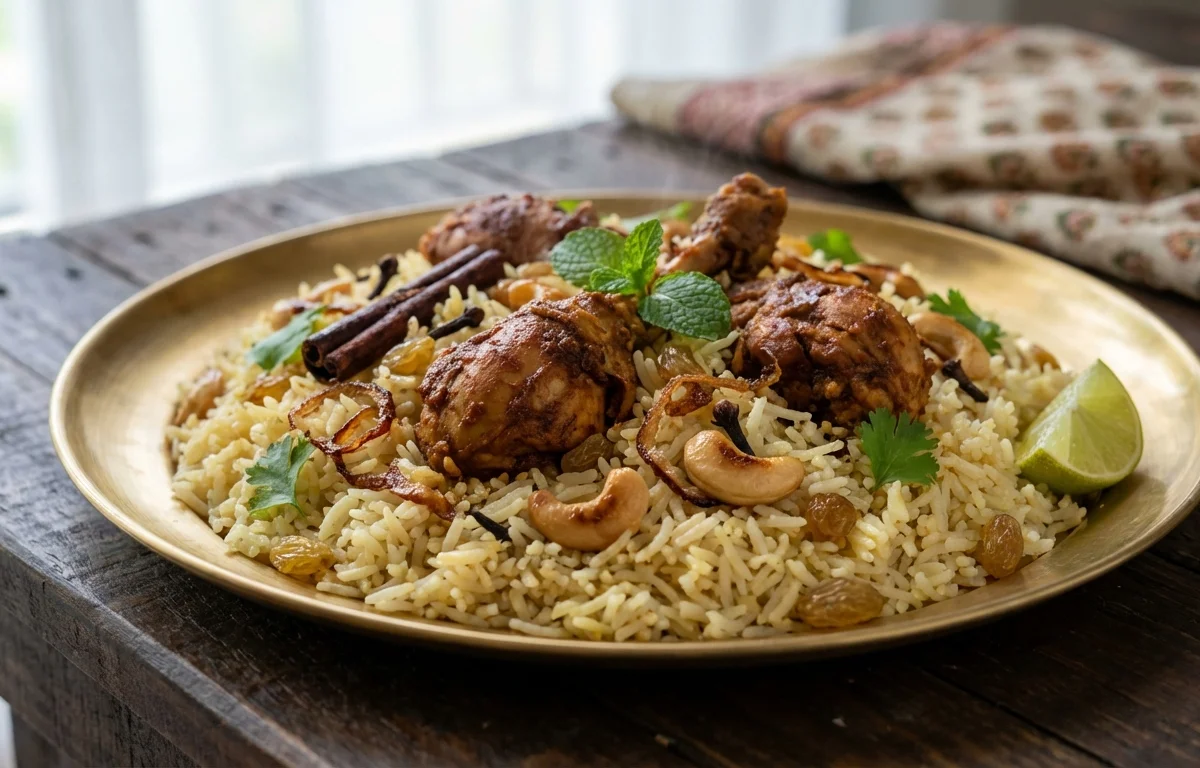
Thalassery Chicken Biryani
A fragrant and flavorful biryani from the Malabar coast of Kerala. Made with unique short-grain Kaima rice, tender chicken, and a rich masala of fried onions, this dum-cooked classic is a true celebration of coastal flavors.
For 4 servings
Marinate the Chicken (30 minutes)
- In a large bowl, combine the chicken pieces with curd, turmeric powder, red chili powder, garam masala, lemon juice, and 1 tsp of salt.
- Mix thoroughly to ensure each piece is well-coated.
- Cover and let it marinate for at least 30 minutes at room temperature, or up to 2 hours in the refrigerator for deeper flavor.
Prepare Fried Garnishes (Bista) (20-25 minutes)
- Heat the ghee in a wide, heavy-bottomed pan over medium heat.
- Add the thinly sliced onions and fry, stirring occasionally, for 20-25 minutes until they are deep golden brown, crispy, and brittle. This step is crucial for the biryani's flavor, so be patient and avoid burning them.
- Using a slotted spoon, remove the fried onions (bista) and spread them on a paper towel to drain excess ghee. Set aside.
- In the same ghee, fry the cashew nuts until golden brown (about 1 minute), then remove. Next, fry the raisins until they puff up (about 30 seconds), and remove. Keep these aside for the final garnish.
Cook the Chicken Masala (25 minutes)
- In the same pan with the remaining ghee (there should be about 3-4 tbsp), add the ginger-garlic paste and slit green chilies. Sauté for 1 minute until fragrant.
- Add the chopped tomatoes and cook for 5-6 minutes until they turn soft and mushy.
- Add the marinated chicken to the pan. Increase the heat to high and cook for 5 minutes, stirring continuously to sear the chicken.
- Take half of the fried onions (bista), crush them lightly with your hands, and add them to the chicken. Also add half of the chopped mint and coriander leaves, and the biryani masala powder.
- Mix well, reduce the heat to low, cover the pan, and simmer for 15-20 minutes, or until the chicken is tender and oil separates from the masala.
Cook the Rice (15 minutes)
- While the chicken is cooking, wash the Jeerakasala rice in several changes of water until the water runs clear. Soak for 20 minutes, then drain completely.
- In a separate large pot, bring 4 cups of water to a rolling boil. Add the whole spices (cinnamon, cloves, cardamom, bay leaf) and the remaining 1.5 tsp of salt.
- Add the drained rice to the boiling water. Stir once gently, cover, and cook on medium-low heat for 8-10 minutes. The rice should be 90% cooked and have absorbed all the water.
Layer and Dum Cook (20 minutes)
- Select a heavy-bottomed pot (biryani handi). Spread the entire cooked chicken masala evenly at the bottom.
- Gently layer all the cooked rice over the chicken masala, spreading it evenly without pressing down.
- Garnish the top of the rice with the remaining fried onions, fried cashews, raisins, and the rest of the chopped mint and coriander leaves.
- Drizzle the rose water over the top, if using.
- To seal the pot, make a firm dough with the atta and a little water. Roll it into a long rope and press it firmly along the rim of the pot. Place the lid on top and press down to create an airtight seal.
- Place the sealed pot on a tawa (flat griddle) over the lowest possible heat. Let it cook on 'dum' for 15-20 minutes to allow the flavors to meld.
Rest and Serve (15 minutes)
- Turn off the heat and let the biryani rest, still sealed, for a minimum of 15 minutes. This step is crucial for the flavors to settle and the rice grains to firm up.
- Carefully break the dough seal and open the lid. The escaping steam will be very hot.
- Use a wide spatula to gently fluff the biryani from the sides, mixing the rice and masala from the bottom as you serve.
- Serve hot with traditional accompaniments like raita, papad, and a date-lemon pickle.
What to keep in mind.
5 tips from the recipe — small details that make a real difference to the final dish.
- 1Using authentic Jeerakasala (Kaima) rice is key to the unique aroma and texture of Thalassery biryani. Do not substitute with Basmati if possible.
- 2Fry the onions slowly on medium heat to achieve a sweet, caramelized flavor without any bitterness. Do not rush this step.
- 3Crushing fried onions directly into the chicken masala adds a signature sweetness and depth to the gravy.
- 4Using a tawa under the biryani pot during 'dum' cooking ensures gentle, even heat and prevents the bottom layer from burning.
- 5Always let the biryani rest after cooking. This helps the rice grains to firm up and absorb all the fragrant steam, preventing them from breaking when you serve.
Adapt it for your goals.
Protein Swap
Replace chicken with mutton pieces (use a pressure cooker to tenderize the mutton first) or large prawns (add them in the last 5-7 minutes of masala cooking to avoid overcooking).
Vegetarian VersionVegetarian Version
Substitute chicken with a mix of vegetables like potatoes, carrots, beans, and cauliflower, along with paneer or mushrooms. Par-boil the harder vegetables before adding to the masala.
Spicier VersionSpicier Version
Increase the number of green chilies to 6-7 and add an extra 1/2 teaspoon of black pepper powder to the chicken marinade for a spicier kick.
Why this is on our healthy list.
Rich in Protein
Chicken is an excellent source of high-quality lean protein, which is essential for muscle growth, repair, and overall body function.
Source of Energy
The combination of carbohydrates from rice and fats from ghee provides a significant source of energy, making this a hearty and satisfying meal.
Anti-inflammatory Spices
Spices like turmeric, ginger, and garlic used in the masala have natural anti-inflammatory and antioxidant properties that can help combat oxidative stress in the body.
Frequently asked questions
Thalassery Chicken Biryani is a rich and indulgent dish, high in calories and fats, primarily from ghee and fried onions. While it provides a good amount of protein from chicken and beneficial compounds from spices, it should be enjoyed in moderation as part of a balanced diet, especially for those monitoring calorie or fat intake.