
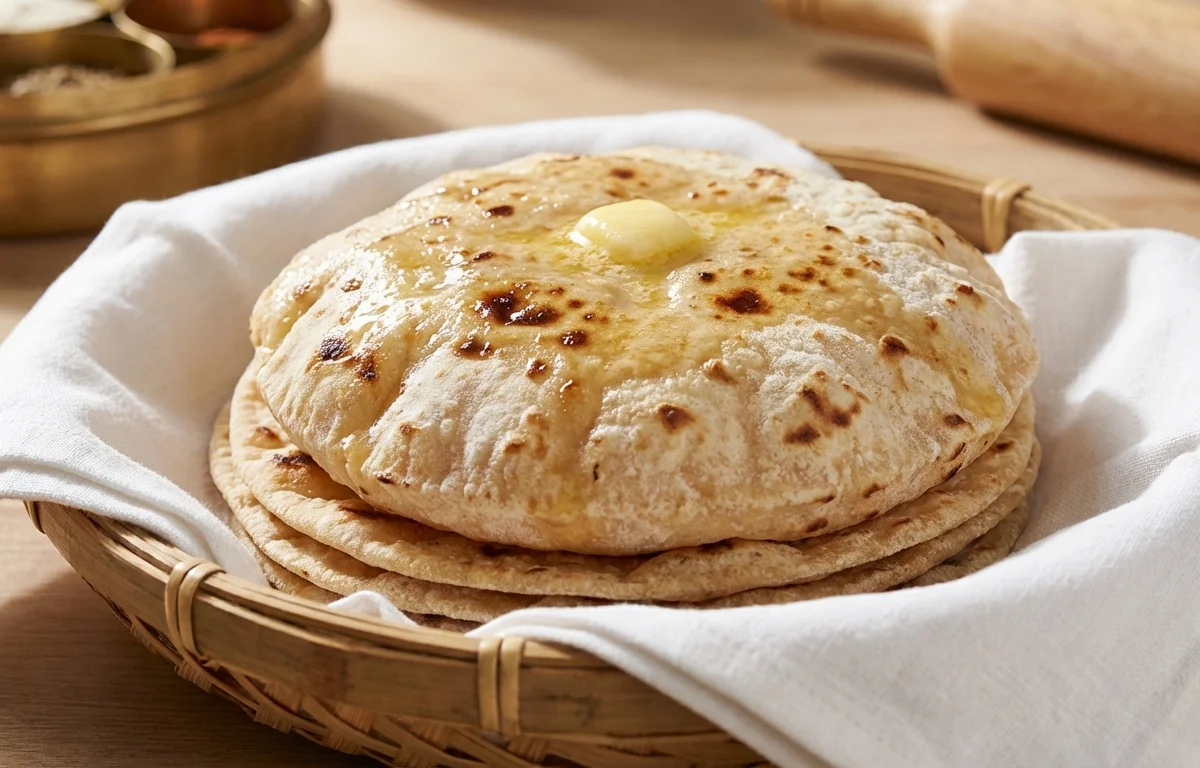
Tawa Roti
A staple in Indian households, these soft, whole wheat flatbreads are cooked on a griddle until puffed and golden. Perfect for scooping up curries and dals, they are both wholesome and delicious.
For 4 servings
4 steps. 15 minutes total.
- 1
Step 1
- a.Prepare the Dough
- b.In a large mixing bowl, combine 2 cups of atta and 0.5 tsp of salt. Mix well.
- c.Gradually add warm water while mixing with your fingers. Add just enough water to bring the flour together.
- d.Begin to knead the dough. If using, add 1 tsp of ghee. Knead for 8-10 minutes, pushing with the heel of your hand and folding, until the dough is smooth, soft, and pliable, but not sticky.
- e.Cover the dough with a damp cloth or a lid and let it rest for at least 20-30 minutes. This step is crucial for soft rotis.
- 2
Step 2
- a.Divide and Roll the Rotis
- b.After resting, knead the dough again for 1 minute.
- c.Divide the dough into 8 equal-sized portions and roll each into a smooth ball between your palms.
- d.Take one dough ball, flatten it slightly, and dip it in the dry atta for dusting. Shake off any excess.
- e.On a clean, flat surface (chakla), roll the dough ball into a thin, even circle about 6-7 inches in diameter. Dust with more flour as needed to prevent sticking.
- 3
Step 3
- a.Cook the Roti on the Tawa
- b.Heat a tawa (flat griddle) over medium-high heat. It should be hot but not smoking.
- c.Carefully place the rolled roti on the hot tawa. Cook for about 15-20 seconds, until you see small bubbles forming on the surface.
- d.Using tongs, flip the roti. Cook the other side for about 30-40 seconds, until light brown spots appear.
- 4
Step 4
- a.Puff the Roti (Phulka)
- b.Turn your gas stove to a medium flame.
- c.Using tongs, carefully lift the roti off the tawa and place it directly on the open flame.
- d.The roti should puff up like a balloon within a few seconds. Immediately flip it with the tongs to cook the other side for just 2-3 seconds.
- e.Remove the puffed roti from the flame. If desired, brush one side with melted ghee.
- f.Place the cooked roti in a cloth-lined container or a roti box to keep it warm and soft. Repeat for all remaining dough balls.
What to keep in mind.
6 tips from the recipe — small details that make a real difference to the final dish.
- 1Use warm water to knead the dough; it helps in making the rotis soft.
- 2The consistency of the dough is key. It should be soft and elastic, not too hard or too sticky.
- 3Resting the dough is non-negotiable. It allows the gluten to relax, making the rotis easy to roll and soft to eat.
- 4Ensure the tawa is properly heated. A cold tawa will make the rotis hard, and a smoking hot tawa will burn them.
- 5Roll the roti evenly. An unevenly rolled roti will not puff up properly.
- 6If you don't have a gas stove for direct flame puffing, you can puff the roti on the tawa. After step 3, flip the roti again and gently press the edges with a folded kitchen towel or a flat spatula to encourage it to puff up.
Adapt it for your goals.
Masala Roti
Add 1/4 tsp turmeric powder, 1/2 tsp red chili powder, and 1/2 tsp ajwain (carom seeds) to the flour before kneading for a spiced version.
Palak (Spinach) RotiPalak (Spinach) Roti
Blend a handful of fresh spinach into a puree and use it instead of some of the water to knead the dough. This adds nutrients and a vibrant green color.
Methi (Fenugreek) RotiMethi (Fenugreek) Roti
Mix 1/2 cup of finely chopped fresh fenugreek leaves into the flour before adding water. This gives the roti a delicious, slightly bitter flavor.
Why this is on our healthy list.
Rich in Fiber
Whole wheat flour is an excellent source of dietary fiber, which aids digestion, prevents constipation, promotes satiety, and helps maintain stable blood sugar levels.
Provides Sustained Energy
As a complex carbohydrate, roti provides a slow and steady release of energy, keeping you full and energized for longer periods compared to bread made from refined grains.
Source of Essential Nutrients
Atta is rich in B-vitamins (like niacin and thiamine), iron, magnesium, and phosphorus, which are crucial for energy metabolism, red blood cell formation, and bone health.
Frequently asked questions
There are a few common reasons: the dough might be too stiff or too sticky, the roti was not rolled evenly (thicker in some spots), or the tawa was not hot enough when you started cooking. Proper resting of the dough is also essential for good puffing.