
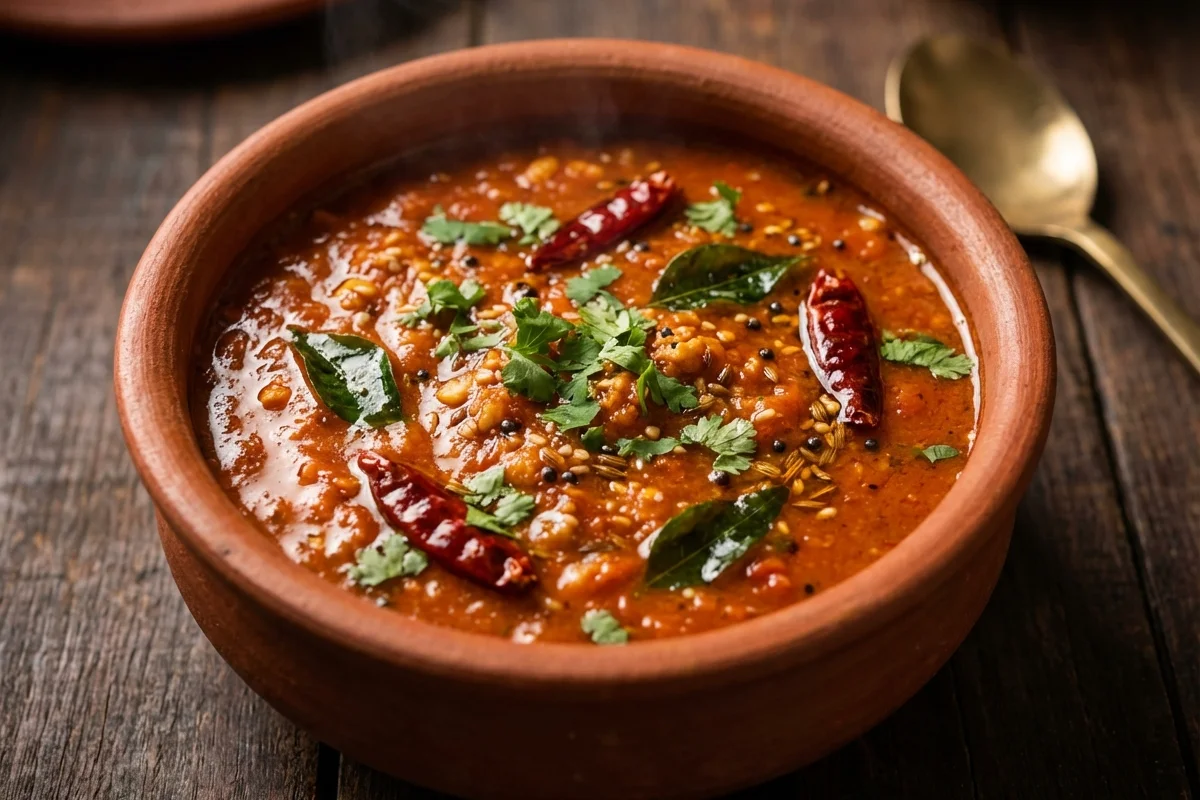
Tamate ka Kut
A rich and tangy tomato curry from Hyderabad, thickened with a creamy paste of roasted peanuts and sesame seeds. This flavorful dish is a perfect side for rice or rotis, offering a unique nutty twist to a classic tomato base.
For 4 servings
5 steps. 30 minutes total.
- 1
Step 1
- a.Roast and Grind the Nut Paste
- b.In a dry pan over low-medium heat, roast the peanuts for 3-4 minutes until they are fragrant and have light brown spots.
- c.Add the sesame seeds and continue to roast for another 1-2 minutes until they start to pop. Be careful not to burn them.
- d.Remove the mixture from the heat and allow it to cool completely.
- e.Transfer the cooled peanuts and sesame seeds to a grinder. Grind to a fine powder, then add 3-4 tablespoons of water to form a smooth, thick paste. Set aside.
- 2
Step 2
- a.Prepare the Tadka and Sauté Onions
- b.Heat oil in a heavy-bottomed pan or kadai over medium heat.
- c.Once the oil is hot, add the mustard seeds and cumin seeds. Allow them to splutter for about 30 seconds.
- d.Add the broken dried red chilies and fresh curry leaves. Sauté for 15-20 seconds until fragrant.
- e.Add the finely chopped onion and sauté for 7-8 minutes, stirring occasionally, until it turns soft and golden brown.
- 3
Step 3
- a.Cook the Tomato Masala
- b.Add the ginger-garlic paste and slit green chilies. Cook for 1 minute until the raw aroma disappears.
- c.Pour in the tomato puree. Add the turmeric powder, red chili powder, coriander powder, cumin powder, and salt.
- d.Mix everything thoroughly. Cook the masala on medium-low heat for 10-12 minutes, stirring occasionally, until the mixture thickens and oil begins to separate from the sides.
- 4
Step 4
- a.Combine Paste and Simmer the Curry
- b.Add the prepared peanut-sesame paste to the pan. Stir continuously and cook for 2-3 minutes to toast the paste and remove any raw taste.
- c.Gradually pour in 1.5 cups of hot water while stirring constantly to prevent any lumps from forming.
- d.Bring the curry to a gentle boil. Then, reduce the heat to low, cover the pan, and let it simmer for 10-12 minutes.
- e.Stir occasionally to prevent the paste from sticking to the bottom. The curry is ready when it has thickened and a layer of oil floats on top.
- 5
Step 5
- a.Garnish and Serve
- b.Turn off the heat. Garnish with freshly chopped coriander leaves.
- c.Let the curry rest for 5 minutes before serving. Serve hot with steamed rice, bagara khana, roti, or phulka.
What to keep in mind.
5 tips from the recipe — small details that make a real difference to the final dish.
- 1Roast the peanuts and sesame seeds on low heat to prevent them from burning, which can make the curry bitter.
- 2For a vibrant red color without excessive heat, use Kashmiri red chili powder.
- 3Cooking the tomato masala until the oil separates is a crucial step for developing a deep, rich flavor.
- 4The gravy will naturally thicken as it cools. Adjust the consistency with a little hot water before reheating if needed.
- 5A pinch of jaggery or sugar can be added with the tomatoes to balance the tanginess and enhance the overall flavor.
Adapt it for your goals.
Creamier Version
For a richer, creamier texture, add 1/4 cup of thick coconut milk or 2 tablespoons of fresh cream during the last 2 minutes of simmering.
Add VegetablesAdd Vegetables
Incorporate parboiled vegetables like green peas, diced potatoes, or carrots along with the tomato puree to make it a more wholesome curry.
Nut Free AlternativeNut-Free Alternative
If you have a nut allergy, you can use 2 tablespoons of roasted gram flour (besan) or a paste of roasted poppy seeds (khus khus) as a thickening agent instead.
Extra TangExtra Tang
For a more pronounced sour note characteristic of Hyderabadi cuisine, add 1 teaspoon of tamarind paste along with the tomato puree.
Why this is on our healthy list.
Promotes Heart Health
The peanuts and sesame seeds in this curry are excellent sources of monounsaturated and polyunsaturated fats, which help in lowering bad cholesterol levels and supporting overall cardiovascular health.
Rich in Antioxidants
Tomatoes are packed with lycopene, a powerful antioxidant that becomes more bioavailable when cooked. Lycopene helps protect cells from damage caused by free radicals.
Good Source of Plant-Based Protein
Peanuts provide a significant amount of plant-based protein, which is essential for muscle repair, growth, and overall body function, making this a satisfying vegetarian dish.
Anti-inflammatory Properties
The inclusion of spices like turmeric (containing curcumin) and ginger lends natural anti-inflammatory properties to the dish, which can help in reducing inflammation in the body.
Frequently asked questions
One serving of Tamate ka Kut contains approximately 230-260 calories, primarily from the peanuts, sesame seeds, and oil. The exact count can vary based on the specific ingredients and quantities used.