
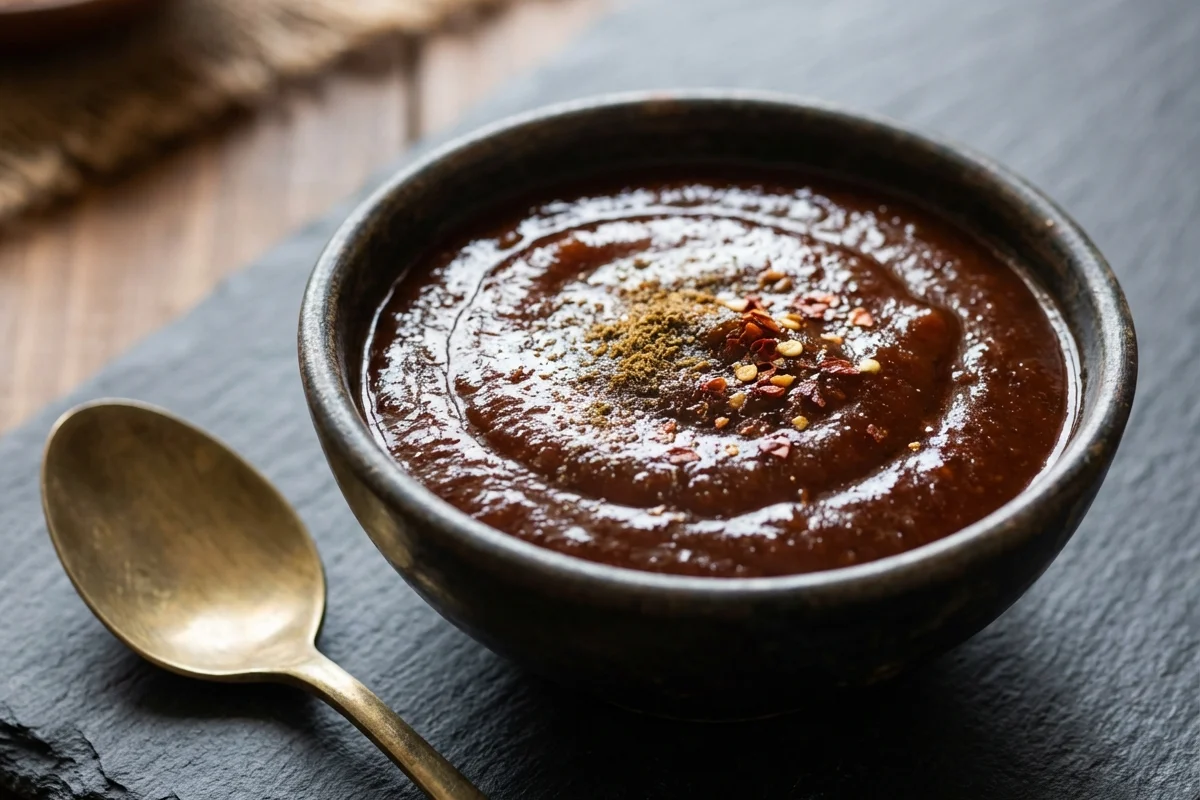
Tamarind Chutney
A classic Indian condiment balancing sweet, sour, and tangy notes perfectly. Made from tamarind pulp, jaggery, and spices, this chutney is the soul of chaat and the perfect dip for samosas and pakoras.
For 8 servings
Soak the Tamarind
- Place the block of seedless tamarind in a heatproof bowl.
- Pour 2 cups of hot (not boiling) water over it.
- Let it soak for at least 30 minutes, or until the tamarind has softened completely.
Extract the Tamarind Pulp
- Once softened, use your hands or a sturdy spoon to mash the tamarind thoroughly in the water to release its pulp.
- Position a fine-mesh sieve over a saucepan and pour the tamarind mixture through it.
- Press the solids with the back of a spoon to extract as much thick pulp as possible. Discard the fibrous residue left in the sieve.
Dissolve the Jaggery
- Place the saucepan with the tamarind extract on medium heat.
- Add the grated or powdered jaggery. Stir continuously until the jaggery dissolves completely, which should take about 3-5 minutes.
- Bring the mixture to a gentle boil.
Add Spices and Simmer
- Once the mixture is boiling, reduce the heat to low.
- Stir in the roasted cumin powder, dry ginger powder, red chili powder, black salt, regular salt, garam masala, and optional hing.
- Mix well and let the chutney simmer for 20-25 minutes. Stir occasionally to prevent it from sticking.
- The chutney is ready when it has thickened and coats the back of a spoon.
Cool and Store
- Turn off the heat and allow the chutney to cool completely to room temperature. It will thicken significantly as it cools.
- Once cooled, transfer the chutney to a clean, dry, and airtight glass jar.
- Store in the refrigerator for up to 2 months.
What to keep in mind.
5 tips from the recipe — small details that make a real difference to the final dish.
- 1For a perfectly smooth texture, you can blend the cooled chutney with an immersion blender before storing.
- 2The chutney's consistency is key. Remember it thickens a lot upon cooling, so cook it to a slightly thinner consistency than you ultimately desire.
- 3Taste and adjust the sweetness and saltiness before you turn off the heat. Some tamarind is more sour than others.
- 4Using a non-reactive pan (like stainless steel or enamel-coated) is recommended as tamarind is acidic.
- 5To save time, you can use 1/2 cup of store-bought tamarind concentrate mixed with 1.5 cups of water instead of soaking the block.
Adapt it for your goals.
Date and Tamarind Chutney
For a naturally sweeter and thicker chutney (known as 'Khajur Imli ki Chutney'), add 1/2 cup of pitted and chopped dates along with the jaggery and simmer until they are completely soft.
Spicy Sonth ChutneySpicy Sonth Chutney
Increase the dry ginger powder (sonth) to 1.5 teaspoons and add a pinch of fennel powder (saunf) for a spicier, more aromatic version often served with Dahi Bhalla.
With Melon SeedsWith Melon Seeds
Add 1 tablespoon of melon seeds (magaz) during the last 5 minutes of simmering for a pleasant texture and nutty flavor.
Why this is on our healthy list.
Aids Digestion
Tamarind is a natural laxative, while spices like ginger and hing (asafoetida) are traditionally used to improve digestion, reduce gas, and prevent bloating.
Rich in Antioxidants
Tamarind is packed with polyphenols, which act as powerful antioxidants. These compounds help protect the body against oxidative stress and inflammation.
Source of Essential Minerals
Jaggery, being an unrefined sugar, retains more minerals like iron, magnesium, and potassium compared to refined white sugar, contributing to your daily mineral intake.
Frequently asked questions
One serving of approximately 1/4 cup (60g) contains around 85-95 calories, primarily from the carbohydrates in the jaggery.