
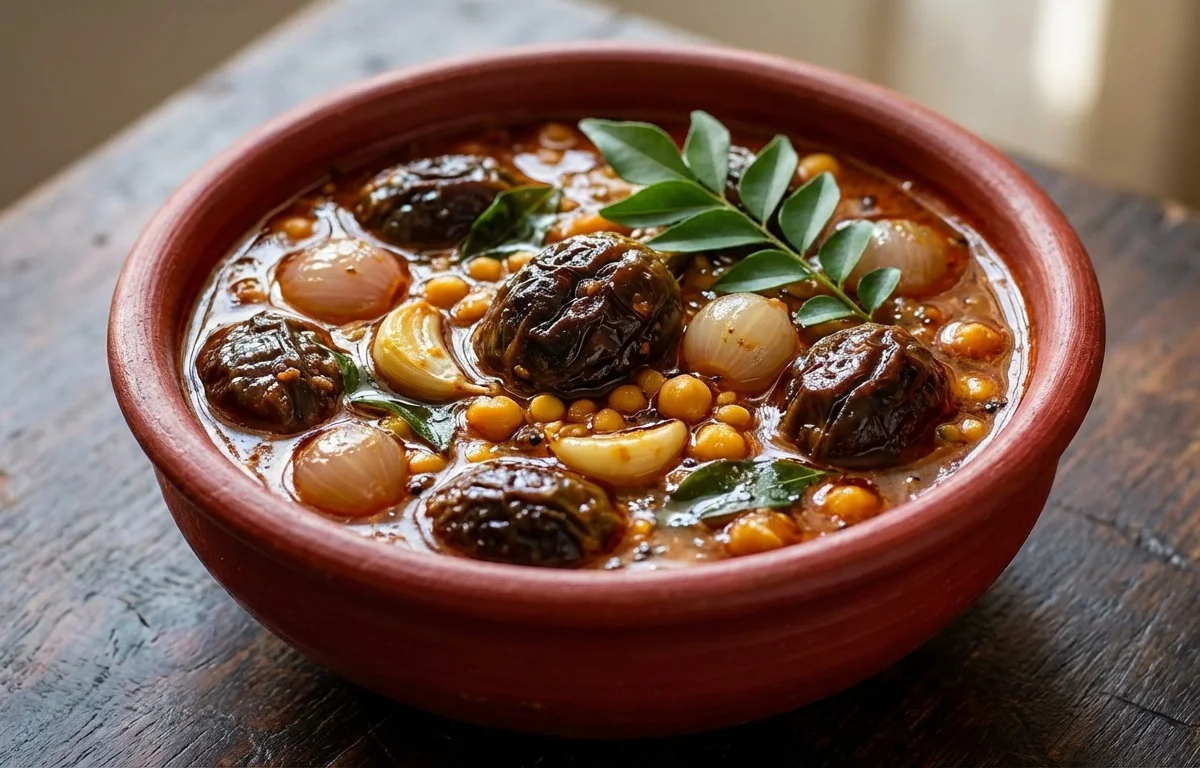
Sundakkai Vathal Kuzhambu
A classic Tamil curry with a perfect balance of tangy, spicy, and slightly bitter flavors. Sun-dried turkey berries are simmered in a tamarind-based gravy, creating a deeply aromatic and traditional South Indian dish.
For 4 servings
Prepare Tamarind and Fry Vathal
- Soak the 25g tamarind block in 1 cup of hot water for 15 minutes. Squeeze the pulp thoroughly to extract a thick juice. Strain the liquid, discarding the pulp and seeds. Set the tamarind extract aside.
- In a small pan, heat 1 tbsp of sesame oil over low-medium heat. Add the sundakkai vathal and fry for 2-3 minutes, stirring constantly until they puff up and turn a deep, dark brown. Be careful not to burn them, as this will make them excessively bitter. Remove from the pan and set aside.
Temper the Spices
- In a heavy-bottomed pot or clay pot (kadai), heat the remaining 3 tbsp of sesame oil over medium heat.
- Add the mustard seeds and wait for them to splutter completely. Then, add the fenugreek seeds, chana dal, and urad dal. Sauté for about 30-45 seconds until the dals turn golden brown.
- Add the hing and fresh curry leaves. Sauté for another 10 seconds until the leaves are crisp and aromatic.
Sauté Aromatics and Powders
- Add the peeled sambar onions and crushed garlic cloves to the pot. Sauté for 5-6 minutes until the onions soften and become translucent with light golden edges.
- Reduce the heat to low. Add the turmeric powder, sambar powder, and red chili powder. Stir continuously for 1 minute to cook the spices without burning them, until their raw aroma disappears.
Simmer the Kuzhambu
- Pour the prepared tamarind extract into the pot, followed by 2 cups of fresh water. Add the salt and powdered jaggery.
- Stir well and bring the mixture to a rolling boil over medium-high heat.
- Once boiling, reduce the heat to low, cover partially, and let it simmer for 12-15 minutes. The gravy will thicken, and you should see a layer of oil separating and floating on top, which indicates it's well-cooked.
Finish and Rest
- Add the fried sundakkai vathal to the simmering kuzhambu.
- If using rice flour for extra thickness, mix 1 tsp of rice flour with 2 tbsp of water in a small bowl to create a smooth, lump-free slurry. Pour this into the kuzhambu while stirring continuously.
- Continue to simmer for another 4-5 minutes, allowing the vathal to soften slightly and absorb the gravy's flavors.
- Turn off the heat. For an extra layer of flavor, you can drizzle a final teaspoon of sesame oil over the top. Let the kuzhambu rest for at least 20-30 minutes before serving. This allows the flavors to meld and deepen.
What to keep in mind.
6 tips from the recipe — small details that make a real difference to the final dish.
- 1For the most authentic flavor, use gingelly (sesame) oil. It gives the kuzhambu its characteristic taste and aroma.
- 2Frying the sundakkai vathal properly is crucial. They should be dark and crisp, which helps to mellow their bitterness.
- 3Don't skip the jaggery. It is essential to balance the tanginess of the tamarind and the bitterness of the vathal.
- 4This kuzhambu tastes even better the next day as the flavors have more time to deepen and mature.
- 5You can lightly crush the sundakkai vathal before frying to help them cook evenly and absorb the gravy better.
- 6If the final kuzhambu is too tangy, add a little more jaggery. If it's too thick, add a splash of hot water.
Adapt it for your goals.
Ingredient Substitution
Replace sundakkai vathal with manathakkali vathal (sun-dried black nightshade berries) or even dried brinjal (eggplant) vathal for a different flavor profile.
Added VegetablesAdded Vegetables
Add vegetables like drumsticks, small brinjals, or okra along with the sambar onions. Sauté them well before adding the tamarind water.
Creamier VersionCreamier Version
For a milder and creamier kuzhambu, add 1/4 cup of thin coconut milk during the last 2 minutes of simmering. Do not boil after adding coconut milk.
Why this is on our healthy list.
Aids Digestion
Tamarind acts as a natural mild laxative, while spices like hing (asafoetida) and fenugreek are well-known in traditional medicine for their digestive properties and ability to reduce bloating.
Rich in Antioxidants
The base of this curry includes tamarind, turmeric, and other spices, which are loaded with antioxidants. These compounds help protect the body against cellular damage from free radicals.
Traditional Iron Source
Sundakkai (turkey berry) is traditionally valued as a plant-based source of iron. Regular consumption is believed to help in managing and preventing iron-deficiency anemia.
Frequently asked questions
Sundakkai Vathal are sun-dried turkey berries. The fresh berries are soaked in buttermilk and salt, then sun-dried until they are hard and preserved. They have a unique, slightly bitter taste that is characteristic of this dish.