
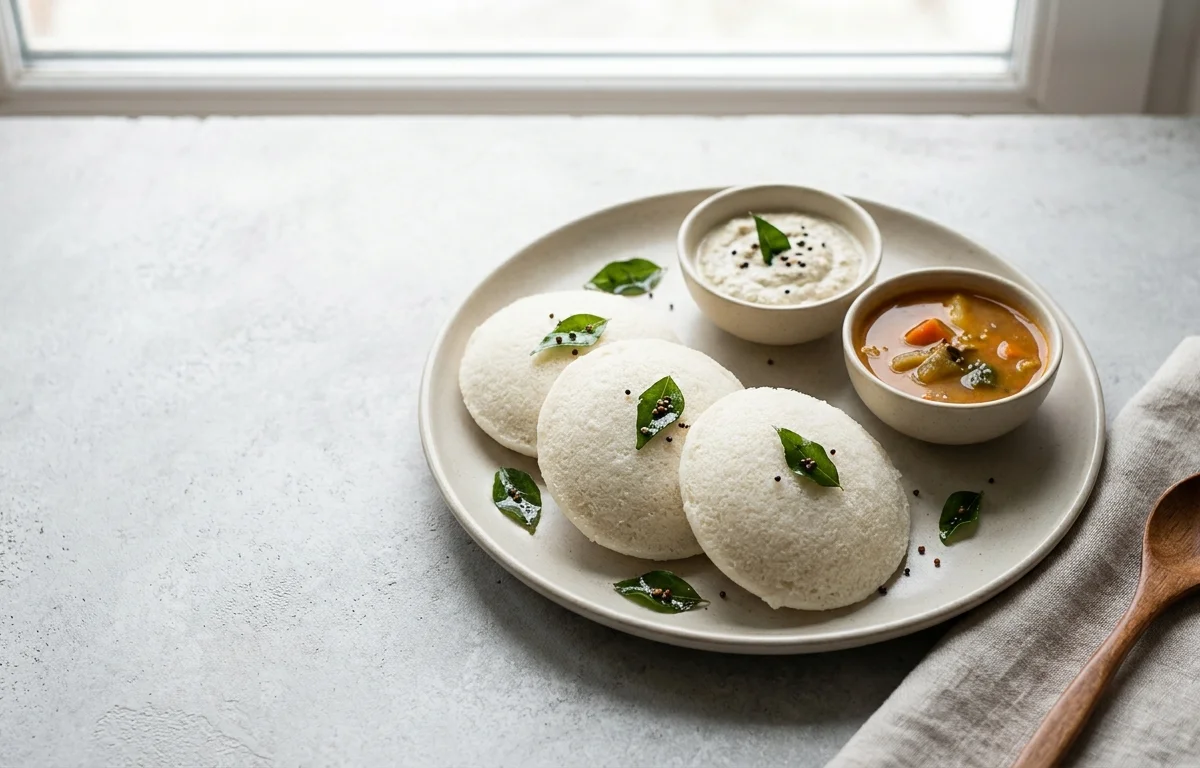
Steamed Idli
Soft, pillowy steamed rice cakes with a slightly tangy flavor from fermentation. This South Indian classic is naturally gluten-free, high in protein, and easy to digest, making it a perfect healthy breakfast.
For 6 servings
Soak the rice and lentils.
- Rinse the idli rice and urad dal separately until the water runs clear.
- In a medium bowl, soak the rice in 2 cups of water.
- In another bowl, soak the urad dal and fenugreek seeds together in 1 cup of water.
- Let both soak for at least 6 hours or overnight.
TIPSoaking them separately ensures each is ground to the right consistency.Grind the batter.
- Drain the water from the urad dal. Grind it in a wet grinder or high-powered blender, adding a little cold water as needed, until you get a smooth, light, and fluffy batter.
- Transfer the dal batter to a large bowl.
- Next, drain the rice and grind it to a slightly coarse texture, adding water as necessary. Don't make it perfectly smooth.
- Add the ground rice to the bowl with the dal batter.
TIPUse cold water while grinding to prevent the grinder from overheating, which can affect fermentation.Combine and ferment the batter.
- Add salt to the batter and mix well with your clean hands. The warmth from your hands helps kickstart fermentation.
- The batter should have a thick, pouring consistency.
- Cover the bowl with a lid (don't seal it tightly) and place it in a warm, dark place to ferment for 8 to 12 hours.
- The batter will double in volume and become bubbly and airy.
TIPIn colder weather, you can place the batter in a turned-off oven with the light on to provide warmth.Prepare for steaming.
- Once fermented, gently stir the batter once or twice. Do not overmix, as this will deflate the air bubbles.
- Grease the idli molds with a little oil.
- Add about 1-2 inches of water to an idli steamer or a large pot and bring it to a boil.
Steam the idlis.
- Pour the batter into the greased molds, filling them about 3/4 full.
- Place the idli stand into the steamer or pot with boiling water.
- Cover and steam on medium-high heat for 10-12 minutes.
- To check if they are done, insert a toothpick into the center of an idli. It should come out clean.
Rest and demold the idlis.
- Turn off the heat and let the idli stand remain in the steamer for 5 minutes.
- Carefully remove the stand from the steamer.
- Use a wet spoon or knife to gently scoop out the idlis from the molds.
TIPResting helps the idlis firm up and makes them easier to remove without breaking.Serve the idlis hot.
Serve the soft, fluffy idlis immediately with hot sambar and fresh coconut chutney.
What to keep in mind.
6 tips from the recipe — small details that make a real difference to the final dish.
- 1Always use idli rice (parboiled rice) for the best texture. Other varieties of rice might result in sticky or hard idlis.
- 2The consistency of the batter is key. It should not be too thick or too thin. It should be like a thick pancake batter.
- 3Do not over-steam the idlis, as this can make them hard.
- 4Store leftover batter in the refrigerator for up to 3 days. Let it come to room temperature before making idlis.
- 5You can add finely grated vegetables like carrots or beets to the batter for a nutritious twist.
- 6Ensure your urad dal is fresh. Old dal may not ferment well.
Adapt it for your goals.
Quick
For an instant version, use 1 cup of rice flour and 1/2 cup of urad dal flour. Mix with yogurt to form a batter and add 1 tsp of Eno fruit salt just before steaming.
healthyHealthy
Incorporate 1/4 cup of cooked quinoa or oats into the batter for added fiber and nutrients.
high proteinHigh protein
Increase the urad dal to rice ratio to 1:1. This will make the idlis denser but significantly higher in protein.
kid friendlyKid friendly
Make mini idlis using a special mold and toss them in a little ghee and mild spices (podu) to make 'podi idli'.
Why this is on our healthy list.
Rich in Probiotics
The fermentation process creates beneficial bacteria that act as probiotics, promoting a healthy gut microbiome and improving digestion.
Easily Digestible
Fermentation breaks down the complex starches and proteins in rice and lentils, making idlis very easy to digest and light on the stomach.
Good Source of Protein and Fiber
Urad dal is a great source of plant-based protein and dietary fiber, which helps in muscle maintenance and keeps you full for longer.
Low in Fat
Since idlis are steamed and not fried, they are very low in fat and cholesterol, making them a heart-healthy breakfast option.
Frequently asked questions
Yes, idli is considered very healthy. It's a steamed food with no oil, making it low in fat and calories. The fermentation process increases the bioavailability of nutrients and adds probiotics, which are great for gut health.