
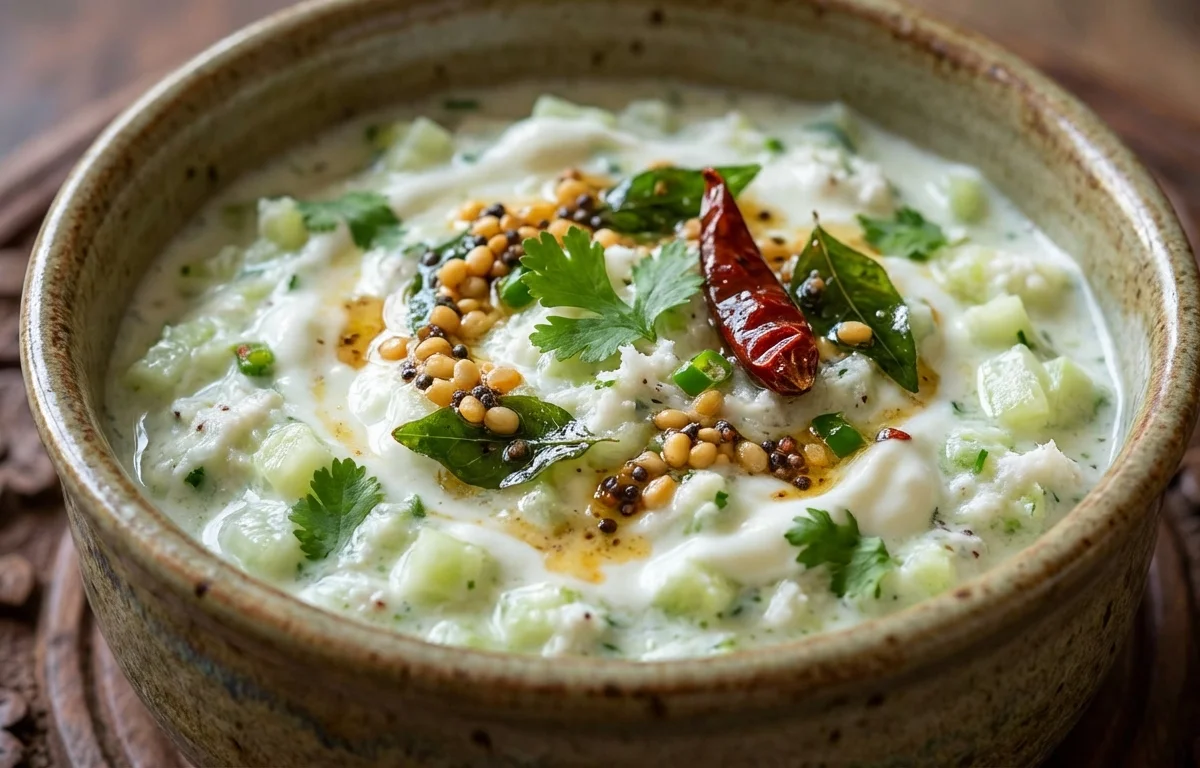
Southekayi Hasi Gojju
A refreshing and tangy raw cucumber curry from Karnataka. Finely chopped cucumber is mixed with a pungent coconut-mustard paste and yogurt, then finished with a classic South Indian tempering. A perfect side for rice.
For 4 servings
Prepare the cucumber: Wash the cucumbers well. You can peel them or leave the skin on for extra fiber. It's important to taste a small piece to ensure it's not bitter. Finely chop the cucumbers, discarding any large, tough seeds, and place them in a medium-sized mixing bowl. This should take about 5 minutes.
Grind the masala paste: In a blender or grinder jar, combine the freshly grated coconut, green chillies, 1 tsp of mustard seeds, tamarind paste, and jaggery. Add 2-3 tablespoons of water and grind for about 2-3 minutes to a smooth, thick paste. The raw mustard seeds are key to the characteristic pungent flavor of the gojju.
Combine the gojju base: Add the ground coconut-mustard paste to the bowl with the chopped cucumber. Pour in the whisked curd and add salt to taste. Mix everything gently for about 1 minute until well combined.
Prepare the tempering (Oggarane): Heat coconut oil in a small tadka pan over medium heat. Once hot, add 1/2 tsp of mustard seeds and let them splutter completely (about 30 seconds). Next, add the urad dal and sauté until it turns a light golden brown (about 45 seconds). Finally, add the broken dried red chilli, curry leaves, and hing. Sauté for another 20 seconds until the curry leaves are crisp and aromatic, then immediately turn off the heat.
Finish and serve: Pour the hot tempering over the cucumber-yogurt mixture. Garnish with finely chopped coriander leaves and give it a final gentle stir. For the best taste and texture, serve the Southekayi Hasi Gojju immediately with hot steamed rice or as a side with rotis.
What to keep in mind.
6 tips from the recipe — small details that make a real difference to the final dish.
- 1Always taste a small piece of cucumber before chopping. A bitter cucumber can ruin the entire dish.
- 2Use fresh, tender cucumbers for the best taste and texture.
- 3Do not add too much water while grinding the coconut paste; it should be thick to maintain the gojju's consistency.
- 4The raw mustard seeds in the paste are essential for the authentic pungent flavor; do not skip them.
- 5For best results, mix the gojju just before serving. This prevents the cucumber from releasing excess water and making the dish runny.
- 6Whisking the yogurt before adding ensures a smooth, creamy consistency without any lumps.
Adapt it for your goals.
Vegan Version
Replace the dairy curd with a thick, unsweetened plant-based yogurt like coconut or cashew yogurt for a completely vegan dish.
Different VegetableDifferent Vegetable
This gojju can also be made with finely chopped capsicum (bell pepper), onion, or even tender bottle gourd (sorekayi).
Added FlavorAdded Flavor
For a different flavor profile, you can add a small piece of ginger (about 1/2 inch) while grinding the masala paste.
Why this is on our healthy list.
Extremely Hydrating
Cucumber is composed of over 95% water, making this dish incredibly hydrating and cooling, which is perfect for hot weather and maintaining body fluid balance.
Promotes Gut Health
The use of curd (yogurt) provides beneficial probiotics that support a healthy gut microbiome, improve digestion, and boost overall immunity.
Source of Healthy Fats
Fresh coconut and the use of coconut oil provide medium-chain triglycerides (MCTs), which are easily digestible fats that offer a quick source of energy for the body.
Frequently asked questions
'Hasi' means 'raw' in Kannada, and 'Gojju' refers to a type of curry or chutney. So, Hasi Gojju is a raw curry that doesn't involve cooking the main ingredients, only a final tempering is added.