
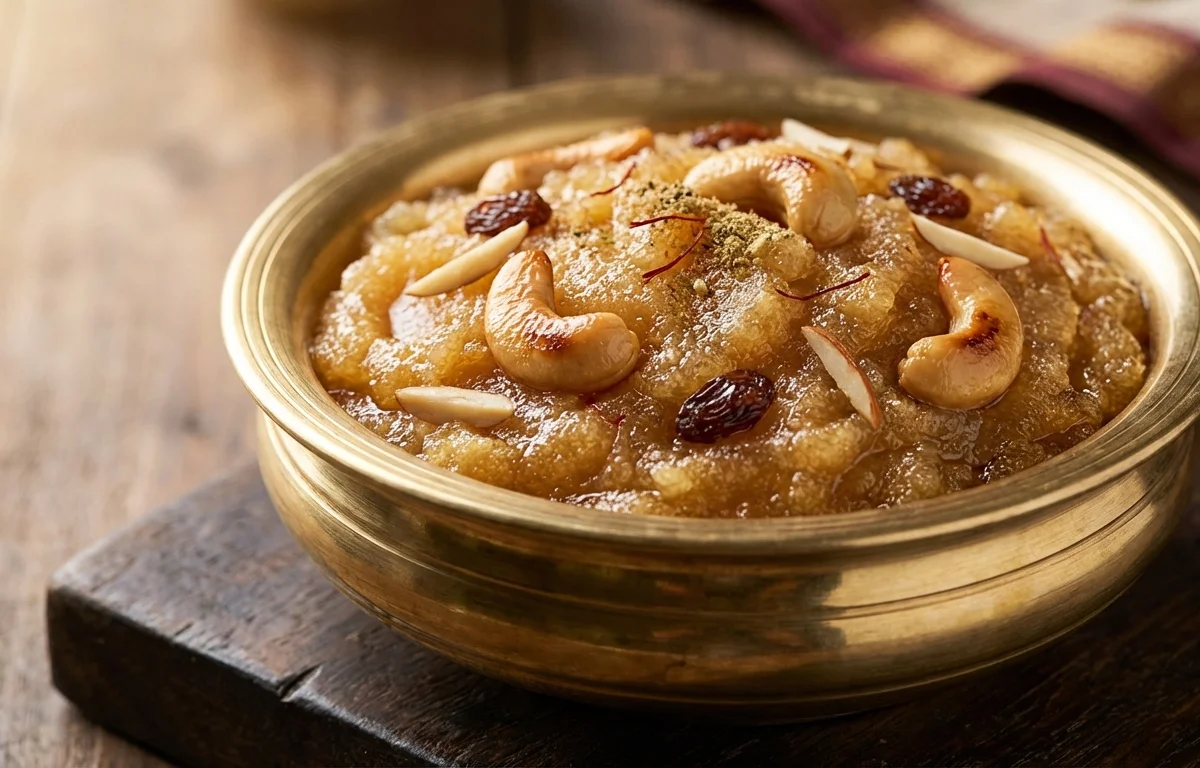
Sooji Halwa
A classic Indian dessert made with roasted semolina, ghee, sugar, and nuts. This warm, sweet, and aromatic pudding is often made for festivals and special occasions, ready in under 30 minutes.
For 4 servings
Prepare Sugar Syrup
- In a saucepan, combine 3 cups of water, 3/4 cup of sugar, cardamom powder, and saffron strands.
- Bring the mixture to a rolling boil over medium-high heat, stirring until the sugar dissolves completely.
- Once boiling, reduce the heat to the lowest setting to keep the syrup hot while you roast the sooji. This is crucial for a lump-free halwa.
Roast Nuts & Sooji
- While the syrup is heating, melt the ghee in a heavy-bottomed pan (kadai) over medium heat.
- Add the cashews and almonds and fry for 1-2 minutes until they turn a light golden brown. Add the raisins and fry for another 30 seconds until they plump up.
- Remove the nuts and raisins with a slotted spoon and set them aside.
- In the same ghee, add the sooji. Reduce the heat to low and roast, stirring continuously, for about 8-10 minutes.
- The sooji is perfectly roasted when it becomes fragrant, turns a light golden color, and the ghee begins to separate from the grains.
Combine and Cook Halwa
- With the flame still on low, carefully and slowly pour the hot sugar syrup into the roasted sooji. Stand back as the mixture will bubble and splutter vigorously.
- Stir continuously and quickly to prevent any lumps from forming.
- The sooji will absorb the liquid rapidly. Continue to cook, stirring, for 2-3 minutes until the halwa thickens and starts to pull away from the sides of the pan.
Garnish and Serve
- Stir in the fried nuts and raisins, reserving a few for garnish.
- Turn off the heat, cover the pan with a lid, and let the halwa rest for 5 minutes. This allows the sooji grains to swell and become fluffy.
- Garnish with the remaining nuts and serve warm.
What to keep in mind.
5 tips from the recipe — small details that make a real difference to the final dish.
- 1Roast the sooji on a consistent low flame. Rushing this step will result in a raw taste and a pasty texture.
- 2Always add hot syrup to hot roasted sooji. Adding cold liquid will cause lumps.
- 3Be extremely cautious when pouring the syrup into the sooji as it will splutter. Use a long-handled spoon and pour slowly from the side of the pan.
- 4For a richer flavor, you can replace half of the water with milk.
- 5The amount of ghee can be adjusted, but using a good amount ensures a non-sticky, flavorful halwa where the ghee separates at the end.
Adapt it for your goals.
Milk Halwa (Sheera)
Replace the water entirely with whole milk for a richer, creamier texture and taste.
Pineapple HalwaPineapple Halwa
Add 1/2 cup of finely chopped pineapple or pineapple puree to the sugar syrup for a tangy and fruity flavor.
Jaggery HalwaJaggery Halwa
Substitute sugar with an equal amount of powdered or grated jaggery. Dissolve the jaggery in water and strain it to remove impurities before boiling.
Vegan Sooji HalwaVegan Sooji Halwa
Use coconut oil or a neutral vegetable oil instead of ghee to make a plant-based version.
Why this is on our healthy list.
Source of Instant Energy
Rich in carbohydrates from semolina and sugar, and fats from ghee, Sooji Halwa provides a quick and substantial energy boost.
Rich in Iron
Semolina is a good source of iron, a vital mineral for producing red blood cells, maintaining energy levels, and preventing anemia.
Supports Bone Health
Ghee contains fat-soluble vitamins like Vitamin K2, which plays a role in calcium metabolism and helps maintain strong bones.
Frequently asked questions
One serving of this Sooji Halwa contains approximately 580-600 calories, primarily from ghee, sugar, and semolina. It is a rich, energy-dense dessert.