
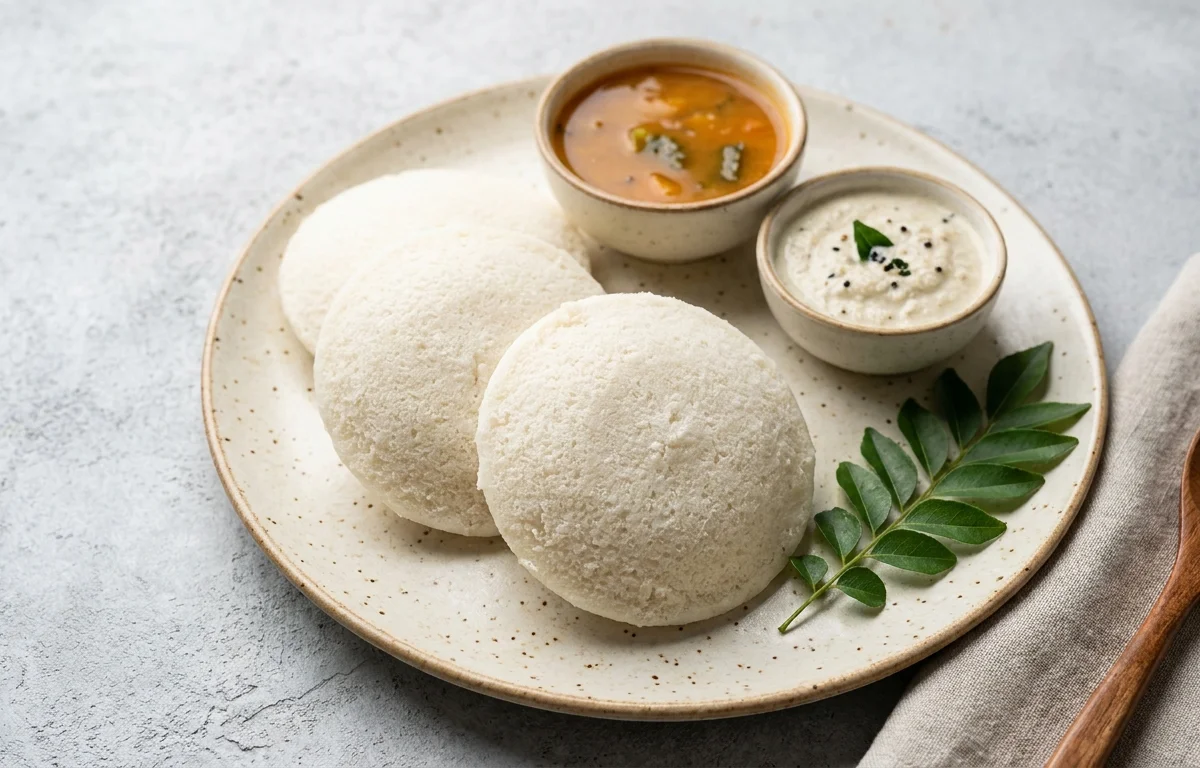
Soft Idli
Experience the classic South Indian breakfast with these incredibly soft and fluffy steamed rice cakes. Made from a naturally fermented batter, they are light, healthy, and perfect for soaking up sambar and chutney.
For 8 servings
Soak the rice and lentils.
- Rinse the idli rice thoroughly 3-4 times until the water runs clear. Soak it in a large bowl with enough water to cover.
- In a separate bowl, rinse the urad dal and fenugreek seeds. Soak them together in fresh water.
- Let both bowls soak for at least 6 hours or overnight.
TIPProper soaking is key for a smooth batter and soft idlis.Grind the batter.
- About 15 minutes before grinding, soak the poha in a little water.
- First, drain the urad dal and grind it in a wet grinder or high-speed blender, adding cold water little by little. Grind until you have a very smooth, light, and fluffy batter.
- Transfer the dal batter to a large container.
- Next, drain the rice and soaked poha. Grind them together to a fine, slightly coarse texture (like fine semolina). Use cold water as needed.
- Combine the rice batter with the dal batter in the large container. Mix well with your hands for a minute; this helps in fermentation.
TIPGrinding the dal until it's very fluffy is the secret to soft idlis. The batter should almost double in volume.Ferment the batter.
Cover the container with a lid (do not seal it tightly) and place it in a warm, dark place to ferment for 8 to 12 hours, or until it has risen and looks bubbly. The time will vary based on the climate.
Prepare for steaming.
- Once fermented, gently mix the batter. Do not overmix, as this will deflate the air pockets.
- Add salt and mix gently.
- Grease the idli plates with a few drops of oil.
- Pour the batter into each mold, filling it about three-quarters full.
Steam the idlis.
Place the idli stand in a steamer or a large pot with an inch of boiling water at the bottom. Cover and steam on medium-high heat for 10-12 minutes. A toothpick inserted into the center should come out clean.
TIPDon't steam for too long, as it can make the idlis hard.Rest and demold.
Turn off the heat and let the idli stand rest for 5 minutes before opening the lid. This prevents them from becoming sticky. Use a wet spoon to gently scoop out the idlis from the molds.
Serve the idlis hot.
Serve the soft, fluffy idlis immediately with hot sambar and your favorite chutney.
What to keep in mind.
6 tips from the recipe — small details that make a real difference to the final dish.
- 1Use a wet grinder for the best batter texture, especially for the urad dal.
- 2The consistency of the batter should be thick but pourable, similar to pancake batter.
- 3If you live in a cold climate, place the batter in a preheated (and turned off) oven with the light on to aid fermentation.
- 4Don't add salt before fermentation, as it can slow down the process.
- 5Leftover batter can be stored in the refrigerator for up to 3 days.
- 6For extra soft idlis, you can add a pinch of baking soda to the batter just before steaming, but it's not traditional.
Adapt it for your goals.
Quick
For a faster version, use 2 cups of store-bought idli rava (rice semolina) instead of whole rice. Soak only the urad dal and mix the ground dal paste with the idli rava.
healthyHealthy
Add 1/2 cup of finely grated carrots, beetroot, or chopped spinach to the batter before steaming for added nutrients and color.
kid friendlyKid friendly
Use mini idli molds to create small, bite-sized idlis that are fun for kids. You can also temper them with a little ghee and mustard seeds after steaming.
Why this is on our healthy list.
Excellent Source of Probiotics
The fermentation process of the batter cultivates healthy bacteria, making idlis a great natural source of probiotics that support gut health and digestion.
Easy to Digest
Being steamed and made from fermented batter, idlis are very light on the stomach and easy to digest, making them a perfect food for breakfast or for those recovering from illness.
Good Source of Protein and Carbs
The combination of rice and urad dal provides a good balance of carbohydrates for energy and plant-based protein for muscle repair and growth.
Naturally Gluten-Free
Idlis are made from rice and lentils, both of which are naturally gluten-free, making them a safe and delicious option for individuals with gluten sensitivity or celiac disease.
Frequently asked questions
Yes, idli is considered very healthy. It's a steamed food with no oil, making it low in fat and calories. The fermentation process makes it rich in probiotics, which are great for gut health, and enhances the bioavailability of nutrients.