
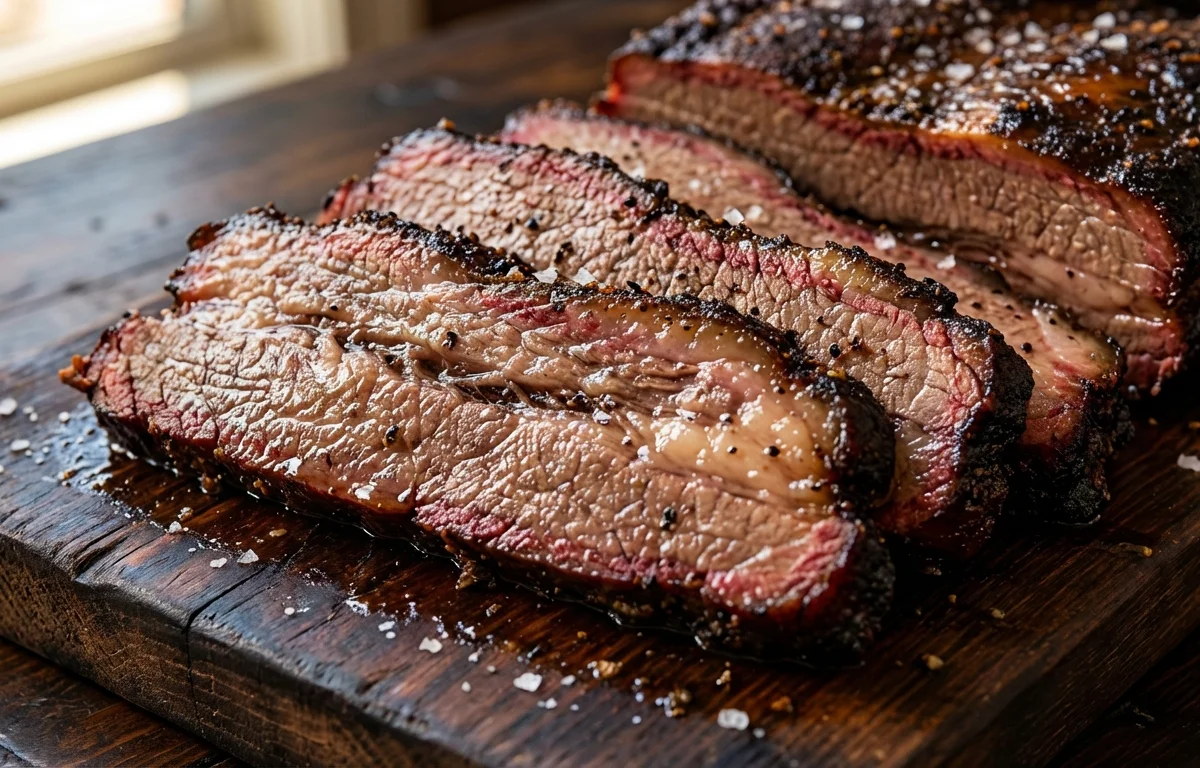
Smoked Beef Brisket
Tender, juicy beef brisket smoked low and slow until it develops a beautiful dark bark and melts in your mouth. This is the ultimate backyard barbecue centerpiece, perfect for feeding a crowd.
For 12 servings
8 steps. 600 minutes total.
- 1
Step 1
- a.Trim and Prepare the Brisket
- b.Place the brisket fat-side down on a large cutting board. Trim any excess silver skin and hard, non-rendering fat from the meat side.
- c.Flip the brisket over. Trim the fat cap down to a uniform 1/4-inch (0.6 cm) thickness. This allows the fat to render properly without blocking the smoke.
- d.Square off the edges for a more aerodynamic shape, which helps it cook more evenly. Let the brisket sit at room temperature for about 1 hour before smoking.
- 2
Step 2
- a.Apply the Binder and Rub
- b.In a small bowl, thoroughly mix the kosher salt, black pepper, garlic powder, onion powder, and smoked paprika to create the rub.
- c.Pat the brisket dry with paper towels. Slather a very thin layer of yellow mustard all over the surface. This acts as a binder to help the rub adhere.
- d.Generously and evenly season the entire brisket with the rub, pressing it gently into the meat. Ensure all sides, including the edges, are completely covered.
- 3
Step 3
- a.Prepare the Smoker
- b.Preheat your smoker to 250°F (121°C). Place a water pan inside the smoker to help maintain a humid environment.
- c.Add your wood chunks according to the manufacturer's instructions. Wait until you see a clean, thin blue smoke before adding the meat.
- 4
Step 4
- a.Smoke the Brisket (Phase 1)
- b.Place the brisket on the smoker grate, fat-side up. Insert a leave-in meat thermometer probe into the thickest part of the flat.
- c.Close the lid and smoke for about 5-6 hours. The goal is to reach an internal temperature of 165°F (74°C) and develop a dark, firm crust called the 'bark'. You may notice the temperature 'stalls' here for a while; this is normal.
- 5
Step 5
- a.Wrap the Brisket (The Texas Crutch)
- b.Lay out two large, overlapping sheets of pink butcher paper on a clean surface.
- c.Carefully remove the brisket from the smoker and place it in the center of the paper.
- d.Wrap the brisket as tightly as possible to create a seal. The paper will protect the meat and retain moisture while still allowing some smoke to penetrate.
- 6
Step 6
- a.Finish Smoking (Phase 2)
- b.Return the wrapped brisket to the smoker, fat-side up. Re-insert the meat thermometer through the paper into the thickest part of the flat.
- c.Continue to cook for another 4-6 hours. The target internal temperature is approximately 203°F (95°C), but the real test is tenderness.
- d.Begin checking for tenderness around 195°F. The thermometer probe should slide into the meat with almost no resistance, like probing warm butter.
- 7
Step 7
- a.Rest the Brisket
- b.Once tender, remove the wrapped brisket from the smoker. Place it in a dry, empty cooler and close the lid. Do not unwrap it.
- c.Let it rest for a minimum of 1 hour, but 2-4 hours is ideal. This crucial step allows the muscle fibers to relax and reabsorb the juices, ensuring a moist and tender result.
- 8
Step 8
- a.Slice and Serve
- b.After resting, unwrap the brisket on a large cutting board with a juice groove. Reserve the rendered fat (tallow) from the paper.
- c.Identify the large fat line that separates the two muscles: the leaner 'flat' and the fattier 'point'. Separate them by cutting along this line.
- d.Slice the flat against the grain into pencil-thick slices. Turn the point 90 degrees and slice it against its grain. Arrange on a platter, drizzle with some reserved tallow, and serve immediately.
What to keep in mind.
6 tips from the recipe — small details that make a real difference to the final dish.
- 1Cook to temperature and feel, not time. Every brisket is unique and cook times can vary widely.
- 2A quality instant-read thermometer is your best friend for checking tenderness in multiple spots.
- 3The resting period is not optional. Skipping it will result in a dry brisket as all the juices will run out when you slice it.
- 4For slicing, identify the direction of the muscle fibers. The flat and point have grains running in different directions, so separate them before slicing.
- 5Maintaining a consistent smoker temperature is key. Avoid large temperature swings for the best results.
- 6Leftover brisket makes amazing sandwiches, tacos, or chili.
Adapt it for your goals.
Rub
For a sweeter bark, add 2 tablespoons of brown sugar to the rub. For more heat, add 1 tablespoon of cayenne pepper or chili powder.
Wood SmokeWood Smoke
Experiment with different wood types for unique flavors. Mesquite offers a strong, bold flavor, while apple or cherry wood provide a milder, sweeter smoke.
BinderBinder
If you don't have yellow mustard, you can use hot sauce, Worcestershire sauce, or even just a light coating of olive oil as a binder for the rub.
InjectionInjection
For extra moisture, you can inject the brisket with beef broth before smoking. Mix 2 cups of low-sodium beef broth with 2 tablespoons of your rub (without salt and pepper) and inject it into the flat every inch or so.
Why this is on our healthy list.
Excellent Source of Protein
Beef brisket is packed with high-quality protein, which is essential for building and repairing muscle tissue, supporting bone health, and maintaining overall body function.
Rich in B Vitamins
This cut of beef is a good source of B vitamins, particularly B12, which is crucial for nerve function and the formation of red blood cells. It also contains niacin (B3) and riboflavin (B2), which help convert food into energy.
Provides Essential Minerals
Brisket supplies important minerals like iron, which helps transport oxygen in the blood, and zinc, which is vital for immune system function and wound healing.
Frequently asked questions
A 225g (about 8 oz) serving of smoked beef brisket, including both the lean flat and fatty point, contains approximately 750-850 calories, depending on the final fat content.