
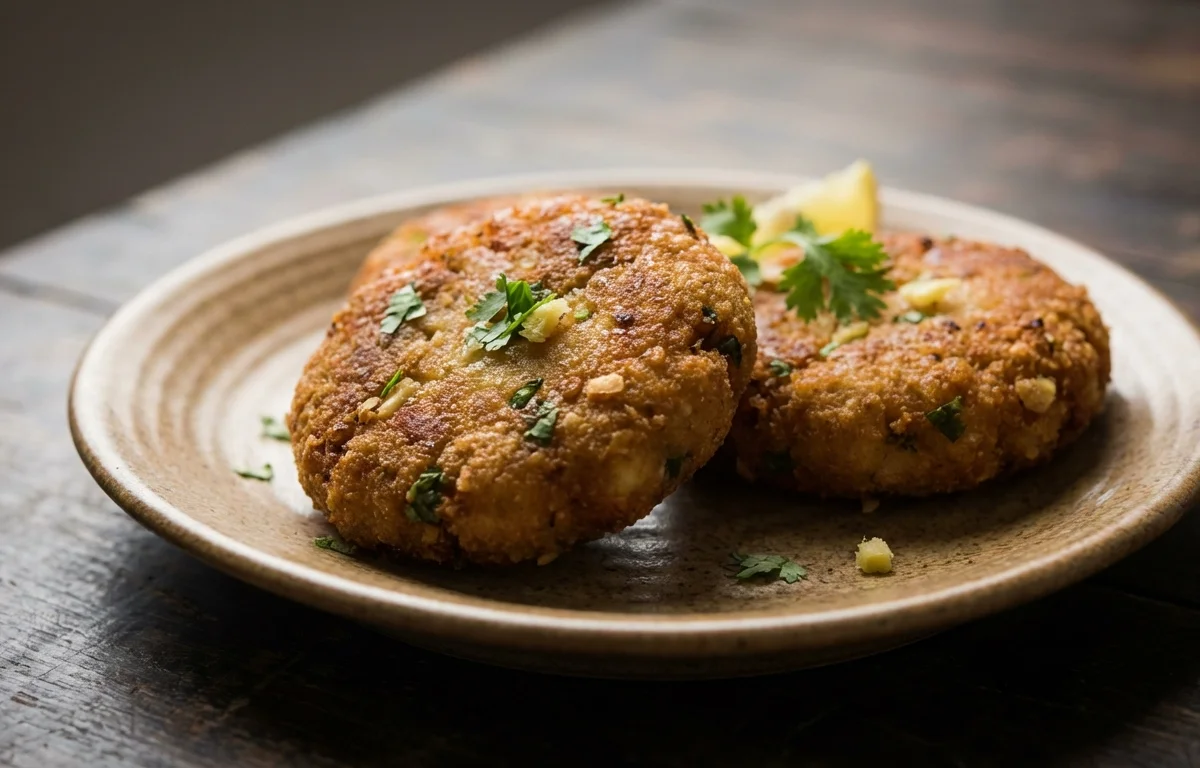
Singhare ke Atte ki Tikki
Crispy, savory patties made from water chestnut flour and boiled potatoes. This popular North Indian snack is perfect for fasting days like Navratri, offering a delicious and gluten-free treat.
For 4 servings
Prepare the Tikki Mixture
- Ensure the boiled potatoes are completely cool. Peel and mash them in a large mixing bowl until smooth and free of lumps.
- Add the singhare ka atta, sendha namak, finely chopped green chilies, coriander leaves, cumin seeds, black pepper powder, and lemon juice to the mashed potatoes.
- Mix everything together thoroughly with your hands to form a firm, non-sticky dough. Do not add any water, as the moisture from the potatoes is sufficient.
Shape the Tikkis
- Lightly grease your palms with a few drops of oil to prevent the dough from sticking.
- Divide the mixture into 12 equal portions.
- Take one portion, roll it into a smooth ball between your palms, and then gently flatten it to form a round patty (tikki) about 2 inches in diameter and 1/2 inch thick. Place it on a plate and repeat for the remaining dough.
Shallow Fry the Tikkis
- Heat the peanut oil in a heavy-bottomed pan or skillet over medium heat. The oil should be hot but not smoking.
- To test the oil, drop a tiny piece of the dough into it. If it sizzles and rises to the surface, the oil is ready.
- Carefully slide 4-5 tikkis into the hot oil, ensuring not to overcrowd the pan.
- Fry for 4-5 minutes on one side, or until the base is golden brown and crisp.
- Gently flip the tikkis and fry the other side for another 4-5 minutes until it is also crisp and evenly golden brown.
Drain and Serve
- Once cooked, remove the tikkis from the pan using a slotted spoon and place them on a plate lined with paper towels to drain excess oil.
- Repeat the frying process in batches for the remaining tikkis.
- Serve the Singhare ke Atte ki Tikki hot with vrat-friendly mint chutney, sweet tamarind chutney, or plain yogurt.
What to keep in mind.
5 tips from the recipe — small details that make a real difference to the final dish.
- 1For the best texture, use potatoes that have been boiled a day ahead and refrigerated. This reduces their moisture content and makes the tikkis crispier.
- 2Ensure the oil is at the right temperature (medium hot). If it's too hot, the tikkis will burn on the outside and remain raw inside. If it's not hot enough, they will absorb too much oil.
- 3If the mixture feels too sticky, add another tablespoon of singhare ka atta. If it's too dry, add a teaspoon of water, but do so sparingly.
- 4Do not overcrowd the pan while frying, as this lowers the oil temperature and can make the tikkis soggy.
- 5For added flavor and crunch, you can add 2 tablespoons of roasted and coarsely crushed peanuts to the dough.
Adapt it for your goals.
Stuffing
Create a small cavity in each tikki and fill it with a mixture of chopped cashews, raisins, and grated coconut before sealing and frying.
Healthier VersionHealthier Version
Cook the tikkis in an air fryer. Brush them with oil and air fry at 180°C (350°F) for 15-20 minutes, flipping them halfway through, until golden and crisp.
Flavor TwistFlavor Twist
Add 1 teaspoon of grated ginger and 1/2 teaspoon of amchur (dry mango powder) to the dough for a tangy and zesty flavor (ensure these are permitted if you are fasting).
Why this is on our healthy list.
Gluten-Free Goodness
Made from water chestnut flour (singhare ka atta), this recipe is naturally gluten-free, making it a safe and delicious option for those with celiac disease or gluten intolerance.
Sustained Energy Source
The complex carbohydrates from both potatoes and water chestnut flour provide a steady release of energy, which is ideal for maintaining stamina during fasting periods like Navratri.
Rich in Potassium
Potatoes are an excellent source of potassium, an essential electrolyte that helps maintain fluid balance, supports healthy blood pressure, and is crucial for proper muscle function.
Frequently asked questions
One serving of three tikkis contains approximately 290-320 calories, primarily from carbohydrates in the potatoes and flour, and fat from the frying oil. The exact count can vary based on the size of the potatoes and the amount of oil absorbed.