
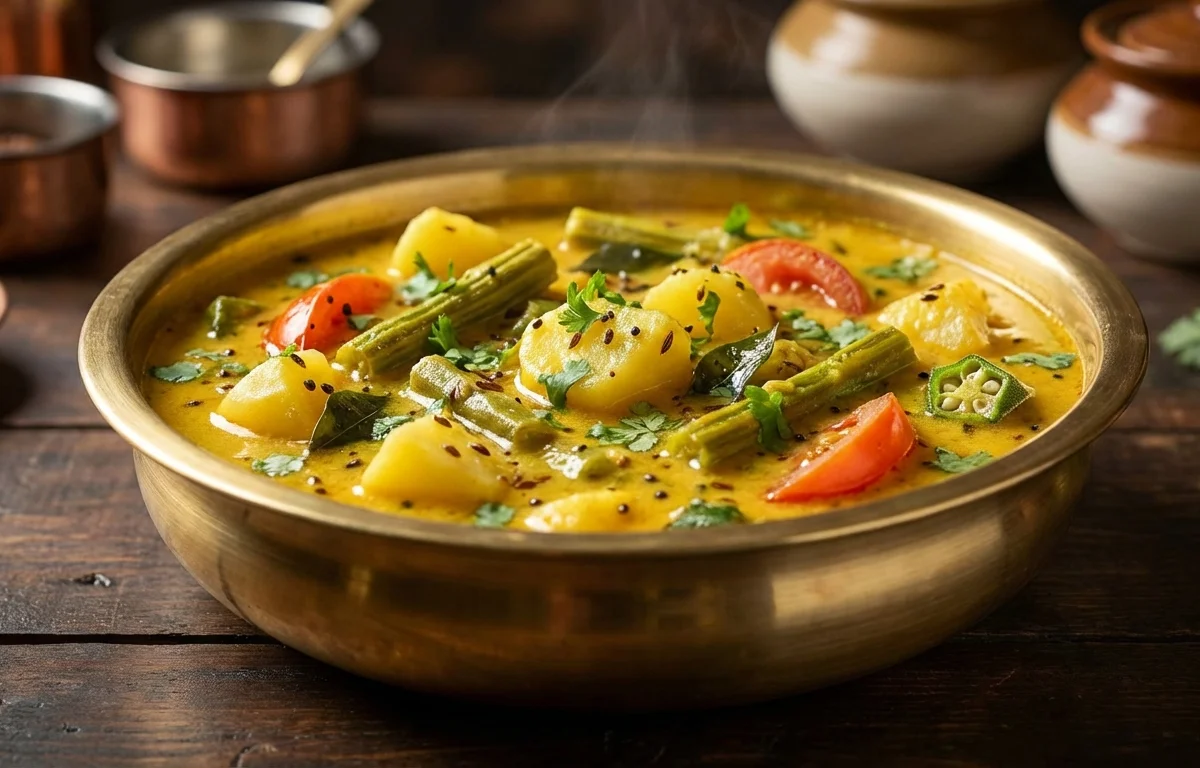
Sindhi Kadhi
A tangy and flavorful chickpea flour-based curry, loaded with assorted vegetables like drumsticks and cluster beans. This classic Sindhi dish gets its signature sour taste from tamarind and is traditionally served with steamed rice and sweet boondi.
For 4 servings
Prepare Tamarind and Vegetables: Soak the tamarind in 1/2 cup of warm water for 20 minutes. Squeeze the pulp well, strain it through a fine-mesh sieve, and discard the solids. Set the tamarind extract aside. Wash, peel, and chop all vegetables as specified in the ingredient list.
Roast Besan: Heat oil in a large, heavy-bottomed pot or kadai over medium heat. Add mustard seeds and let them splutter. Add cumin seeds, hing, and curry leaves, and sauté for 30 seconds until fragrant. Reduce the heat to low, add the besan, and roast, stirring continuously for 5-7 minutes until it turns golden brown and emits a nutty aroma.
Create the Kadhi Base: Turn off the heat completely. Slowly pour in 2 cups of water while whisking vigorously to create a smooth, lump-free paste. Once smooth, turn the heat back to medium. Add the remaining 4 cups of water, turmeric powder, red chili powder, coriander powder, ginger paste, slit green chilies, and salt. Whisk well to combine.
Cook the Vegetables: Bring the kadhi to a rolling boil, then reduce the heat to a simmer. Add the cubed potatoes and drumstick pieces. Cover and cook for 10-12 minutes until they are partially tender. Next, add the chopped cluster beans and continue to simmer for another 8-10 minutes.
Finish and Temper: Stir in the prepared tamarind extract, whole okra, and quartered tomatoes. Let the kadhi simmer gently for a final 5-7 minutes, until the okra is tender-crisp and the tomatoes have softened slightly. Be careful not to overcook the okra.
Garnish and Serve: Turn off the heat and garnish with fresh chopped coriander leaves. Let the kadhi rest for 5-10 minutes for the flavors to meld. Serve hot with steamed rice.
What to keep in mind.
5 tips from the recipe — small details that make a real difference to the final dish.
- 1Roasting the besan on low heat is the most crucial step. A well-roasted besan gives the kadhi its unique nutty flavor and prevents a raw taste.
- 2To avoid lumps, always add the initial amount of water to the roasted besan with the heat turned off.
- 3Add vegetables in stages according to their cooking time to ensure everything is perfectly cooked and not mushy.
- 4The kadhi will thicken as it cools. If it becomes too thick upon reheating, simply add a little hot water to adjust the consistency.
- 5For crispier okra, you can lightly pan-fry it in 1 tsp of oil separately and add it to the kadhi just before serving.
Adapt it for your goals.
Vegetable Additions
You can add other traditional vegetables like lotus stem (bhee), eggplant (baingan), or carrots to make it even more wholesome.
Spicier VersionSpicier Version
Increase the number of green chilies or add a pinch of garam masala at the end for extra heat and aroma.
Adjusting TanginessAdjusting Tanginess
If you prefer a less tangy kadhi, reduce the amount of tamarind. For more tang, you can add a squeeze of lemon juice just before serving.
Why this is on our healthy list.
Rich in Fiber
The combination of besan and a wide variety of vegetables makes this dish an excellent source of dietary fiber, which aids digestion, promotes satiety, and helps maintain stable blood sugar levels.
Good Source of Plant-Based Protein
Besan (gram flour) is a key ingredient and provides a significant amount of plant-based protein, essential for muscle repair and overall body function.
Packed with Vitamins and Minerals
With vegetables like drumsticks, cluster beans, potatoes, and tomatoes, this kadhi is a powerhouse of vitamins (like Vitamin C and A) and minerals (like potassium and iron).
Aids Digestion
Spices like hing (asafoetida) and cumin, along with the tamarind, are known to stimulate digestive enzymes, prevent bloating, and promote a healthy gut.
Frequently asked questions
The key is to turn off the heat completely after roasting the besan and before adding the first two cups of water. Add the water slowly while whisking continuously and vigorously to form a smooth paste. Only turn the heat back on after the paste is lump-free.