
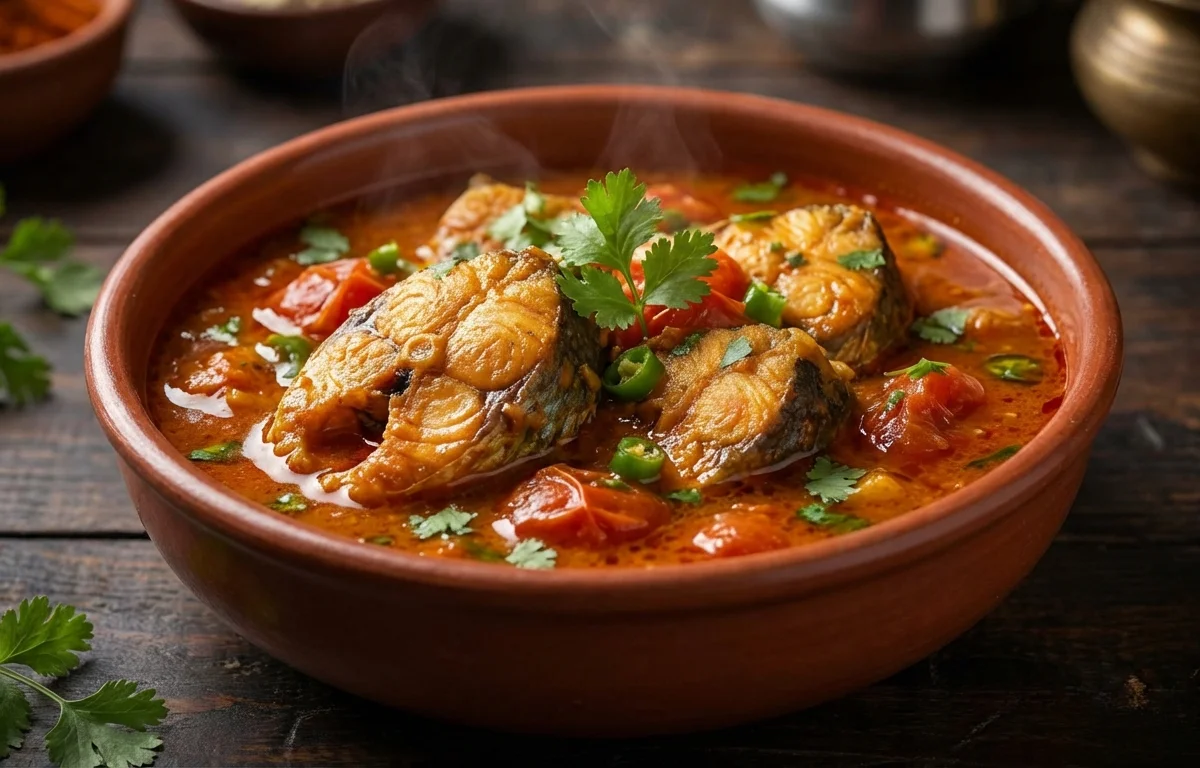
Sindhi Fish Curry
A tangy and spicy fish curry from Sindhi cuisine, featuring tender fish simmered in a flavorful tomato and tamarind gravy. It's a comforting meal, best enjoyed with a plate of hot steamed rice.
For 4 servings
Marinate the Fish
- Clean the fish steaks thoroughly and pat them completely dry with paper towels. This prevents splattering during frying.
- In a bowl, gently rub the fish steaks with 1/4 tsp of turmeric powder and 1/2 tsp of salt.
- Let the fish marinate for 15 minutes at room temperature.
Shallow-Fry the Fish
- Heat 4 tbsp of vegetable oil in a wide, heavy-bottomed pan or kadai over medium-high heat.
- Carefully place the marinated fish steaks in the hot oil in a single layer. Do not overcrowd the pan.
- Fry for 2-3 minutes on each side until they are light golden brown. The fish will not be fully cooked at this stage.
- Gently remove the fried fish from the pan and set aside on a plate.
Prepare the Curry Base
- In the same pan, add the remaining 2 tbsp of oil. Once hot, add the finely chopped onions.
- Sauté the onions on medium heat for 5-7 minutes until they become soft and translucent.
- Add the ginger-garlic paste and slit green chilies. Cook for another minute until the raw smell disappears.
- Lower the heat, add the besan (gram flour), and roast for 1-2 minutes, stirring continuously, until it becomes fragrant.
Cook the Masala
- Add the tomato puree to the pan. Stir well to combine.
- Add the remaining 1/2 tsp turmeric powder, red chili powder, coriander powder, and 1 tsp of salt.
- Cook this masala mixture on medium-low heat for 6-8 minutes, stirring occasionally, until the oil begins to separate from the sides of the masala.
Simmer the Gravy
- Pour in 3 cups of water and add the tamarind paste. Stir well to dissolve the paste.
- Bring the gravy to a rolling boil, then reduce the heat to low.
- Let the gravy simmer for 7-10 minutes, allowing the flavors to meld and the gravy to thicken slightly.
Finish and Serve
- Gently slide the fried fish pieces into the simmering gravy.
- Cover the pan and cook on low heat for 5-7 minutes. This will cook the fish through and allow it to absorb the flavors. Avoid stirring vigorously to prevent the fish from breaking.
- Turn off the heat. Garnish with freshly chopped coriander leaves.
- Let the curry rest for 5 minutes before serving hot with steamed rice.
What to keep in mind.
6 tips from the recipe — small details that make a real difference to the final dish.
- 1Use a firm-fleshed fish like Rohu, Surmai (Kingfish), or Pomfret, as they hold their shape well in the curry.
- 2Do not skip shallow frying the fish. This step is crucial for flavor and helps prevent the fish from disintegrating in the gravy.
- 3Roasting the besan properly is key to avoiding a raw, pasty taste in the final dish.
- 4For a richer flavor, you can use mustard oil instead of vegetable oil.
- 5Adjust the tanginess and spice levels by altering the amount of tamarind paste and red chili powder.
- 6The curry's flavor deepens over time. It often tastes even better the next day.
Adapt it for your goals.
Add Vegetables
You can add vegetables like potato wedges, drumsticks, or okra to the curry. Add them with the water and cook until they are tender before adding the fish.
Different FishDifferent Fish
While Rohu is traditional, this curry works well with other firm white fish like cod, haddock, or tilapia if freshwater fish is unavailable.
Coconut Milk VersionCoconut Milk Version
For a creamier, less tangy version, you can reduce the tamarind paste and add 1/2 cup of thin coconut milk along with the water.
Why this is on our healthy list.
Rich in Omega-3 Fatty Acids
The fish in this curry is a prime source of omega-3 fatty acids, which are crucial for maintaining heart health, reducing inflammation, and supporting brain function.
Excellent Source of Lean Protein
Fish provides high-quality lean protein, essential for muscle repair, growth, and overall body function, making this dish a satisfying and nutritious meal.
Anti-inflammatory Properties
Spices like turmeric, ginger, and garlic used in the curry base are known for their powerful anti-inflammatory and antioxidant properties, which can help combat oxidative stress in the body.
Rich in Lycopene
The use of tomato puree provides a good amount of lycopene, a potent antioxidant linked to a reduced risk of certain chronic diseases.
Frequently asked questions
Yes, Sindhi Fish Curry is quite healthy. Fish is an excellent source of lean protein and omega-3 fatty acids, which are beneficial for heart and brain health. The curry base uses tomatoes, onions, and spices like turmeric, which have anti-inflammatory properties. It is relatively low in unhealthy fats, especially when shallow-fried with minimal oil.