
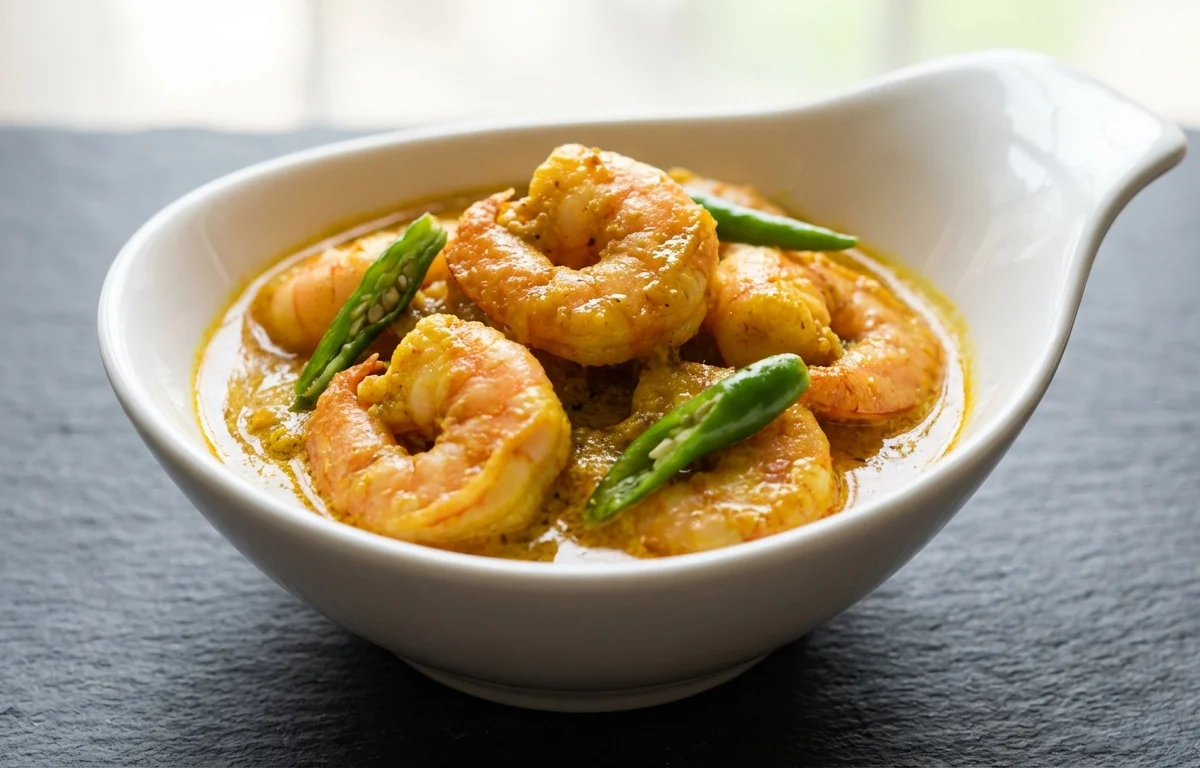
Shorshe Chingri Bhapa
A classic Bengali delicacy where tender prawns are steamed in a pungent, creamy paste of mustard seeds, poppy seeds, and coconut. This 'bhapa' preparation is incredibly flavorful and best enjoyed with hot steamed rice.
For 4 servings
4 steps. 20 minutes total.
- 1
Step 1
- a.Prepare the Mustard-Coconut Paste
- b.In a small bowl, combine the black mustard seeds, yellow mustard seeds, and poppy seeds. Cover with warm water and let them soak for at least 20-30 minutes. This step is crucial to soften the seeds and reduce bitterness.
- c.Drain the soaked seeds completely.
- d.Transfer the drained seeds to a grinder jar. Add the grated coconut, 4 green chilies, and a pinch of salt.
- e.Grind the mixture in short bursts to avoid generating heat, which can make the paste bitter. Add 1-2 tablespoons of water as needed to form a smooth, thick paste.
- 2
Step 2
- a.Marinate the Prawns
- b.In a mixing bowl, place the cleaned and deveined prawns.
- c.Add the freshly prepared mustard-coconut paste, turmeric powder, 1 tsp of salt, and 4 tbsp of mustard oil.
- d.Gently mix everything together, ensuring each prawn is thoroughly coated with the marinade. Let it sit for 10 minutes.
- 3
Step 3
- a.Steam the Prawns
- b.Transfer the marinated prawns into a steel tiffin box or any heatproof container with a tight-fitting lid.
- c.Slit the remaining green chili lengthwise and place it on top of the prawn mixture.
- d.Drizzle 1 teaspoon of extra mustard oil over the top for added flavor.
- e.Secure the lid tightly. Place the container inside a steamer or a large pot with about 2 inches of boiling water at the bottom.
- f.Cover the pot and steam on medium heat for 15-20 minutes. The prawns will turn pink and opaque when cooked.
- 4
Step 4
- a.Rest and Serve
- b.Turn off the heat and let the container rest in the pot for 5 minutes. This allows the flavors to meld beautifully.
- c.Carefully remove the hot container from the steamer. Open the lid, releasing the aromatic steam.
- d.Gently stir the contents. Serve the Shorshe Chingri Bhapa immediately with hot steamed rice.
What to keep in mind.
6 tips from the recipe — small details that make a real difference to the final dish.
- 1For the best flavor, use fresh, high-quality mustard oil. It is the soul of this dish.
- 2Do not over-steam the prawns, as they can become tough and rubbery. 15-20 minutes is usually sufficient for medium-sized prawns.
- 3If you don't have a steel tiffin box, you can use a glass bowl and cover it tightly with aluminum foil.
- 4A pinch of sugar can be added to the marinade to balance the pungency of the mustard, though it's not traditional.
- 5Ensure your mustard seeds are fresh. Old seeds tend to be more bitter.
- 6Let the dish rest for a few minutes after steaming. This step is crucial as it allows the flavors to deepen and settle.
Adapt it for your goals.
Fish Version
Replace prawns with fillets of fish like Hilsa (Ilish) or Bhetki (Barramundi) for an equally delicious 'Shorshe Bhapa Maach'.
Vegetarian VersionVegetarian Version
Use paneer cubes or cauliflower florets instead of prawns for a vegetarian take on this classic dish.
Creamier GravyCreamier Gravy
Add 1-2 tablespoons of whisked yogurt (curd) to the marinade for a tangier, creamier gravy that slightly mellows the mustard's sharpness.
Why this is on our healthy list.
Excellent Source of Protein
Prawns are rich in high-quality protein, which is essential for building and repairing tissues, muscle development, and overall body function.
Rich in Selenium
Prawns provide a significant amount of selenium, a powerful antioxidant that helps protect cells from damage and supports thyroid function.
Contains Healthy Fats
Mustard oil is a good source of monounsaturated and polyunsaturated fatty acids (MUFAs and PUFAs), including omega-3s, which are beneficial for heart health.
Anti-inflammatory Properties
Both mustard seeds and turmeric contain compounds with anti-inflammatory properties that can help reduce inflammation in the body.
Frequently asked questions
Bitterness in mustard paste can occur for a few reasons: not soaking the seeds long enough, over-grinding them which generates heat, or using old, stale mustard seeds. Always soak in warm water and grind in short pulses.