
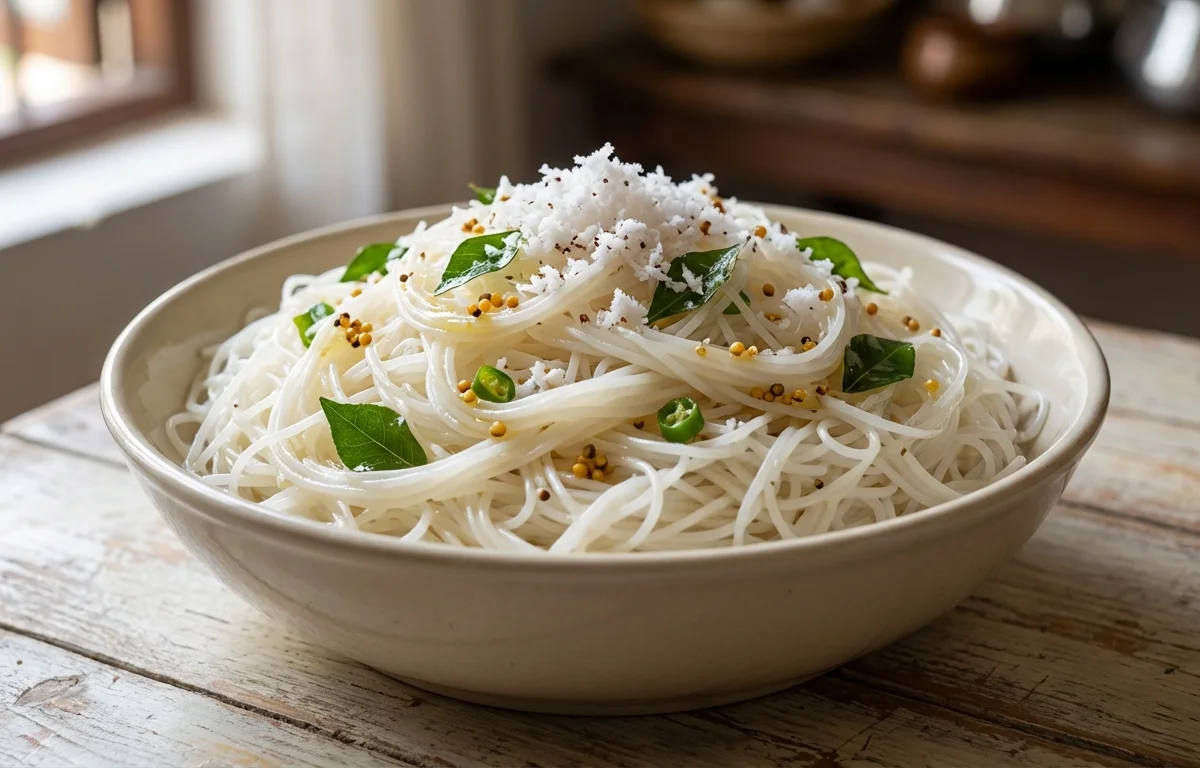
Shevai
A delicate nest of steamed rice flour noodles, light and airy. This South Indian classic is incredibly versatile, perfect with sweet coconut milk for breakfast or a savory vegetable stew for dinner.
For 4 servings
6 steps. 15 minutes total.
- 1
Step 1
- a.Prepare the Steamer
- b.Pour about 1-2 inches of water into the base of your steamer or idli cooker and bring it to a rolling boil over medium-high heat.
- c.While the water heats, lightly grease the steamer plates or idli molds with a few drops of coconut oil.
- 2
Step 2
- a.Make the Dough
- b.In a large, heatproof bowl, whisk together the idiyappam flour and salt.
- c.Carefully and slowly pour the rolling boil water into the flour mixture, stirring continuously with a wooden spoon or spatula. The mixture will be lumpy and shaggy.
- d.Continue mixing until all the flour is moistened and a rough dough forms. Add the 1 tsp of coconut oil and mix it in.
- e.Cover the bowl with a lid and let the dough rest for 5-7 minutes. This allows the flour to absorb the water and cook slightly, making it easier to knead.
- 3
Step 3
- a.Knead the Dough
- b.Once the dough has cooled enough to handle but is still quite warm, grease your hands with a little oil.
- c.Knead the dough for 3-4 minutes until it becomes smooth, soft, and pliable without any cracks.
- d.If the dough feels too dry, sprinkle a teaspoon of hot water. If it's too sticky, add a teaspoon of rice flour. The final texture should be like a soft chapati dough.
- 4
Step 4
- a.Press the Noodles
- b.Grease the inside of your shevai (idiyappam) press and the disc with fine holes.
- c.Take a portion of the warm dough, shape it into a cylinder, and place it inside the press. Do not overfill it.
- d.Press the dough out in a circular motion onto the greased steamer plates, creating small, even nests of noodles. Avoid making the nests too thick to ensure even cooking.
- 5
Step 5
- a.Steam the Shevai
- b.Carefully place the filled plates into the steamer where the water is already boiling.
- c.Cover the steamer and steam for 8-10 minutes on medium-high heat.
- d.The shevai is cooked when it appears shiny and is not sticky to the touch.
- e.Turn off the heat and let it rest for 1-2 minutes before opening the lid. This prevents them from breaking.
- 6
Step 6
- a.Serve
- b.Gently remove the shevai nests from the plates using a spatula.
- c.Serve immediately with your choice of accompaniment, such as sweetened coconut milk, vegetable kurma, or kadala curry.
What to keep in mind.
6 tips from the recipe — small details that make a real difference to the final dish.
- 1For the softest shevai, use store-bought idiyappam flour, which is specifically processed for this purpose.
- 2The water must be at a full, rolling boil when added to the flour. This is the most critical step for achieving the correct dough texture.
- 3Always knead the dough while it is still warm. A cool dough will be difficult to knead and may result in hard shevai.
- 4Keep the remaining dough covered with a damp cloth while you press and steam in batches to prevent it from drying out.
- 5Don't overcrowd the steamer plates. Leave some space between the nests for steam to circulate and cook them evenly.
- 6Shevai is also known as Idiyappam in Tamil Nadu and Kerala, and Nool Puttu in some regions.
Adapt it for your goals.
Savory Lemon Shevai
Toss the cooked shevai with a tempering of mustard seeds, urad dal, curry leaves, and green chilies. Finish with a generous squeeze of lemon juice and a garnish of fresh coriander.
Sweet Coconut ShevaiSweet Coconut Shevai
Serve warm shevai with freshly extracted, sweetened coconut milk. Flavor the coconut milk with a pinch of cardamom powder and a teaspoon of jaggery or sugar.
Ragi ShevaiRagi Shevai
For a healthier alternative, substitute 1/2 cup of rice flour with 1/2 cup of ragi (finger millet) flour. You may need to slightly adjust the amount of boiling water.
Why this is on our healthy list.
Naturally Gluten-Free
Made entirely from rice flour, Shevai is an excellent and safe staple for individuals with celiac disease or gluten sensitivity.
Light and Easy to Digest
The steaming process makes Shevai soft, light, and gentle on the stomach, making it a suitable food for all ages, from children to the elderly.
Low in Fat
As a steamed dish prepared with minimal oil, Shevai is very low in fat and contains no cholesterol, contributing to a heart-healthy diet.
Provides Sustained Energy
The complex carbohydrates from rice flour offer a steady release of energy, helping to keep you feeling full and energized for longer periods.
Frequently asked questions
One serving of Shevai (approximately 3 nests or 155g) contains around 280-320 calories, primarily from the carbohydrates in the rice flour.