
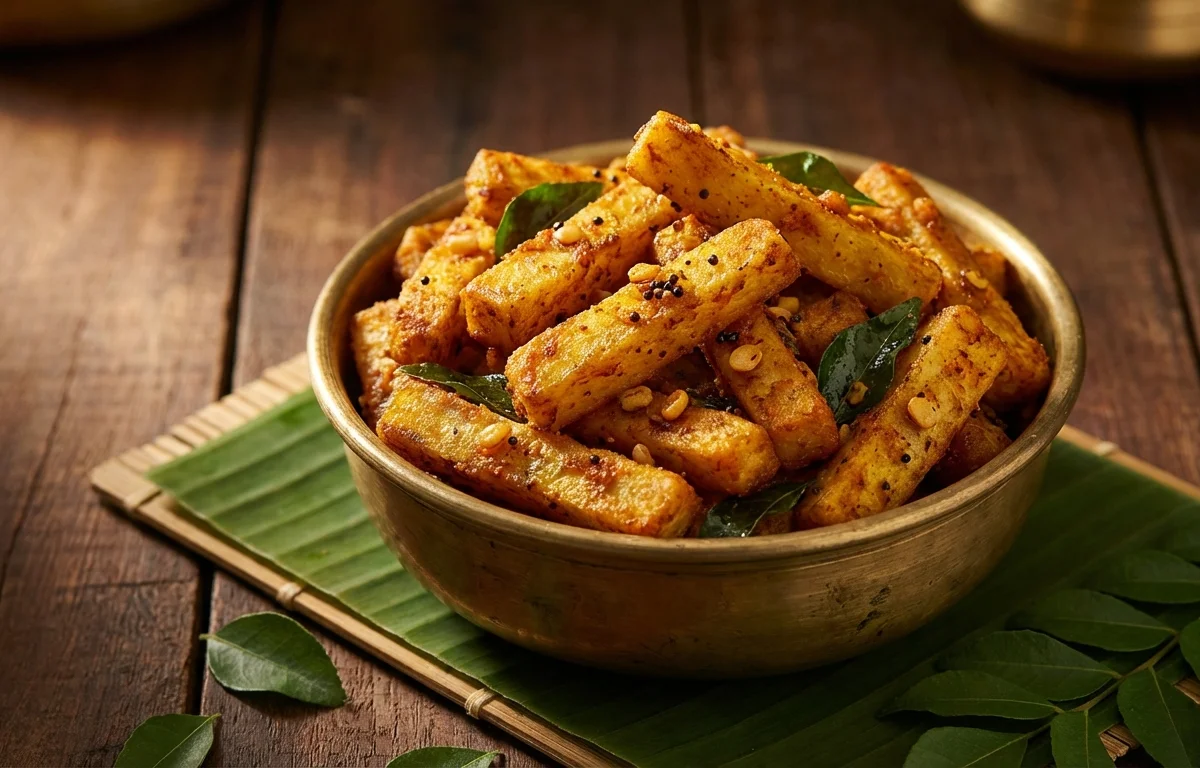
Seppankizhangu Roast
Crispy, spicy, and tangy taro root slices roasted to perfection. This popular South Indian side dish, also known as Seppankizhangu Varuval, is the perfect accompaniment for sambar, rasam, or curd rice.
For 4 servings
Pressure Cook Taro Root
- Wash the taro roots thoroughly under running water to remove all mud and dirt.
- Place the washed taro roots in a pressure cooker. Add 4 cups of water, 1 tsp of salt, and the piece of tamarind.
- Secure the lid and pressure cook on medium heat for 2 whistles, which takes about 8-10 minutes. The taro should be just fork-tender, not mushy.
- Allow the pressure to release naturally. Once safe, open the cooker, drain the hot water, and let the taro roots cool down completely.
Prepare Taro Slices
- Once the taro roots are completely cool to the touch, gently peel off the skin.
- Slice the peeled taro into uniform rounds, about 1/2-inch thick. Consistent thickness ensures even cooking.
Marinate the Taro
- In a large mixing bowl, combine the rice flour, besan, red chili powder, turmeric powder, coriander powder, hing, and the remaining 0.5 tsp of salt.
- Add the sliced taro to the bowl.
- Sprinkle 1-2 tablespoons of water over the slices, just enough to help the dry masala mixture adhere. Do not add too much water.
- Gently toss with your hands or a spatula until every slice is evenly coated with the masala. Let it marinate for at least 15 minutes.
Temper and Arrange Slices
- Heat the vegetable oil in a wide, heavy-bottomed pan or a cast-iron skillet over medium heat.
- Once the oil is hot, add the mustard seeds. When they begin to splutter, add the curry leaves and sauté for about 30 seconds until fragrant.
- Carefully arrange the marinated taro slices in a single layer in the pan. Avoid overcrowding to ensure they get crispy.
Roast to Perfection
- Reduce the heat to medium-low and let the slices roast for 15-20 minutes.
- Flip the slices gently every 4-5 minutes to ensure they cook evenly and don't stick to the pan.
- Continue roasting until the slices are a deep golden brown and crispy on both sides.
Serve
- Once crispy, remove the Seppankizhangu Roast from the pan and serve immediately.
- It pairs exceptionally well with sambar rice, rasam rice, or curd rice.
What to keep in mind.
6 tips from the recipe — small details that make a real difference to the final dish.
- 1Do not overcook the taro root; it should be fork-tender but firm, not mushy.
- 2Using a small piece of tamarind while boiling is a traditional trick that helps reduce the natural sliminess of taro.
- 3Ensure the taro is completely cool before peeling and slicing to prevent it from breaking apart.
- 4A wide, non-stick or well-seasoned cast iron pan is best to prevent sticking and achieve an even, crispy roast.
- 5Roast on a consistent medium-low flame. High heat will burn the masala coating before the taro becomes crispy.
- 6Avoid overcrowding the pan. If necessary, roast the taro in two batches to ensure every piece has enough space to crisp up.
Adapt it for your goals.
Flavor
Add 1/2 tsp of amchur (dry mango powder) along with the other spices for an extra tangy flavor.
SpiceSpice
For a different flavor profile, add 1/2 tsp of garam masala or freshly ground black pepper to the spice mix.
Healthier VersionHealthier Version
For a low-oil version, arrange the marinated slices on a baking sheet, spray with oil, and bake at 200°C (400°F) for 20-25 minutes, flipping halfway. You can also use an air fryer at 190°C (375°F) for 15-18 minutes.
GarnishGarnish
Garnish with freshly chopped cilantro or a squeeze of lemon juice just before serving for added freshness.
Why this is on our healthy list.
Rich in Dietary Fiber
Taro root is an excellent source of dietary fiber and resistant starch, which aid digestion, promote a healthy gut microbiome, and help regulate blood sugar levels.
Energy-Boosting Complex Carbs
Provides sustained energy through complex carbohydrates, making it a more fulfilling and energizing side dish compared to simple carbs.
Source of Essential Nutrients
Taro contains important vitamins and minerals, including Vitamin C, Vitamin B6, potassium, and manganese, which support immune function, nerve health, and bone strength.
Frequently asked questions
A single serving (approximately 135g) contains an estimated 280-300 calories. This is an approximation and can vary based on the type and amount of oil absorbed during cooking.