
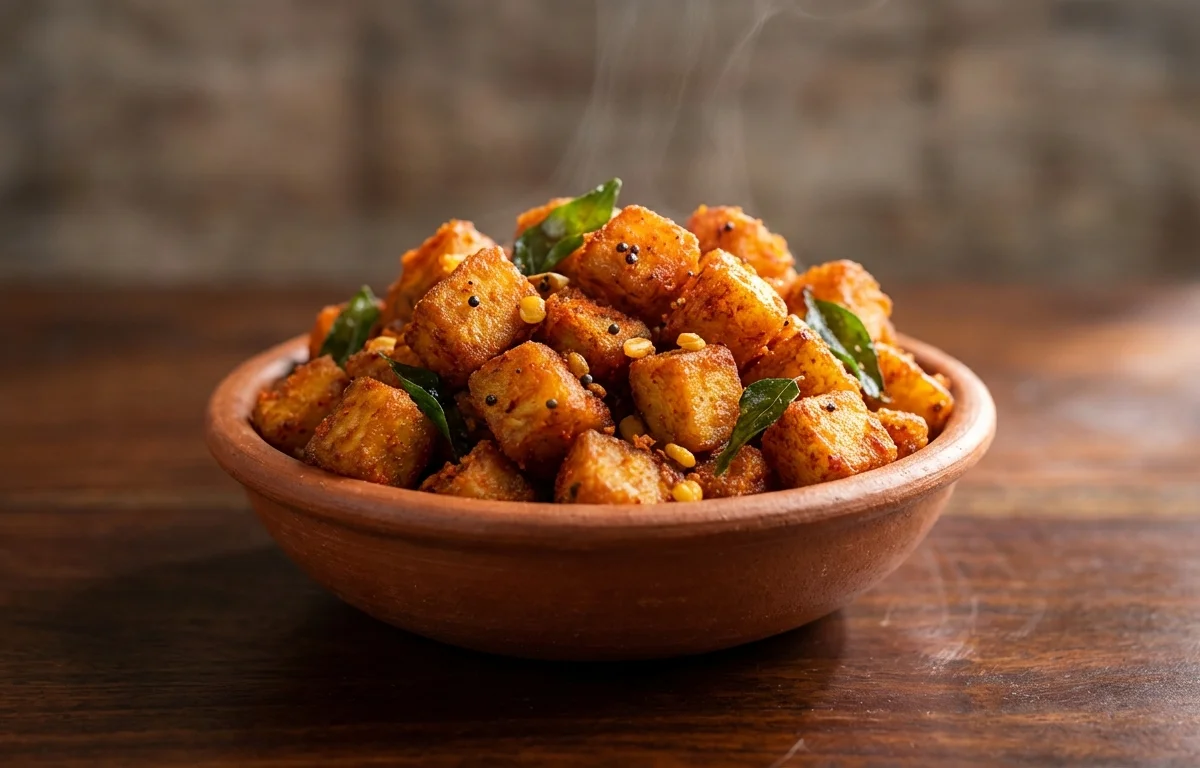
Seppankizhangu Fry
Crispy, spicy pan-fried taro root, a classic South Indian side dish. Boiled and sliced arbi is coated in a flavorful spice mix and shallow-fried until golden. The perfect accompaniment for sambar rice or rasam.
For 4 servings
Cook the Taro Root
- Wash the taro root thoroughly under running water to remove all dirt.
- Pressure Cooker Method: Place the taro root in a pressure cooker. Add 4 cups of water, 0.5 tsp salt, and 0.25 tsp turmeric powder. Cook on medium heat for 2 whistles. Allow the pressure to release naturally.
- Stovetop Method: Alternatively, place the taro in a pot with enough water to cover it, along with the salt and turmeric. Boil for 15-20 minutes until fork-tender but still firm. Do not overcook.
- Once cooked, drain the water completely and let the taro root cool down to room temperature. This step is crucial for easy peeling and slicing.
Prepare and Marinate the Taro
- Once cooled, gently peel the skin off the taro root. Slice them into 1/2-inch thick roundels.
- In a large mixing bowl, combine the sliced taro with red chili powder, coriander powder, sambar powder, the remaining 0.25 tsp turmeric powder, rice flour, besan, asafoetida, and 1 tsp salt.
- Gently toss the slices until each piece is evenly coated with the spice mixture. Be careful not to break the slices.
- Let the marinated taro rest for 10-15 minutes. This allows the spices to penetrate and adhere better.
Shallow Fry to Perfection
- Heat 4 tbsp of oil in a wide, heavy-bottomed pan or cast-iron skillet over medium-high heat.
- Once the oil is hot, add the mustard seeds. When they begin to splutter, add the curry leaves and let them sizzle for a few seconds.
- Carefully arrange the marinated taro slices in a single layer in the pan. Do not overcrowd; fry in batches if necessary.
- Fry for 5-7 minutes on one side until golden brown and crisp. Gently flip each slice and cook for another 5-7 minutes on the other side.
- Once both sides are deep golden brown and crispy, remove them from the pan and place on a plate lined with a paper towel to absorb excess oil.
Garnish and Serve
- Transfer the crispy Seppankizhangu Fry to a serving bowl.
- If using, squeeze fresh lemon juice over the top just before serving for a tangy finish.
- Serve immediately as a delicious side dish with sambar rice, rasam rice, or curd rice.
What to keep in mind.
6 tips from the recipe — small details that make a real difference to the final dish.
- 1Do not overcook the taro root; it should be firm enough to hold its shape after boiling.
- 2Cool the taro completely before peeling and slicing. This prevents it from becoming sticky and mushy.
- 3Rice flour is the secret ingredient for an extra crispy texture. Don't skip it.
- 4Fry in a single layer without overcrowding the pan to ensure every piece becomes perfectly crisp.
- 5Use a heavy-bottomed pan or cast-iron skillet for even heat distribution and superior browning.
- 6Adjust the amount of red chili powder to suit your preferred spice level.
Adapt it for your goals.
Healthier Method
For a lower-oil version, arrange the marinated slices in a single layer in an air fryer basket. Spray with a little oil and air fry at 190°C (375°F) for 15-20 minutes, flipping halfway, until golden and crisp.
Baked VersionBaked Version
Preheat your oven to 200°C (400°F). Arrange marinated slices on a baking sheet lined with parchment paper, drizzle with a little oil, and bake for 20-25 minutes, flipping once, until crispy and browned at the edges.
Spice BlendSpice Blend
Replace Sambar Powder with 1/2 tsp of Garam Masala and 1/4 tsp of Amchur (dry mango powder) for a different, North Indian-inspired flavor profile.
Why this is on our healthy list.
Rich in Dietary Fiber
Taro root is an excellent source of dietary fiber, which is crucial for digestive health. Fiber helps regulate bowel movements, prevents constipation, and promotes a healthy gut microbiome.
Supports Blood Sugar Control
Taro contains resistant starch, a type of carbohydrate that is digested slowly and doesn't cause sharp spikes in blood sugar levels. It can improve insulin sensitivity and is beneficial for blood sugar management.
Packed with Essential Nutrients
This root vegetable provides important minerals like manganese, which is vital for bone health and metabolism, and potassium, which helps regulate blood pressure and fluid balance.
Frequently asked questions
One serving (about 125g) contains approximately 180-220 calories, primarily depending on the amount of oil absorbed during the frying process.