
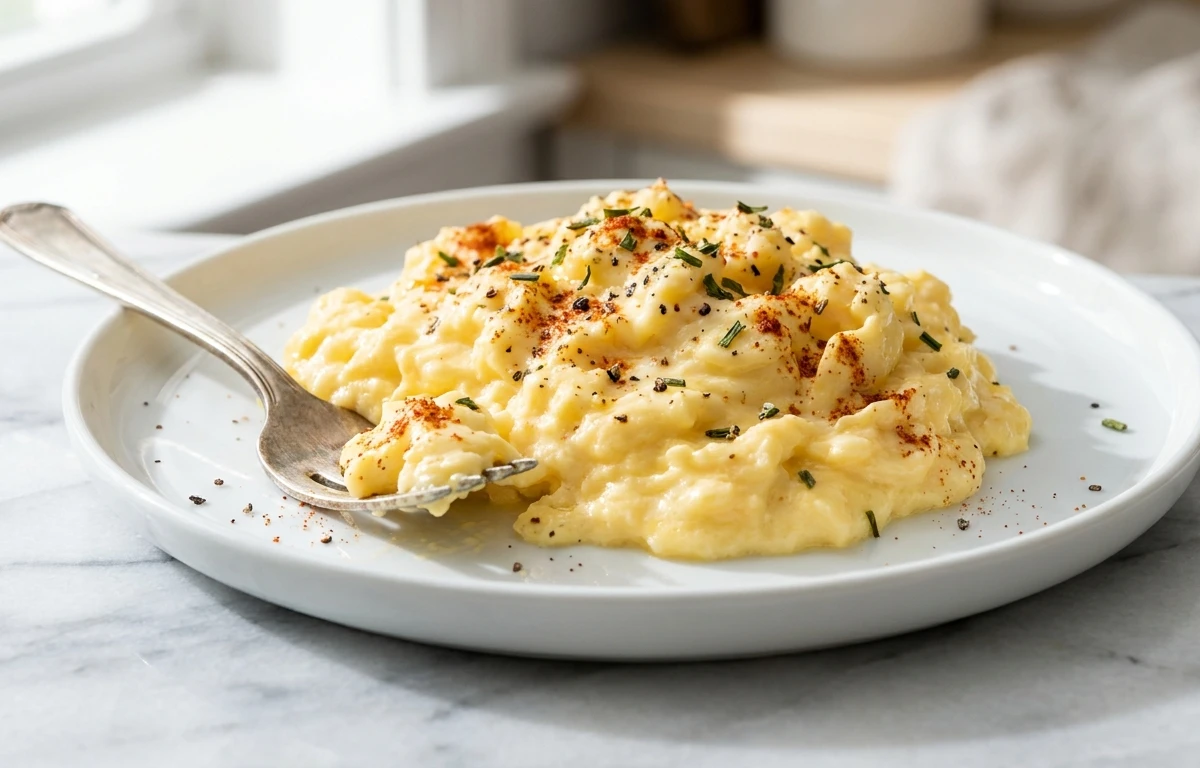
Scrambled Eggs
The quintessential breakfast classic, these scrambled eggs are wonderfully fluffy, creamy, and ready in minutes. A simple, satisfying way to start your day, perfect with a side of toast.
For 2 servings
3 steps. 5 minutes total.
- 1
Step 1
- a.Prepare the Egg Mixture
- b.In a medium bowl, crack the 4 large eggs.
- c.Add the milk, salt, and freshly ground black pepper.
- d.Whisk vigorously with a fork or whisk for about 30-45 seconds, just until the yolks and whites are fully combined and the mixture is a uniform pale yellow. Avoid over-whisking, as this can make the eggs tough.
- 2
Step 2
- a.Cook the Eggs Gently
- b.Place a non-stick skillet over medium-low heat. Add the butter and allow it to melt completely until it's foamy but not browned.
- c.Pour the egg mixture into the warm skillet. Let it sit undisturbed for 20-30 seconds, until the edges just begin to set.
- d.Using a rubber spatula, gently push the cooked eggs from the edges of the pan toward the center. Tilt the pan to allow the uncooked egg to flow into the empty spaces.
- 3
Step 3
- a.Finish and Serve
- b.Continue this gentle pushing and folding motion every 15-20 seconds. This process creates large, soft curds.
- c.When the eggs are about 90% cooked (they should still look slightly wet and glossy), remove the skillet from the heat. The residual heat will finish cooking them to perfection.
- d.Immediately transfer the eggs to a plate. Garnish with freshly chopped chives and serve right away for the best texture.
What to keep in mind.
5 tips from the recipe — small details that make a real difference to the final dish.
- 1For the creamiest eggs, use low and slow heat. High heat cooks the proteins too quickly, resulting in dry, rubbery eggs.
- 2A non-stick skillet is highly recommended to prevent sticking and ensure easy cleanup.
- 3Always remove the eggs from the heat when they are slightly underdone. They will continue to cook in the hot pan and on the plate.
- 4For extra richness, you can swirl in a teaspoon of cold butter or a tablespoon of cream cheese at the very end, off the heat.
- 5Serve immediately. Scrambled eggs are best enjoyed fresh and hot, as they can become firm as they cool.
Adapt it for your goals.
Cheesy Scrambled Eggs
Sprinkle 1/4 cup of shredded cheddar, Gruyère, or goat cheese over the eggs during the last 30 seconds of cooking. Gently fold to melt.
Herbed Scrambled EggsHerbed Scrambled Eggs
Add 1 tablespoon of mixed fresh herbs like parsley, dill, or tarragon along with the chives at the end.
Vegetable Scrambled EggsVegetable Scrambled Eggs
Before adding the eggs, sauté 1/2 cup of finely diced onions, bell peppers, mushrooms, or spinach in the butter until soft.
Spicy Scrambled EggsSpicy Scrambled Eggs
Add a pinch of red pepper flakes or a dash of your favorite hot sauce to the egg mixture before whisking.
Rich & Creamy EggsRich & Creamy Eggs
Substitute the milk with heavy cream or crème fraîche for an exceptionally rich and decadent texture.
Why this is on our healthy list.
Excellent Source of Protein
Eggs provide high-quality, complete protein that is essential for building and repairing tissues, supporting muscle health, and maintaining overall body function.
Rich in Essential Nutrients
Packed with vitamins like B12, D, and A, as well as minerals like selenium and choline, which are vital for brain health, immune function, and metabolism.
Promotes Satiety
The combination of protein and healthy fats in eggs helps you feel full and satisfied for longer, which can aid in weight management by reducing the likelihood of overeating later.
Frequently asked questions
One serving of these scrambled eggs (half of the total recipe) contains approximately 200-220 calories, depending on the exact size of the eggs and type of milk used.