
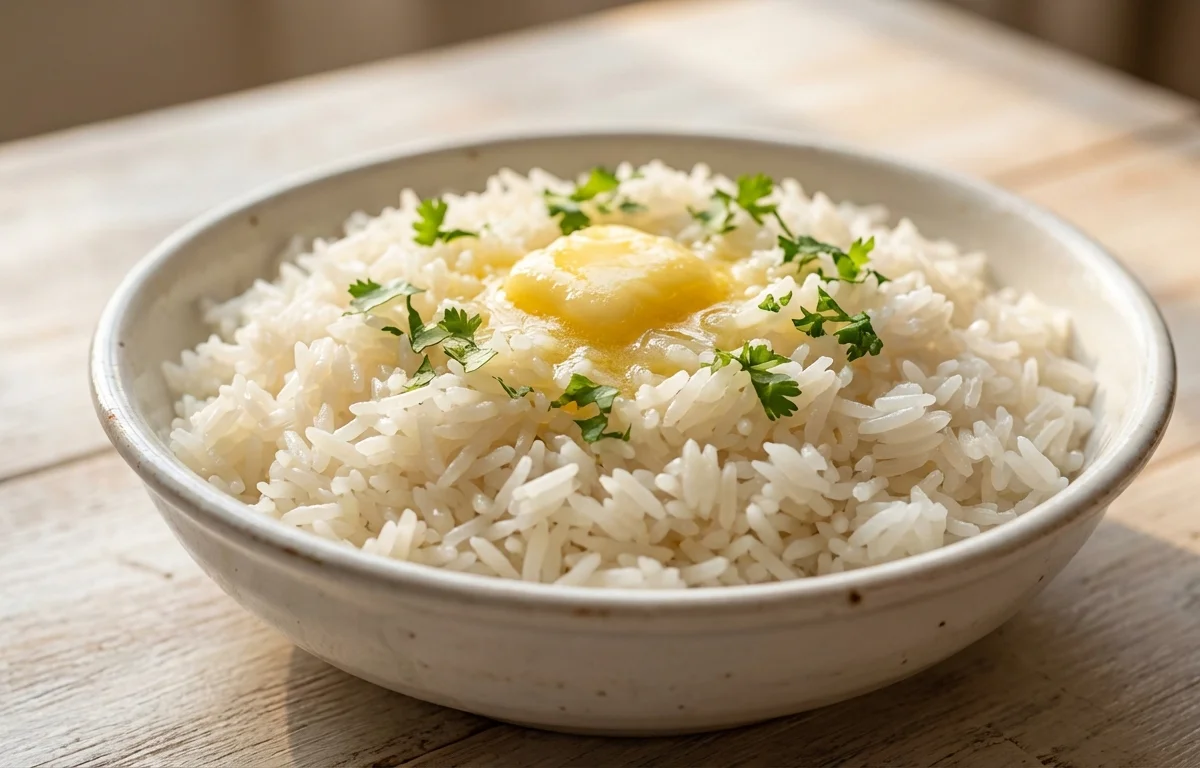
Sada Bhat
Perfectly cooked, fluffy white rice with long, separate grains. This simple recipe for Sada Bhat, or plain steamed rice, is the ideal companion for any Indian dal, sabzi, or curry. A staple in every Indian household, this foolproof method yields perfect results every time.
For 4 servings
Rinse and Soak the Rice
- Measure 1.5 cups of basmati rice into a large bowl.
- Add cool water and gently rub the grains with your fingertips. Drain the cloudy water. Repeat this process 3-4 times until the water runs mostly clear. This removes excess surface starch, which is key to fluffy, non-sticky rice.
- Cover the rinsed rice with fresh water and let it soak for at least 30 minutes. This helps the grains cook evenly and elongate beautifully.
Cook the Rice
- Drain the soaked rice completely through a fine-mesh sieve.
- Transfer the drained rice to a heavy-bottomed pot with a tight-fitting lid. Add 3 cups of fresh water, 0.5 tsp salt, and 1 tsp ghee (if using).
- Place the pot on the stove over medium-high heat and bring the water to a full boil.
- As soon as it boils, immediately reduce the heat to the lowest possible setting. Cover the pot tightly with the lid.
- Let the rice simmer gently for 15 minutes. Do not lift the lid or stir the rice during this time.
Rest and Fluff
- After 15 minutes, turn off the heat but leave the pot on the stove, still covered. Let it rest undisturbed for 10 minutes. This crucial step allows the residual steam to finish cooking the grains and helps them firm up.
- After resting, remove the lid. You will see small steam vents on the surface of the rice.
- Gently fluff the rice with a fork or a thin spatula, lifting from the bottom to the top to separate the grains.
- Serve hot as a perfect accompaniment to dals, curries, and sabzis.
What to keep in mind.
6 tips from the recipe — small details that make a real difference to the final dish.
- 1The 1:2 rice-to-water ratio (by volume) is perfect for the stovetop absorption method with basmati rice.
- 2Using a heavy-bottomed pot prevents the rice at the bottom from burning and ensures even heat distribution.
- 3Never skip the resting step. It's as important as the cooking time for achieving perfectly cooked, separate grains.
- 4For a fragrant touch, add whole spices like 1 bay leaf, 2-3 cloves, or 1-2 green cardamom pods to the water before boiling.
- 5If your rice turns out mushy, you may have used too much water or cooked it for too long. If it's hard, you may need a little more water or a longer cooking time. Adjust slightly for your specific stove and pot.
- 6To cook in a pressure cooker, use a 1:1.5 ratio of rice to water. Cook on high pressure for 2 whistles (about 5-6 minutes), then let the pressure release naturally.
Adapt it for your goals.
Flavor Infusion
Add whole spices like a bay leaf, a few cloves, a stick of cinnamon, or a green cardamom pod to the water for a subtly fragrant rice, perfect for special occasions.
Jeera RiceJeera Rice
Temper 1 tsp of cumin seeds (jeera) in 1 tbsp of ghee in the pot before adding the soaked, drained rice. Sauté for 30 seconds, then add the rice and water and cook as directed.
Turmeric RiceTurmeric Rice
Add 1/4 tsp of turmeric powder along with the salt and water for a beautiful yellow color and mild, earthy flavor.
Why this is on our healthy list.
Provides Quick Energy
As a rich source of carbohydrates, white rice is quickly converted into energy by the body, making it an excellent fuel source for daily activities.
Easy to Digest
Sada Bhat is low in fiber and fat, making it very gentle on the digestive system. It's often recommended during recovery from illness or for those with sensitive stomachs.
Naturally Gluten-Free
Rice is a naturally gluten-free grain, making it a safe and essential staple for individuals with celiac disease or gluten sensitivity.
Frequently asked questions
One serving of Sada Bhat (approximately 1 cup or 225g cooked) contains about 280-300 calories, primarily from carbohydrates.