
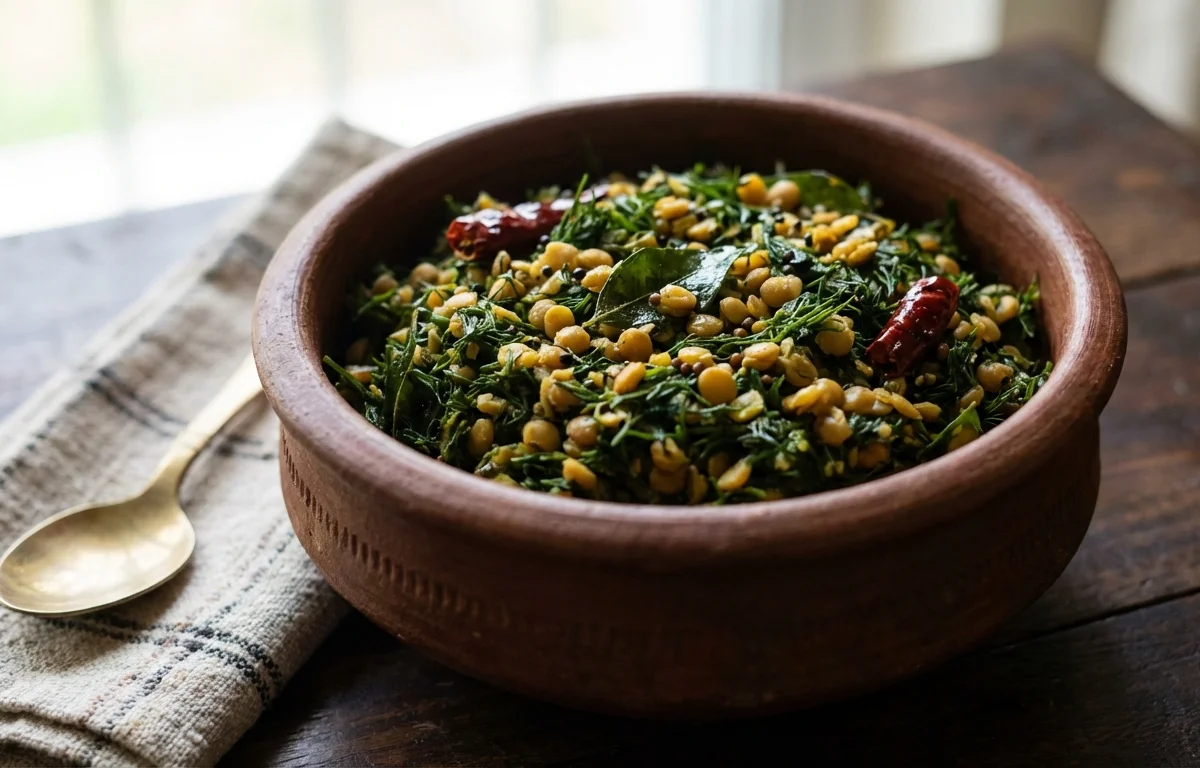
Sabsige Soppu Palya
A simple and aromatic Karnataka-style stir-fry made with fresh dill leaves, lentils, and coconut. This healthy side dish comes together quickly and pairs perfectly with rice and sambar.
For 4 servings
7 steps. 15 minutes total.
- 1
Step 1
- a.Cook the Dal: In a pressure cooker, combine the rinsed toor dal with 3/4 cup of water and a pinch of turmeric. Cook for 2-3 whistles until the dal is soft but still holds its shape. Once the pressure releases, lightly mash the dal and set it aside. If cooking in a pot, simmer until soft, which takes about 20-25 minutes.
- 2
Step 2
- a.Prepare the Dill: While the dal cooks, thoroughly wash the sabsige soppu (dill leaves) in a large bowl of water to remove all grit. Drain completely and chop finely. Finely chop the onion as well.
- 3
Step 3
- a.Make the Tempering (Oggarane): Heat coconut oil in a kadai or heavy-bottomed pan over medium heat. Add the mustard seeds and wait for them to splutter (about 30 seconds). Then, add the urad dal and chana dal, and sauté for 1-2 minutes until they turn light golden. Add the broken dried red chilies, curry leaves, and hing. Sauté for another 20 seconds until fragrant.
- 4
Step 4
- a.Sauté Aromatics and Dill: Add the finely chopped onion to the pan and sauté for 3-4 minutes until it becomes soft and translucent. Add the chopped dill leaves, remaining turmeric powder, and salt. Mix well. The leaves will begin to wilt.
- 5
Step 5
- a.Cook the Palya: Cover the pan and cook on low to medium-low heat for 5-7 minutes. Stir occasionally. The moisture from the leaves is usually sufficient, so there's no need to add extra water.
- 6
Step 6
- a.Combine and Finish: Uncover the pan and add the cooked toor dal, fresh grated coconut, and optional jaggery. Mix gently to combine everything. Cook uncovered for another 2-3 minutes, allowing the flavors to meld and any excess moisture to evaporate.
- 7
Final Touches: Turn off the heat and stir in the fresh lemon juice
- a.Taste and adjust salt if needed. Serve the Sabsige Soppu Palya hot with chapati, roti, or as a side dish with rice and sambar.
What to keep in mind.
6 tips from the recipe — small details that make a real difference to the final dish.
- 1Ensure the dill leaves are washed meticulously, as they can trap a lot of dirt.
- 2Do not overcook the dill leaves, as they can become bitter and lose their vibrant green color and fresh aroma.
- 3For a different texture, you can use cooked moong dal or masoor dal instead of toor dal.
- 4Adding a small amount of jaggery is a traditional touch that helps balance the distinct, slightly pungent flavor of the dill.
- 5Always add lemon juice after turning off the flame to preserve its fresh flavor and Vitamin C content.
- 6If fresh coconut is unavailable, you can use frozen (thawed) or desiccated coconut. If using desiccated, soak it in 2 tablespoons of warm water for 10 minutes before adding.
Adapt it for your goals.
Lentil Swap
Substitute toor dal with an equal amount of cooked moong dal for a lighter texture and quicker cooking time.
Add VegetablesAdd Vegetables
Incorporate 1/4 cup of finely chopped carrots or green peas along with the onions for added nutrition and color.
No Onion VersionNo Onion Version
For a Sattvic or Jain-friendly version, simply omit the onion. The dish will still be flavorful from the tempering and dill.
Spicier VersionSpicier Version
Add 1-2 finely chopped green chilies along with the onions for an extra kick of heat.
Why this is on our healthy list.
Rich in Dietary Fiber
The combination of dill leaves, lentils, and coconut provides a significant amount of dietary fiber, which aids digestion, promotes satiety, and helps maintain stable blood sugar levels.
Good Source of Plant-Based Protein
Toor dal is an excellent source of plant-based protein, essential for muscle repair, growth, and overall body function, making this dish a great addition to vegetarian and vegan diets.
Aids Digestion
Dill has been traditionally used as a carminative, helping to relieve gas and bloating. The fiber content further supports a healthy digestive system.
Packed with Vitamins and Minerals
Dill leaves are a powerhouse of nutrients, including Vitamin A for vision, Vitamin C for immunity, and essential minerals like iron and manganese.
Frequently asked questions
Sabsige Soppu Palya is a traditional South Indian, particularly from Karnataka, dry stir-fry dish. 'Sabsige Soppu' means dill leaves in Kannada, and 'Palya' refers to a stir-fried vegetable dish, similar to a poriyal or thoran.