
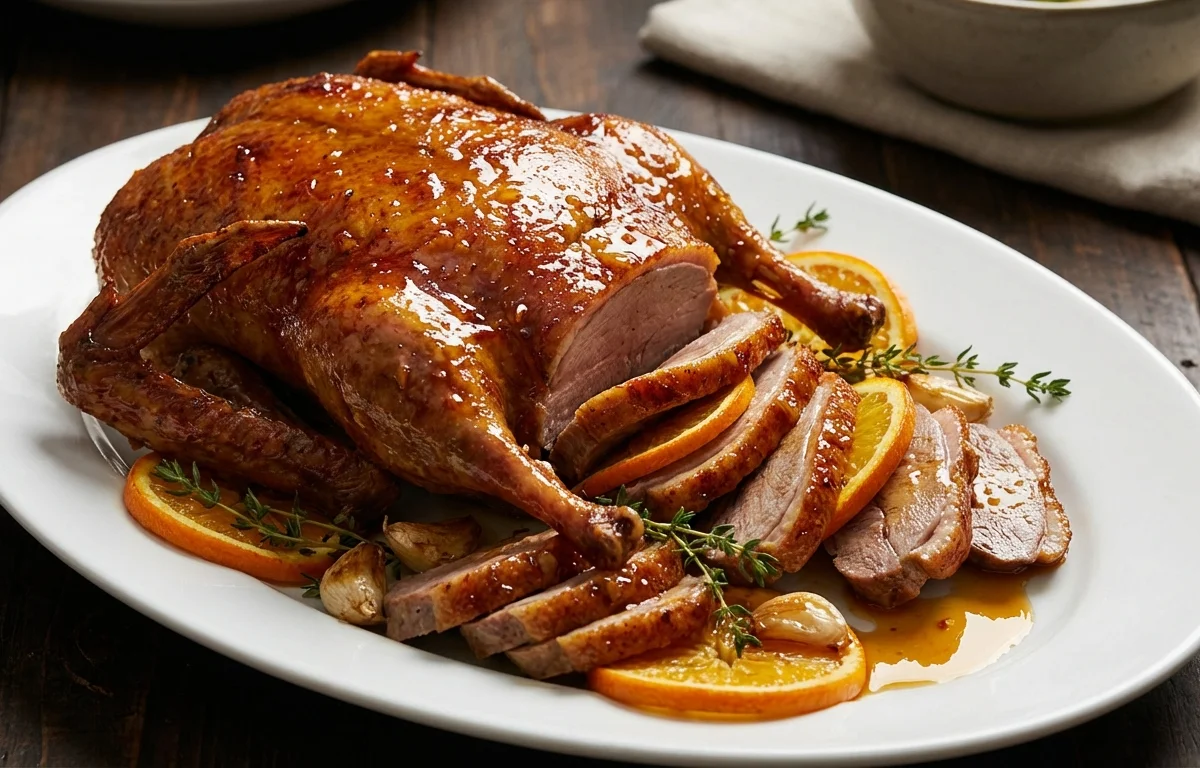
Roast Duck with Orange Glaze
Achieve incredibly crispy skin and succulent, flavorful meat with this classic roast duck recipe. A sweet and tangy orange glaze makes this a showstopping centerpiece for any special occasion or holiday meal.
For 4 servings
6 steps. 170 minutes total.
- 1
Step 1
- a.Prepare the Oven and Duck
- b.Position a rack in the lower third of your oven and preheat to 200°C (400°F). Place a wire rack inside a large roasting pan.
- c.Remove giblets and the neck from the duck cavity (save for stock). Trim any large flaps of excess fat from the neck and cavity opening.
- d.Thoroughly pat the duck dry inside and out with paper towels. This step is critical for achieving crispy skin.
- e.Using a sharp knife, score the duck skin over the breast and thighs in a diamond pattern, about 1/2-inch apart. Be careful to slice through the skin and fat layer but not into the meat.
- f.Prick the skin all over with a fork or skewer, especially in the fattiest parts, avoiding the meat.
- 2
Step 2
- a.Season and Stuff the Duck
- b.Season the duck generously all over and inside the cavity with the coarse sea salt and freshly ground black pepper.
- c.Quarter the orange. Stuff the cavity with the orange quarters, smashed garlic cloves, and fresh thyme sprigs.
- 3
Step 3
- a.Roast the Duck
- b.Place the duck breast-side up on the wire rack in the roasting pan.
- c.Roast for 30 minutes at 200°C (400°F). This initial high heat helps to render the fat quickly.
- d.After 30 minutes, reduce the oven temperature to 175°C (350°F).
- e.Continue to roast for another 2 hours. Every 30 minutes, carefully remove the pan from the oven, prick the skin again to release more fat, and baste the duck with the rendered fat from the bottom of the pan.
- 4
Step 4
- a.Prepare the Orange Glaze
- b.While the duck is roasting, prepare the glaze. In a small saucepan, combine the orange juice, honey, soy sauce, orange zest, and Grand Marnier (if using).
- c.Bring the mixture to a simmer over medium heat.
- d.Cook for 5-7 minutes, stirring occasionally, until the glaze has thickened enough to coat the back of a spoon. Set aside.
- 5
Step 5
- a.Glaze and Finish Roasting
- b.After the duck has roasted for a total of 2.5 hours, check the internal temperature. It should be approaching the final temperature.
- c.Carefully drain or spoon out most of the rendered fat from the roasting pan (save it for later use).
- d.Brush the duck generously all over with the orange glaze.
- e.Return the duck to the oven and roast for a final 15-20 minutes, or until the glaze is caramelized and bubbly, and an instant-read thermometer inserted into the thickest part of the thigh (not touching bone) registers 80°C (175°F).
- 6
Step 6
- a.Rest and Carve
- b.Carefully transfer the roasted duck to a large cutting board.
- c.Tent it loosely with aluminum foil and let it rest for 15-20 minutes. This allows the juices to redistribute, ensuring moist, tender meat.
- d.Carve the duck and serve immediately, drizzling with any remaining glaze or pan juices.
What to keep in mind.
6 tips from the recipe — small details that make a real difference to the final dish.
- 1For extra crispy skin, leave the seasoned duck uncovered in the refrigerator overnight before roasting. This helps to dry out the skin.
- 2Don't skip scoring the skin. It's the most important step for rendering the thick layer of fat underneath.
- 3Save the rendered duck fat! It's liquid gold for roasting potatoes, vegetables, or making confit.
- 4Resting the duck is not optional. Carving it too soon will result in dry meat as all the juices will run out.
- 5Use a meat thermometer for perfect results. Duck is safe to eat at 74°C (165°F), but cooking the thigh to 80°C (175°F) ensures the connective tissue breaks down for more tender meat.
- 6Watch the glaze carefully in the final minutes of cooking to ensure it caramelizes without burning.
Adapt it for your goals.
Citrus
Substitute the orange with blood oranges or clementines for a slightly different flavor profile in the glaze and stuffing.
HerbsHerbs
Use fresh rosemary sprigs instead of or in addition to thyme inside the duck cavity for a more woodsy, aromatic flavor.
GlazeGlaze
Create a different fruit glaze using cherry preserves, plum sauce, or pomegranate molasses instead of the orange juice and honey base.
SpicesSpices
Add a pinch of Chinese five-spice powder or ground star anise to the salt and pepper rub for a warm, spiced flavor.
Why this is on our healthy list.
Rich Source of Protein
Duck is an excellent source of high-quality protein, which is essential for building and repairing tissues, supporting muscle growth, and maintaining overall body function.
Packed with Minerals
Provides significant amounts of iron, vital for red blood cell production and preventing anemia, as well as selenium, a powerful antioxidant that supports immune function and thyroid health.
Source of B Vitamins
Duck meat is a good source of B vitamins, particularly niacin (B3) and pyridoxine (B6), which are crucial for converting food into energy and supporting nervous system health.
Frequently asked questions
A single serving of this Roast Duck with Orange Glaze (approximately 315g) contains an estimated 850-950 calories. The exact number can vary based on the duck's fat content and the amount of glaze absorbed.