
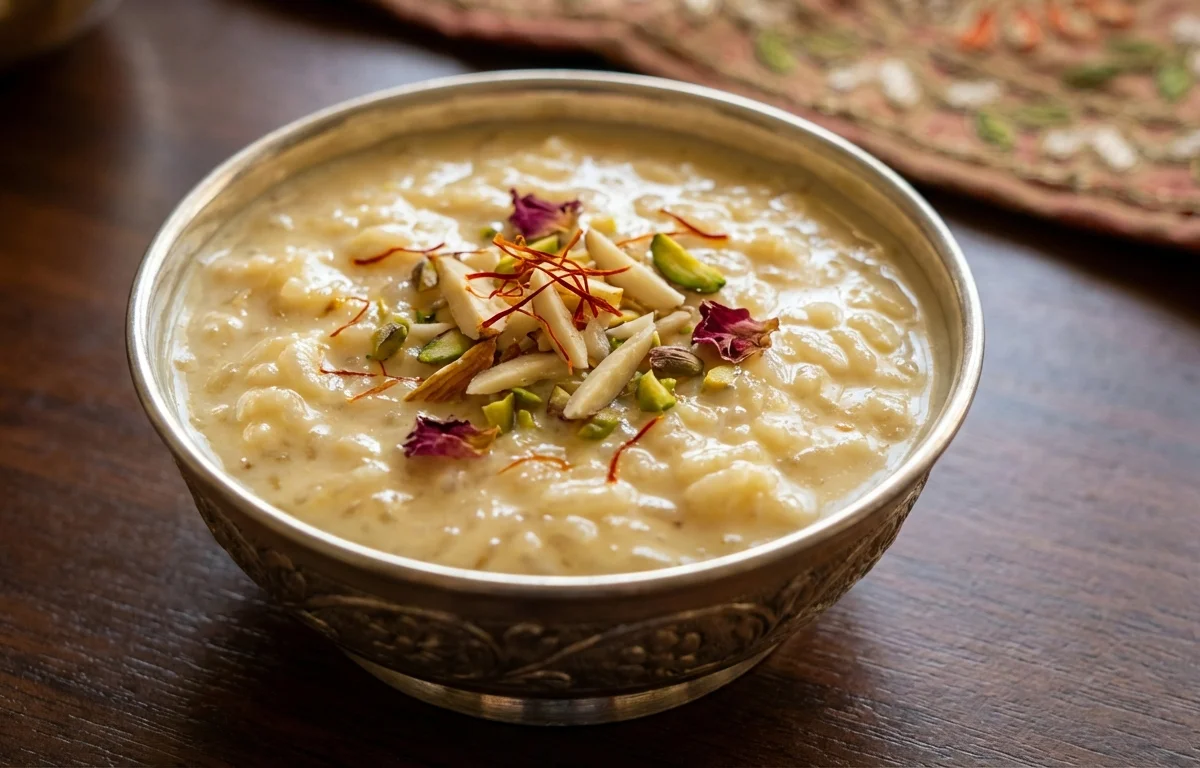
Rice Kheer
A classic Indian dessert, this creamy rice pudding is slow-cooked with milk until thick and luscious. Flavored with aromatic cardamom, saffron, and studded with nuts, it's pure comfort in a bowl.
For 4 servings
5 steps. 50 minutes total.
- 1
Step 1
- a.Prepare the Rice and Saffron
- b.Rinse the basmati rice under cold running water until the water is clear. Soak the rice in water for at least 30 minutes, then drain it completely.
- c.In a small bowl, take 2 tablespoons of warm milk from the 1 liter and add the saffron strands to it. Let it soak to release its color and aroma.
- 2
Step 2
- a.Cook the Kheer
- b.Pour the remaining milk into a heavy-bottomed pan or pot and bring it to a boil over medium heat.
- c.Once the milk boils, add the drained rice. Reduce the heat to low and let it simmer.
- d.Cook for about 40-45 minutes, stirring every 5-7 minutes to prevent the rice and milk from sticking to the bottom. Scrape the sides of the pan regularly.
- e.Continue simmering until the rice is completely cooked and soft, and the milk has reduced and thickened to a creamy consistency.
- 3
Step 3
- a.Add Sweeteners and Aromatics
- b.Once the kheer has thickened, stir in the sugar and the crushed cardamom powder.
- c.Add the saffron-infused milk to the pot.
- d.Cook for another 5-7 minutes, stirring continuously, until the sugar has completely dissolved and the kheer is fragrant.
- 4
Step 4
- a.Add Nuts and Finish
- b.Stir in most of the slivered almonds and chopped pistachios, reserving a small amount for garnish.
- c.Turn off the heat. If using, stir in the rose water for a final touch of fragrance.
- d.Let the kheer rest for about 10 minutes. It will continue to thicken as it cools.
- 5
Step 5
- a.Garnish and Serve
- b.Pour the kheer into individual serving bowls.
- c.Garnish with the reserved almonds, pistachios, and a few extra strands of saffron.
- d.Serve warm for a comforting treat, or chill in the refrigerator for at least 2 hours to serve cold.
What to keep in mind.
6 tips from the recipe — small details that make a real difference to the final dish.
- 1Use full-fat milk for the creamiest texture. Low-fat milk will result in a thinner kheer.
- 2A heavy-bottomed pan is essential to prevent the milk from scorching on the bottom.
- 3Stir frequently, scraping the bottom and sides of the pan, especially as the kheer thickens.
- 4For a richer flavor, you can lightly toast the nuts in a little ghee before adding them.
- 5Kheer thickens significantly upon cooling. If it becomes too thick, you can stir in a splash of warm milk to reach your desired consistency.
- 6Soaking the rice helps it cook faster and results in a creamier texture.
Adapt it for your goals.
Vegan Kheer
Replace dairy milk with full-fat coconut milk or a combination of almond and cashew milk for a rich, plant-based version.
Jaggery Kheer (Gud ki Kheer)Jaggery Kheer (Gud ki Kheer)
Substitute sugar with grated jaggery. Turn off the heat, let the kheer cool slightly, and then stir in the jaggery to prevent the milk from curdling.
Fruit KheerFruit Kheer
Garnish with fresh fruits like chopped mango, pomegranate arils, or sliced bananas just before serving.
Different GrainsDifferent Grains
Make this dessert with other grains like broken wheat (dalia), sabudana (tapioca pearls), or millets for a different texture and nutritional profile.
Why this is on our healthy list.
Source of Calcium
The primary ingredient, milk, is an excellent source of calcium, which is vital for maintaining strong bones and teeth.
Provides Quick Energy
The combination of rice and sugar provides a quick source of carbohydrates, making it an effective energy booster after a meal.
Aids Digestion
Cardamom, a key aromatic spice in kheer, is traditionally known to help with digestion and can have a soothing effect on the stomach.
Rich in Antioxidants
Saffron and nuts like almonds and pistachios contain powerful antioxidants that help protect the body's cells from damage.
Frequently asked questions
A typical serving of Rice Kheer (about 1 cup or 250g) contains approximately 350-450 calories, depending on the amount of sugar and fat in the milk used.