
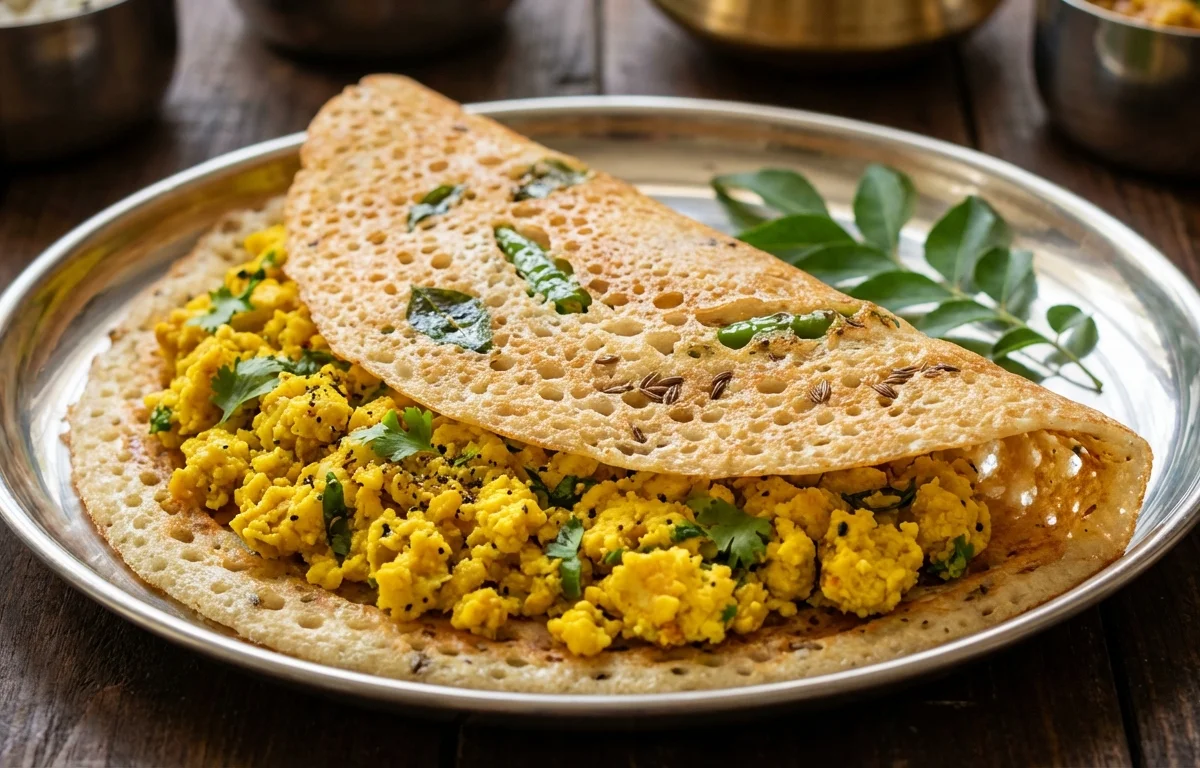
Rava Dosa with Egg Podimas
A delightful twist on a classic, this recipe combines the crispy, lace-like texture of Rava Dosa with a soft, savory spiced egg scramble. It's a protein-packed and incredibly satisfying meal, perfect for a special breakfast or a light dinner.
For 4 servings
Prepare the Rava Dosa Batter
- In a large mixing bowl, combine 1 cup rava, 1 cup rice flour, and 0.5 cup maida. Whisk to mix the flours evenly.
- Add 0.25 cup curd, half of the finely chopped onion, green chillies, grated ginger, cumin seeds, crushed peppercorns, curry leaves, coriander leaves, and 1.5 tsp of salt.
- Gradually pour in about 4 cups of water, whisking continuously to prevent lumps. The batter should be very thin and flowing, similar to the consistency of thin buttermilk.
- Cover the bowl and let the batter rest for at least 20-30 minutes. This crucial step allows the rava to absorb water and soften, which is key for a crispy dosa.
Make the Egg Podimas (Scramble)
- While the dosa batter is resting, prepare the egg filling. Crack 4 eggs into a separate bowl.
- Add 0.25 tsp turmeric powder, 0.5 tsp black pepper powder, and 0.5 tsp salt to the eggs. Whisk vigorously until the mixture is light and frothy.
- Heat 2 tbsp of oil in a non-stick pan over medium heat. Add the remaining half of the chopped onion and sauté for 2-3 minutes until soft and translucent.
- Pour the whisked egg mixture into the pan. Allow it to cook undisturbed for about 30-45 seconds, until the edges begin to set.
- Using a spatula, gently push the cooked eggs from the edges toward the center, breaking them into soft, large curds. Continue cooking for another 2-3 minutes until the eggs are just cooked through but still moist. Avoid overcooking to keep the scramble tender.
- Remove the pan from the heat and set the egg podimas aside.
Cook the Rava Dosa
- After the resting period, check the batter. It will have thickened as the rava absorbed water. Add another 0.5 to 1 cup of water to return it to its original thin, watery consistency. Always stir the batter well from the bottom before making each dosa, as the solids settle quickly.
- Heat a non-stick or well-seasoned cast-iron tawa (griddle) over medium-high heat. The tawa must be very hot. Test it by sprinkling a few drops of water; they should sizzle and evaporate instantly.
- Lightly grease the hot tawa with a few drops of oil.
- Stir the batter again, then take a full ladle. From a height of 8-10 inches, pour the batter onto the tawa, starting from the outer edges and moving inwards in a circular motion to create a lacy, net-like pattern. Fill any very large gaps with a little more batter, but do not try to spread it like a regular dosa.
- Drizzle 1-2 tsp of oil around the edges and over the surface of the dosa.
- Cook on medium heat for 2-3 minutes. You will see the top surface become dry and the bottom turn a beautiful golden brown. The edges will start to crisp up and lift from the tawa. Rava dosa is typically cooked only on one side.
- Once crisp, place 2-3 tablespoons of the prepared egg podimas onto one half of the dosa.
Fold and Serve
- Gently fold the empty half of the dosa over the egg filling.
- Using a flat spatula, carefully lift the dosa from the tawa.
- Serve immediately with coconut chutney and sambar for a complete meal.
- Repeat the process for the remaining batter, remembering to stir the batter and grease the tawa before each dosa.
What to keep in mind.
6 tips from the recipe — small details that make a real difference to the final dish.
- 1For the crispiest dosa, ensure your batter is very thin and watery. Don't be afraid to add more water if it thickens.
- 2A very hot tawa is non-negotiable for a lacy texture. If the tawa isn't hot enough, the dosa will be soft and thick.
- 3Always stir the batter from the bottom up before pouring each dosa, as the rava and flours settle quickly.
- 4Pour the batter from a height to help create the characteristic holes and net-like pattern.
- 5Be patient while the dosa cooks. Rushing and trying to lift it before it's crisp will cause it to break.
- 6Using a well-seasoned cast-iron tawa yields the best flavor and crispiness.
Adapt it for your goals.
Vegan
Replace the eggs with a tofu scramble (crumbled tofu sautéed with onions, turmeric, and spices) and use a plant-based yogurt or skip the curd in the batter.
SpicierSpicier
Add 1/2 tsp of red chilli powder to the egg mixture and increase the number of green chillies in the dosa batter.
With VegetablesWith Vegetables
Add 1/4 cup of finely grated carrots or chopped onions directly into the dosa batter for extra flavor and nutrition.
Gluten FreeGluten-Free
To make it gluten-free, omit the maida (all-purpose flour) and replace it with an equal amount of rice flour. The texture will be slightly different but still delicious.
Why this is on our healthy list.
Excellent Source of Protein
The egg podimas filling makes this dish rich in high-quality protein, which is essential for muscle repair, growth, and keeping you feeling full and satisfied.
Provides Sustained Energy
Rava (semolina) and rice flour are good sources of complex carbohydrates, which provide a steady release of energy to keep you active throughout the day.
Rich in Minerals
This dish contains various spices like cumin and pepper, as well as ginger, which are known for their digestive benefits and are sources of essential minerals like iron and manganese.
Frequently asked questions
The most common reasons are a thick batter or a tawa that isn't hot enough. The batter must be very thin and watery, and the tawa should be on medium-high heat so that water sizzles on contact. Also, allow it to cook fully until the edges lift on their own.