
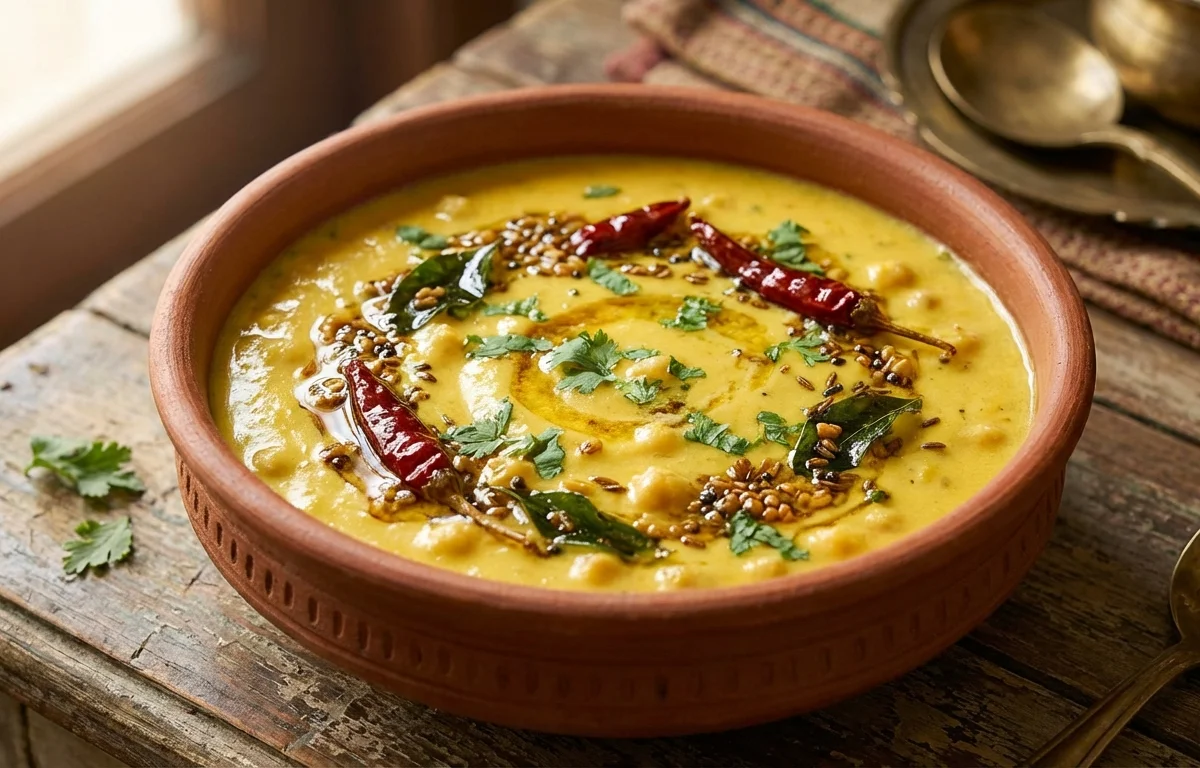
Rajasthani Kadhi
A light and tangy yogurt-based curry from Rajasthan, made with chickpea flour and a flavorful tempering of aromatic spices. This comforting dish is quick to make and pairs perfectly with steamed rice or bajra roti.
For 4 servings
4 steps. 25 minutes total.
- 1
Step 1
- a.Prepare the Kadhi Batter
- b.In a large mixing bowl, add the besan and curd. Whisk vigorously for 2-3 minutes until you have a completely smooth, lump-free paste.
- c.Slowly pour in the water while continuing to whisk. This gradual addition ensures the batter remains smooth.
- d.Once all the water is incorporated, stir in the turmeric powder, red chili powder, ginger paste, and salt. Mix well to combine.
- 2
Step 2
- a.Cook the Kadhi
- b.Pour the prepared batter into a heavy-bottomed pot or kadai.
- c.Place the pot on medium heat. Stir continuously and bring the mixture to a rolling boil. This step is crucial and takes about 5-7 minutes; do not stop stirring to prevent the curd from splitting.
- d.Once it boils, reduce the heat to low and let it simmer gently for 15-20 minutes. Stir occasionally to prevent it from sticking.
- e.The kadhi will thicken slightly, and the raw aroma of besan will be gone.
- 3
Step 3
- a.Prepare the Tempering (Tadka)
- b.While the kadhi is simmering, heat ghee in a small tadka pan over medium heat.
- c.Once the ghee is hot, add the mustard seeds and cloves. Wait for the mustard seeds to splutter completely.
- d.Add the cumin seeds and fenugreek seeds. Sauté for about 30 seconds until they become fragrant.
- e.Add the hing, broken dried red chilies, and curry leaves. Be careful as the curry leaves will sizzle. Sauté for another 15-20 seconds.
- 4
Step 4
- a.Combine and Serve
- b.Carefully pour the hot, sizzling tempering over the simmering kadhi. Mix it in gently.
- c.Let the kadhi cook for another 1-2 minutes to allow the flavors to meld.
- d.Turn off the heat. Garnish with freshly chopped coriander leaves.
- e.Serve hot with steamed rice, jeera rice, or bajra roti.
What to keep in mind.
5 tips from the recipe — small details that make a real difference to the final dish.
- 1For the best tangy flavor, use curd that is a day or two old and has been left at room temperature for a few hours to sour.
- 2The most critical step is to stir the kadhi continuously until it comes to a boil. This prevents the yogurt from curdling and ensures a smooth texture.
- 3Simmering the kadhi for at least 15 minutes is essential to fully cook the besan and develop a deep flavor.
- 4The consistency of Rajasthani kadhi is traditionally thin. However, if you prefer it thicker, you can either reduce the water slightly or simmer it for a longer time.
- 5Kadhi thickens as it cools. When reheating, add a splash of hot water to adjust it to your desired consistency.
Adapt it for your goals.
Pakodi Kadhi
Add fried besan dumplings (pakodis) to the simmering kadhi during the last 5 minutes of cooking. Let them soak up the flavors before serving.
Lehsuni (Garlic) TadkaLehsuni (Garlic) Tadka
For a pungent flavor, add 2-3 cloves of finely chopped garlic to the tempering after the cumin seeds and sauté until golden.
Spicier VersionSpicier Version
Increase the red chili powder to 1 tsp or add 1-2 slit green chilies to the kadhi while it simmers for extra heat.
Why this is on our healthy list.
Promotes Gut Health
The curd (yogurt) base is rich in probiotics, which are beneficial bacteria that support a healthy digestive system and improve gut flora.
Good Source of Protein
Both besan (chickpea flour) and curd contribute to the protein content, making it a nutritious option for vegetarians to support muscle maintenance and satiety.
Aids Digestion
Spices like hing (asafoetida), ginger, and cumin seeds are traditionally used in Ayurveda to improve digestion, reduce bloating, and alleviate gas.
Frequently asked questions
The key is to whisk the curd and besan mixture until perfectly smooth before heating. Then, stir it continuously on medium heat until it comes to a full boil. Do not stop stirring during this initial phase.