
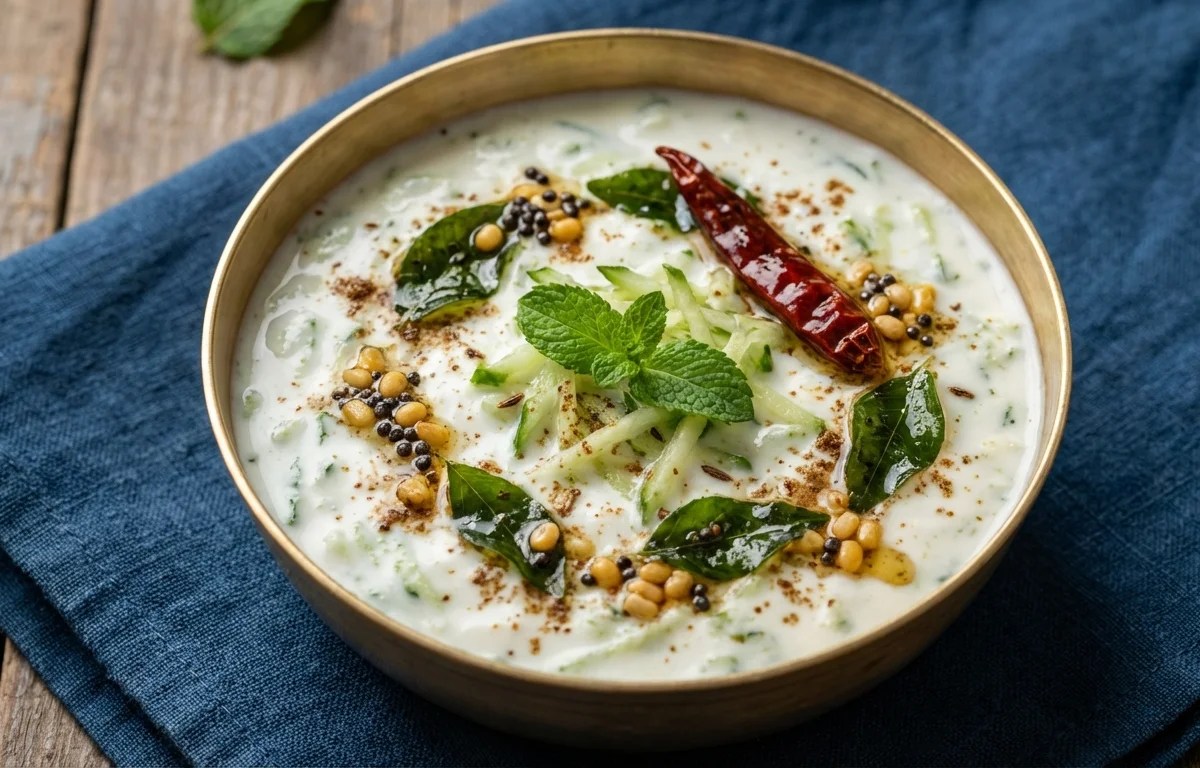
Raita
A refreshing and creamy dairy-free raita made with plant-based yogurt, crisp cucumber, and fresh mint. This authentic vegan version, finished with a fragrant tempering (tadka), is the perfect cooling side dish for spicy Indian meals and is ready in just 20 minutes.
For 4 servings
Prepare the Raita Base
- Wash, peel, and grate the medium cucumber. Place the grated cucumber in a clean cloth or between your palms and squeeze out as much excess water as possible. This prevents the raita from becoming watery.
- In a medium-sized bowl, whisk the unsweetened vegan yogurt until it is smooth and creamy.
- Add the squeezed cucumber, finely chopped mint leaves, and finely chopped green chili (if using) to the yogurt.
- Stir in the roasted cumin powder, kala namak, and regular salt. Mix everything thoroughly until well combined.
- Cover the bowl and place it in the refrigerator to chill for at least 15-20 minutes. This allows the flavors to meld together.
Prepare the Tempering (Tadka)
- While the raita is chilling, prepare the tempering. Heat the coconut oil in a small pan (tadka pan) over medium heat.
- Once the oil is hot, add the mustard seeds. Wait for them to splutter, which should take about 30 seconds.
- Add the urad dal (if using) and sauté for 30-45 seconds until it turns a light golden brown.
- Add the broken dried red chili, fresh curry leaves, and asafoetida. Be careful as the curry leaves will crackle. Sauté for another 20-30 seconds until the curry leaves are crisp and fragrant. Turn off the heat.
Combine and Serve
- Remove the chilled raita from the refrigerator.
- Pour the hot tempering directly over the surface of the raita.
- You can either mix the tempering into the raita for a combined flavor or serve it as is for presentation. Serve immediately with your favorite Indian meal.
What to keep in mind.
5 tips from the recipe — small details that make a real difference to the final dish.
- 1For the best texture, use a thick, creamy, and unsweetened vegan yogurt. Cashew, coconut, or a thick soy yogurt are excellent choices.
- 2Don't skip squeezing the water from the cucumber. This is a crucial step to maintain a thick consistency.
- 3Kala namak (black salt) is key to achieving the authentic tangy, slightly sulfuric flavor of traditional raita. It's highly recommended.
- 4The tempering (tadka) is optional but adds a significant layer of authentic flavor and aroma. Don't let the oil get too hot, or the spices will burn.
- 5For a richer flavor, you can lightly toast the cumin seeds and grind them fresh at home instead of using pre-made powder.
Adapt it for your goals.
Vegetable Variation
Instead of cucumber, try finely chopped onion and tomato (seeds removed) for a different texture and flavor profile.
Herb VariationHerb Variation
Add 1-2 tablespoons of finely chopped fresh cilantro (coriander) along with the mint for a more complex herbal note.
Spice VariationSpice Variation
For a slightly different flavor, add a pinch of chaat masala or a tiny pinch of red chili powder to the raita base.
No Tadka VersionNo-Tadka Version
If you're short on time, you can skip the tempering step. The raita will still be delicious and refreshing, just less complex in flavor.
Why this is on our healthy list.
Promotes Gut Health
Made with plant-based yogurt, this raita can be a good source of probiotics, which are beneficial bacteria that support a healthy digestive system and improve gut flora.
Cooling and Hydrating
Cucumber has a high water content, making this raita incredibly hydrating and cooling. It's the perfect antidote to spicy foods and hot weather, helping to soothe the palate and body.
Dairy-Free and Plant-Based
This recipe is entirely plant-based, making it suitable for vegans and those with lactose intolerance. It provides a creamy, satisfying side dish without any dairy products.
Rich in Antioxidants
The herbs and spices used, such as mint, cumin, and curry leaves, are packed with antioxidants that help combat oxidative stress and inflammation in the body.
Frequently asked questions
A single serving of this Vegan Raita (about 0.5 cup) contains approximately 80-120 calories, depending on the type of vegan yogurt and oil used. Cashew and coconut yogurts tend to be higher in calories than soy or almond-based ones.