
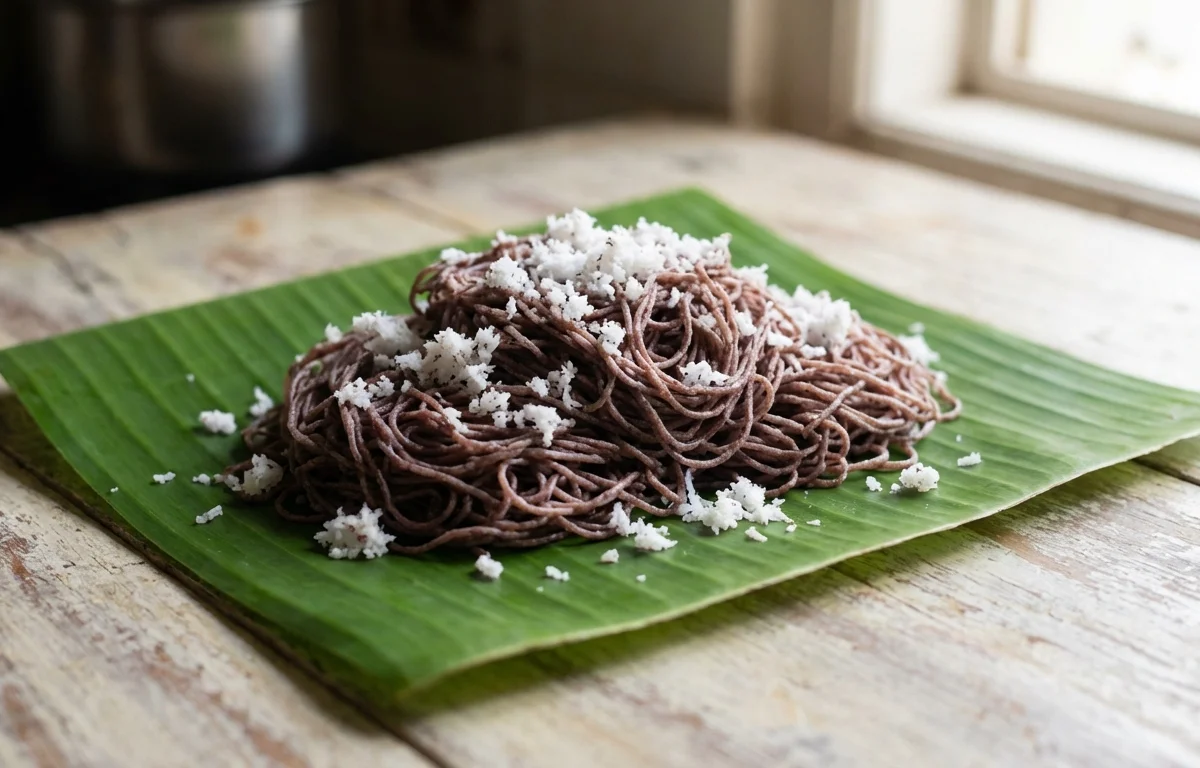
Ragi Idiyappam
Healthy and delicious steamed noodles made from nutritious ragi flour. This gluten-free South Indian classic is soft, light, and pairs wonderfully with sweet coconut milk or a savory curry for a wholesome breakfast or dinner.
For 4 servings
4 steps. 15 minutes total.
- 1
Step 1
- a.Prepare the Dough
- b.In a large, heatproof bowl, combine the sifted ragi flour and salt. Mix them well.
- c.Bring 2 cups of water to a vigorous, rolling boil in a separate pot.
- d.Gradually pour the boiling water into the flour mixture while stirring continuously with a wooden spoon or spatula. The mixture will form a crumbly, shaggy mass.
- e.Cover the bowl and let it rest for 5-7 minutes. This step is crucial as it allows the flour to cook in the residual steam, making the idiyappam soft.
- f.Once the dough is cool enough to handle but still warm, add the sesame oil. Knead for 2-3 minutes to form a soft, smooth, and pliable dough. It should not be sticky or dry.
- 2
Step 2
- a.Press the Idiyappam
- b.Lightly grease your idli plates or steamer trays with a few drops of oil. You can also line them with small squares of banana leaf for added flavor.
- c.Take a portion of the warm dough and fill your idiyappam press (sevai maker). Choose the plate with small holes.
- d.Press the dough onto the greased plates in a circular motion, creating noodle-like mounds. Avoid making the mounds too thick or overlapping them excessively to ensure even cooking.
- 3
Step 3
- a.Steam to Perfection
- b.Pour about 1-2 inches of water into your steamer or pressure cooker (without the weight/whistle) and bring it to a boil.
- c.Carefully place the idiyappam plates inside the steamer.
- d.Cover the steamer and cook on medium-high heat for 10-12 minutes.
- e.The idiyappam is cooked when it appears firm, non-sticky, and has a glossy sheen. To check, touch it lightly; if no dough sticks to your finger, it's done.
- 4
Step 4
- a.Serve and Enjoy
- b.Turn off the heat and let the steamer rest for 2-3 minutes before opening the lid. This prevents the idiyappam from becoming soggy.
- c.Gently remove the idiyappam from the plates using a spatula or spoon.
- d.Garnish with fresh grated coconut if desired.
- e.Serve immediately with sweetened coconut milk, vegetable stew (ishtew), or kadala curry for an authentic South Indian meal.
What to keep in mind.
5 tips from the recipe — small details that make a real difference to the final dish.
- 1The dough consistency is paramount. If it's too dry, the idiyappam will be hard; if too sticky, it will be difficult to press. Adjust with a few drops of hot water or a sprinkle of flour as needed.
- 2Always use boiling water. Lukewarm water will not cook the flour properly, resulting in a dense texture.
- 3Knead the dough while it is still warm to achieve the softest texture.
- 4Do not overfill the idiyappam press, as it will make it very difficult to squeeze the dough out.
- 5For a savory twist, you can crumble the cooked idiyappam and temper it with mustard seeds, urad dal, curry leaves, and lemon juice to make Lemon Sevai.
Adapt it for your goals.
Sweet Version
Serve with a mixture of grated coconut, powdered jaggery or sugar, and a pinch of cardamom powder. A drizzle of ghee on top enhances the flavor.
Savory Tempering (Sevai)Savory Tempering (Sevai)
After steaming, let the idiyappam cool slightly and gently separate the strands. Prepare a tempering of oil, mustard seeds, urad dal, curry leaves, and green chilies. Add the idiyappam strands and toss well. Finish with a squeeze of lemon juice.
Mixed Millet IdiyappamMixed Millet Idiyappam
You can make this recipe with other millet flours like jowar (sorghum) or bajra (pearl millet), or a combination of them for a multi-grain version.
Why this is on our healthy list.
Rich in Calcium
Ragi is one of the best non-dairy sources of calcium, which is crucial for maintaining strong bones and teeth and preventing osteoporosis.
Excellent for Diabetics
The low glycemic index of ragi helps in managing blood sugar levels by ensuring a slower release of glucose into the bloodstream.
High in Dietary Fiber
The high fiber content aids in digestion, prevents constipation, and promotes a feeling of fullness, which can help with weight management.
Naturally Gluten-Free
This recipe is an excellent choice for individuals with celiac disease or gluten sensitivity, providing a nutritious and delicious grain alternative.
Frequently asked questions
This usually happens due to incorrect dough consistency. The dough might have been too dry, or you may have used lukewarm water instead of boiling water. Ensure the dough is soft and pliable, and always use water that is at a rolling boil to partially cook the flour.