
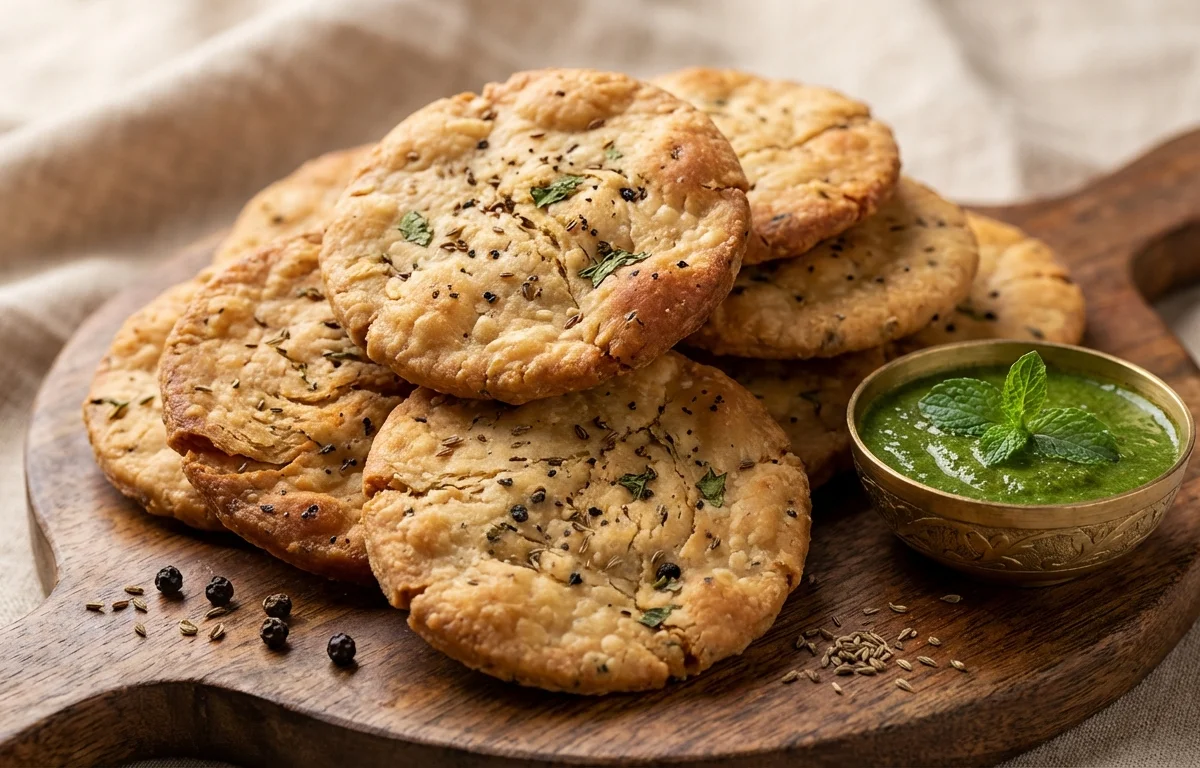
Punjabi Mathri
A classic North Indian savory snack, these crispy, flaky discs are seasoned with carom seeds and black pepper. Perfect with a cup of chai or as a crunchy side with pickles, Mathri is a festive favorite.
For 6 servings
Prepare the Dry Mixture
- In a large mixing bowl, combine the all-purpose flour, semolina, salt, carom seeds, coarsely crushed black peppercorns, and dried fenugreek leaves.
- Whisk everything together to ensure the seasonings are evenly distributed.
Incorporate the Ghee (Moyan)
- Pour the melted ghee over the flour mixture.
- Using your fingertips, rub the ghee into the flour for 4-5 minutes until the mixture resembles coarse, damp sand.
- To check for the correct texture, take a small amount in your fist and press it. It should hold its shape without crumbling immediately. This step is crucial for a flaky ('khasta') mathri.
Knead and Rest the Dough
- Gradually add lukewarm water, a tablespoon at a time, and gather the mixture to form a stiff and firm dough. Be careful not to add too much water; the dough should not be soft like chapati dough.
- Knead for 1-2 minutes just until it comes together. Do not over-knead.
- Cover the dough with a damp cloth and let it rest for 30 minutes.
Shape the Mathris
- After resting, knead the dough again for 30 seconds.
- Divide the dough into 24 small, equal-sized balls.
- Take one ball, flatten it slightly between your palms, and roll it into a small circle about 2-3 inches in diameter and about 1/4 inch thick.
- Using a fork, prick the surface of the mathri 5-6 times on both sides. This prevents it from puffing up like a puri while frying.
Deep Fry the Mathris
- Heat the oil in a heavy-bottomed pan (kadai) over low heat. To test if the oil is ready, drop a tiny piece of dough into it; it should sink and then rise slowly with small bubbles.
- Gently slide 5-6 mathris into the oil, ensuring not to overcrowd the pan.
- Fry on consistently low heat for 10-12 minutes per batch, flipping them occasionally.
- Continue frying until they are golden brown, crisp, and cooked through to the center.
Drain, Cool, and Store
- Once golden and crisp, use a slotted spoon to remove the mathris from the oil.
- Place them on a wire rack or a plate lined with paper towels to drain any excess oil.
- Allow the mathris to cool completely to room temperature. They will become even crispier as they cool.
- Store in an airtight container where they will stay fresh for up to a month.
What to keep in mind.
5 tips from the recipe — small details that make a real difference to the final dish.
- 1The dough must be stiff and tight. A soft dough will absorb excess oil and result in soft, greasy mathris.
- 2Properly rubbing the ghee into the flour (the 'moyan' process) is the secret to a flaky, melt-in-the-mouth texture.
- 3Always fry mathris on low heat. This slow cooking process is essential to cook them evenly to the center and achieve maximum crispness.
- 4Do not skip pricking the mathris with a fork. This step is vital to prevent them from puffing up and ensures a flat, cracker-like texture.
- 5Ensure the mathris are completely cool before storing them in an airtight container to maintain their crispness for weeks.
Adapt it for your goals.
Masala Mathri
Add 1/2 teaspoon of turmeric powder, 1/2 teaspoon of red chili powder, and 1 teaspoon of chaat masala to the dry flour mixture for a spicier, more tangy flavor.
Atta MathriAtta Mathri
For a healthier, nuttier version, replace half or all of the all-purpose flour with whole wheat flour (atta). You may need slightly more water for the dough.
Achari MathriAchari Mathri
Incorporate 1 tablespoon of leftover mango pickle masala (without the oil) into the dough for a tangy, pickled flavor.
Why this is on our healthy list.
Provides Energy
The primary ingredients, flour and semolina, are rich in carbohydrates, which provide a quick source of energy for the body.
Aids Digestion
Carom seeds (ajwain) are traditionally used in Indian cuisine to help relieve indigestion, gas, and bloating, contributing to better digestive health.
Frequently asked questions
This usually happens for three reasons: the dough was too soft, not enough ghee (moyan) was used, or the mathris were fried on high heat. Ensure your dough is very stiff and you fry them slowly on low heat.