
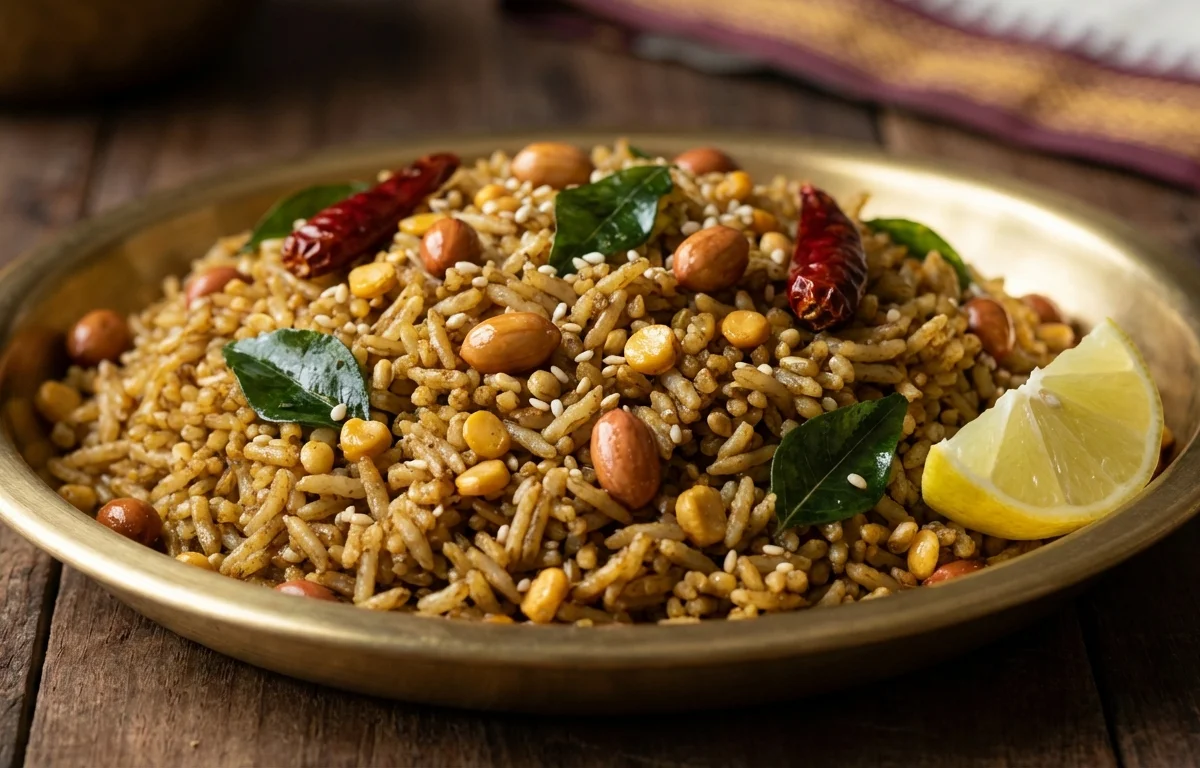
Puliyogare
A beloved South Indian classic, this tangy and spicy rice dish gets its incredible flavor from a special tamarind and spice paste. Perfect for lunchboxes and travel, it tastes even better the next day!
For 4 servings
4 steps. 35 minutes total.
- 1
Step 1
- a.Cook and Cool the Rice
- b.Wash the rice thoroughly under running water until the water runs clear. Cook the rice with 3 cups of water in a pot or rice cooker.
- c.The rice should be cooked through but firm, with each grain separate. Avoid overcooking.
- d.Once cooked, immediately spread the rice on a large plate or tray to cool down completely. Drizzle 1 teaspoon of gingelly oil and a pinch of turmeric powder over the rice and gently fluff with a fork. This prevents the grains from sticking and gives a nice color.
- 2
Step 2
- a.Prepare the Puliyogare Spice Powder
- b.Heat a heavy-bottomed pan over low-medium heat. Dry roast the coriander seeds, 1 tbsp chana dal, 6 dried red chillies, black peppercorns, and fenugreek seeds.
- c.Roast for 4-5 minutes, stirring continuously, until the dals turn golden brown and the spices are highly aromatic. Be careful not to burn them.
- d.Turn off the heat and add the white sesame seeds to the hot pan. Stir for about a minute until they start to pop.
- e.Transfer the roasted spices to a plate and let them cool completely. Once cooled, grind them in a spice grinder with the asafoetida to a slightly coarse powder.
- 3
Step 3
- a.Make the Pulikachal (Tamarind Paste)
- b.Soak the tamarind in 1.5 cups of warm water for about 20-30 minutes. Squeeze the pulp thoroughly with your hands to extract all the juice. Strain the liquid through a fine-mesh sieve, discarding the solids.
- c.Heat 1/4 cup of gingelly oil in a thick-bottomed pan or kadai over medium heat. Once the oil is hot, add the mustard seeds and let them splutter.
- d.Add 1 tbsp chana dal, 1 tsp urad dal, and the raw peanuts. Sauté for 2-3 minutes until the dals are golden and the peanuts are crisp.
- e.Add the 3 broken dried red chillies and curry leaves. Sauté for another 30 seconds until the curry leaves are crisp.
- f.Carefully pour in the prepared tamarind extract. Add the turmeric powder, jaggery, and salt. Stir well to combine.
- g.Bring the mixture to a boil, then reduce the heat to a simmer. Let it cook for 12-15 minutes, stirring occasionally, until the raw smell of tamarind disappears and the paste thickens considerably.
- h.Add 3-4 tablespoons of the freshly ground Puliyogare powder to the paste. Mix well and continue to cook for another 3-4 minutes until the paste becomes very thick and oil starts to separate from the sides.
- 4
Step 4
- a.Combine and Serve
- b.Take the completely cooled rice in a large mixing bowl. Add the prepared Pulikachal paste to the rice, starting with about 3/4 of the paste.
- c.Gently mix with a light hand or a fork, ensuring not to mash or break the rice grains. The goal is to coat each grain evenly.
- d.Taste the rice and add more paste or salt if required. The amount of paste needed depends on your preference for tanginess and spice.
- e.Let the Puliyogare rest for at least 30-60 minutes before serving. This allows the rice to absorb all the flavors. Serve at room temperature with papad or curd.
What to keep in mind.
6 tips from the recipe — small details that make a real difference to the final dish.
- 1Using day-old, refrigerated rice gives the best non-sticky texture for Puliyogare.
- 2Gingelly (toasted sesame) oil is crucial for the authentic, temple-style flavor. Do not substitute if possible.
- 3Roast the spices on a low flame to draw out their essential oils without burning them, which would make the powder bitter.
- 4The Pulikachal paste is a concentrate. You can make a larger batch and store the leftover paste in an airtight container in the refrigerator for up to a month.
- 5Always mix the paste into completely cooled rice to prevent it from becoming mushy.
- 6For a richer flavor, you can add a handful of roasted cashews along with the peanuts during the tempering.
Adapt it for your goals.
Nut Variation
Add 2 tablespoons of cashews along with the peanuts during tempering for extra crunch and richness.
Spice VariationSpice Variation
For a deeper, nuttier flavor, use black sesame seeds instead of white sesame seeds in the spice powder.
Quick VersionQuick Version
If short on time, you can use a high-quality store-bought Puliyogare paste or powder, though the flavor of homemade is superior.
Why this is on our healthy list.
Aids Digestion
Ingredients like tamarind, asafoetida, and black pepper are known in traditional medicine to stimulate digestive enzymes and promote gut health.
Rich in Antioxidants
Tamarind is a good source of polyphenols, while spices like turmeric contain curcumin. These antioxidants help combat oxidative stress in the body.
Energy Boosting
As a rice-based dish, Puliyogare is rich in complex carbohydrates, providing a sustained release of energy to keep you active.
Source of Healthy Fats
The use of gingelly (sesame) oil and peanuts provides monounsaturated and polyunsaturated fats, which are beneficial for heart health.
Frequently asked questions
One serving of Puliyogare (approximately 1 cup or 280g) contains around 500-550 calories, primarily from the rice and oil. The exact count can vary based on the amount of oil and peanuts used.