
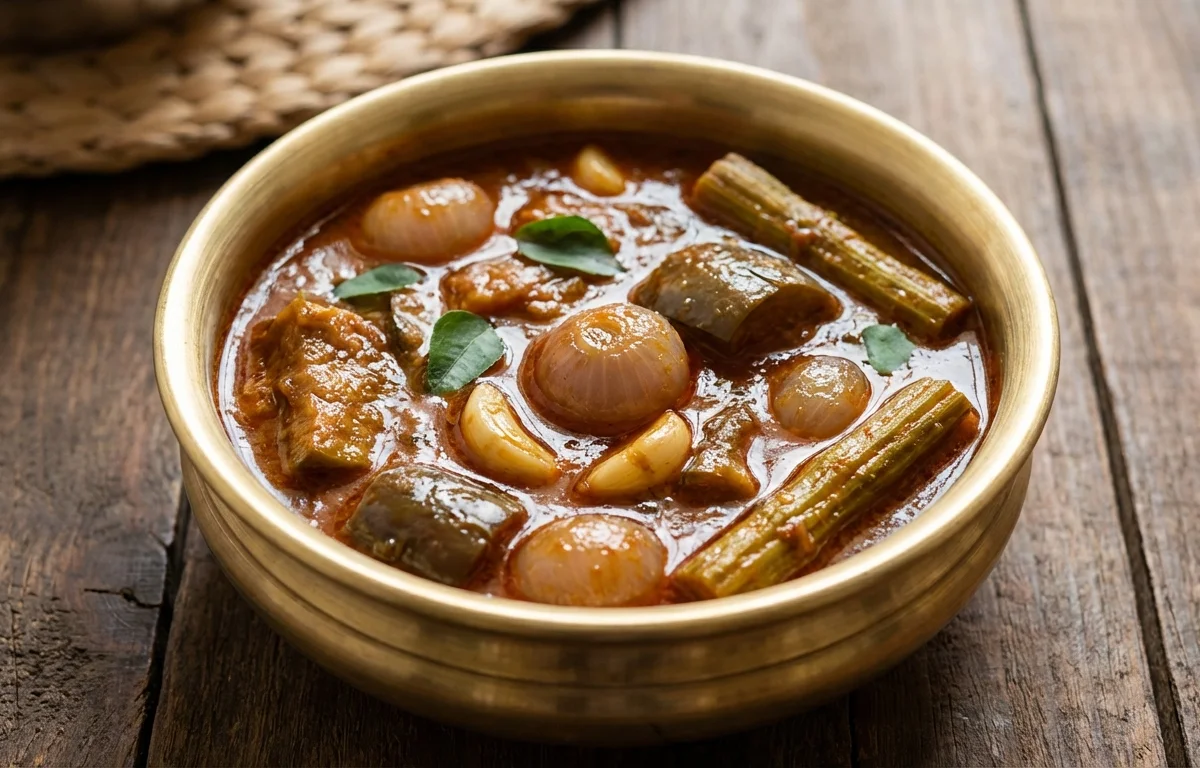
Puli Kuzhambu
A tangy and spicy South Indian curry made with tamarind extract, vegetables, and a blend of aromatic spices. This classic dish from Tamil Nadu is a perfect accompaniment for steamed rice and papad.
For 4 servings
Prepare Tamarind Extract
- Soak the 30g of tamarind in 1.5 cups of warm water for about 15-20 minutes.
- Once softened, squeeze the tamarind pulp thoroughly with your fingers to extract its essence into the water.
- Strain the liquid through a fine-mesh sieve into a bowl, pressing the pulp to get all the extract. Discard the solids. Set this tamarind water aside.
Sauté Vegetables
- Heat 2 tbsp of sesame oil in a heavy-bottomed pan or clay pot (kadai) over medium heat.
- Add the pearl onions and crushed garlic. Sauté for 2-3 minutes until the onions become translucent and fragrant.
- Add the drumstick and brinjal pieces. Continue to sauté for 5-7 minutes until the vegetables are lightly browned and about half-cooked.
Simmer the Kuzhambu
- Reduce the heat to low. Add the turmeric powder and sambar powder to the pan. Stir continuously for 30-45 seconds until aromatic, being careful not to burn the spices.
- Pour in the prepared tamarind extract, 1 cup of fresh water, salt, and powdered jaggery. Stir well to combine.
- Increase the heat to medium-high and bring the mixture to a rolling boil.
- Once boiling, reduce the heat to low, cover the pan, and let it simmer for 12-15 minutes. The key is to cook until the raw smell of tamarind disappears and the gravy thickens.
- You'll know it's ready when you see specks of oil floating on the surface.
Prepare the Tempering (Tadka)
- While the kuzhambu simmers, heat the remaining 1 tbsp of sesame oil in a small tadka pan over medium heat.
- Add the mustard seeds and wait for them to splutter completely.
- Add the fenugreek seeds and urad dal. Fry for about 30 seconds until the dal turns a light golden brown.
- Add the broken dried red chillies, curry leaves, and asafoetida. Sauté for another 20-30 seconds until the curry leaves are crisp.
Combine and Serve
- Carefully pour the hot tempering over the simmering kuzhambu.
- Stir gently to incorporate the flavors. Let it cook for one final minute.
- Turn off the heat and let the Puli Kuzhambu rest for at least 10-15 minutes before serving. This allows the flavors to meld beautifully.
- Serve hot with steamed rice, appalam (papad), or a simple vegetable stir-fry (poriyal).
What to keep in mind.
6 tips from the recipe — small details that make a real difference to the final dish.
- 1For the most authentic taste, always use gingelly (sesame) oil.
- 2Don't skip the jaggery; it's crucial for balancing the sourness of the tamarind and the spiciness of the powders.
- 3You can use other country vegetables like okra (vendakkai), pumpkin (poosanikai), or taro root (seppankizhangu).
- 4The kuzhambu tastes even better the next day as the flavors mature and deepen.
- 5Fry the sambar powder on low heat to prevent it from burning, which can make the gravy taste bitter.
- 6Simmering the gravy until oil separates is the key indicator that the raw taste of tamarind has been cooked off.
Adapt it for your goals.
Vathal Kuzhambu
Replace the fresh vegetables with sun-dried vegetables (vathal) like sundakkai (turkey berry) or manathakkali (black nightshade). Fry the vathal in oil before adding to the gravy.
Poondu Kuzhambu (Garlic Kuzhambu)Poondu Kuzhambu (Garlic Kuzhambu)
Make garlic the star by increasing the quantity to 15-20 cloves and omitting other vegetables. This version is known for its medicinal properties.
Coconut based KuzhambuCoconut-based Kuzhambu
For a thicker and milder gravy, grind 1/4 cup of grated coconut with a little water to a fine paste and add it to the kuzhambu during the last 5 minutes of simmering.
With Lentil Dumplings (Paruppu Urundai)With Lentil Dumplings (Paruppu Urundai)
Add steamed lentil dumplings (paruppu urundai) to the simmering gravy for a protein-rich and filling version of the dish.
Why this is on our healthy list.
Aids Digestion
Tamarind is a natural laxative, and spices like asafoetida and fenugreek seeds are known to reduce bloating and improve digestion, making this dish beneficial for gut health.
Rich in Antioxidants
The base of this curry, tamarind, along with turmeric and other spices, is packed with polyphenols and antioxidants that help fight free radicals and reduce oxidative stress in the body.
Anti-inflammatory Properties
Curcumin in turmeric, allicin in garlic, and compounds in tamarind possess potent anti-inflammatory properties, which can help in managing inflammation-related conditions.
Good Source of Fiber
The inclusion of vegetables like drumstick, brinjal, and pearl onions makes this dish a good source of dietary fiber, which is essential for maintaining a healthy digestive system and promoting satiety.
Frequently asked questions
Yes, Puli Kuzhambu can be very healthy. It is rich in antioxidants from tamarind and spices like turmeric. The vegetables provide fiber and essential vitamins. Using sesame oil offers healthy fats. It is also naturally vegan and gluten-free.