
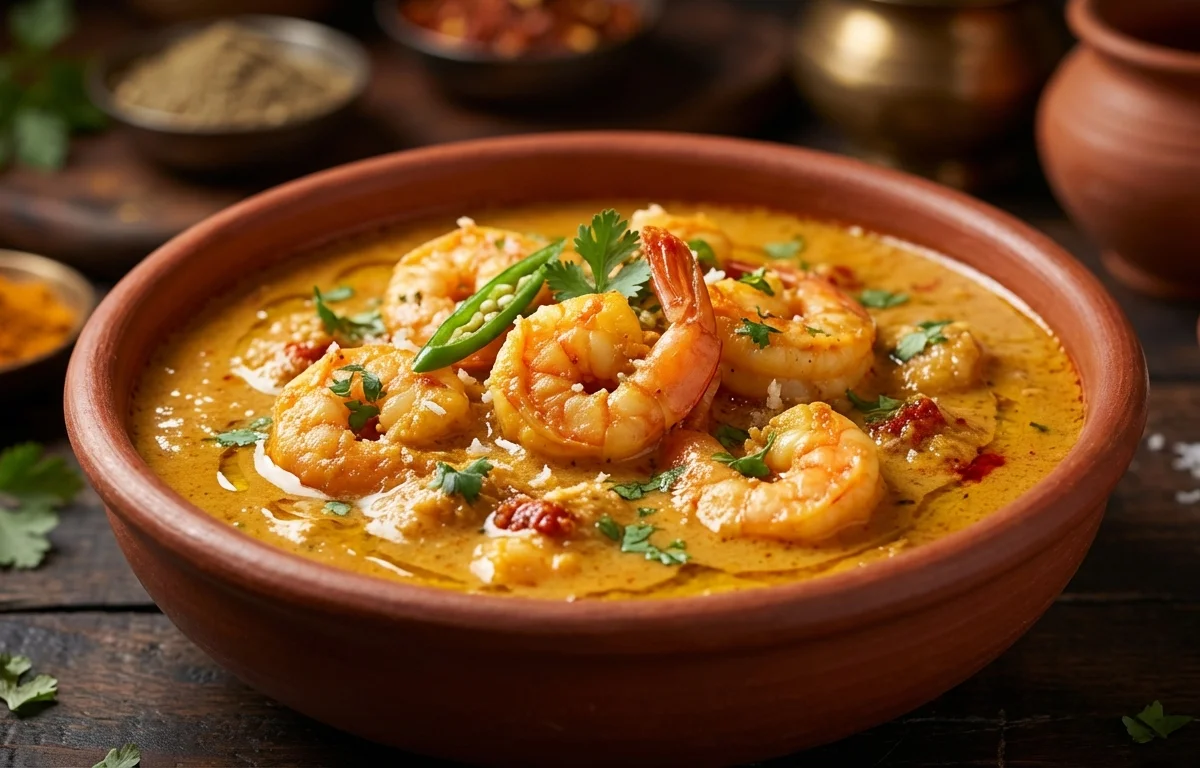
Prawns Hinga Udda
A classic Konkani prawn curry where tender prawns are simmered in a coconut and tamarind gravy, finished with a pungent splash of asafoetida water. This GSB specialty is aromatic, tangy, and ready in under 40 minutes.
For 4 servings
Prepare the Masala Paste
- Soak the seedless tamarind in 2 tablespoons of warm water for 10 minutes. Squeeze to extract the pulp and discard the fibers.
- In a blender jar, combine the grated coconut, dried red chillies, coriander seeds, and turmeric powder.
- Add the tamarind pulp and about 120 ml (1/2 cup) of water. Grind to a very smooth, fine paste. Set aside.
Sauté Aromatics
- Heat coconut oil in a medium-sized pan or kadai over medium heat.
- Add the finely chopped onion and sauté for 4-5 minutes until it becomes soft and translucent.
Cook the Masala
- Add the ground masala paste to the pan with the onions.
- Sauté for 5-7 minutes, stirring frequently, until the raw smell of the masala disappears and it begins to thicken.
Simmer the Curry and Cook Prawns
- Pour in 240 ml (1 cup) of water, add salt to taste, and the slit green chillies. Stir well to combine.
- Bring the curry to a gentle boil and let it simmer for 2-3 minutes for the flavors to meld.
- Gently add the cleaned and deveined prawns to the simmering curry.
- Cook for 3-5 minutes, just until the prawns turn pink and curl. Be careful not to overcook them, as they will become tough.
Add the Hinga Udda
- In a small bowl, dissolve the asafoetida powder in 2 tablespoons of warm water. This is the 'Hinga Udda'.
- Pour this asafoetida water into the curry and give it one final, gentle stir.
- Immediately turn off the heat. Do not boil the curry after adding the hinga udda.
- Cover the pan with a lid and let the curry rest for at least 5-10 minutes. This step is crucial for the asafoetida's aroma to infuse throughout the dish.
Serve
- Serve the Prawns Hinga Udda hot with steamed rice or neer dosa.
What to keep in mind.
6 tips from the recipe — small details that make a real difference to the final dish.
- 1For the most authentic flavor, use fresh coconut and high-quality coconut oil.
- 2Do not overcook the prawns. They cook very quickly, and overcooking makes them rubbery.
- 3Grinding the masala paste to a very smooth consistency is key to achieving the right texture for the gravy.
- 4The final step of resting the curry after adding the 'hinga udda' is essential for the dish's signature aroma.
- 5Adjust the number of Byadgi chillies based on your preferred spice level. They provide more color than heat.
- 6If the curry is too thick, you can add a little warm water to adjust the consistency.
Adapt it for your goals.
Seafood Variation
This curry base works wonderfully with other seafood. Try it with fish fillets (like pomfret or kingfish) or clams.
Vegetarian VariationVegetarian Variation
For a vegetarian version, you can use mushrooms, paneer, or even boiled potatoes instead of prawns. Adjust cooking times accordingly.
Flavor AdjustmentFlavor Adjustment
If you find the curry too tangy, you can balance it with a small pinch of jaggery.
Why this is on our healthy list.
Excellent Source of Lean Protein
Prawns are rich in high-quality protein, which is essential for building and repairing tissues, muscle growth, and overall body function.
Rich in Omega-3 Fatty Acids
Prawns provide beneficial omega-3 fatty acids, which are known to support heart health and reduce inflammation.
Contains Healthy Fats
The use of fresh coconut and coconut oil provides medium-chain triglycerides (MCTs), a type of fat that can be a quick source of energy.
Aids Digestion
Asafoetida (hing), the star ingredient, is traditionally used in Ayurvedic medicine to aid digestion and relieve gas and bloating.
Frequently asked questions
'Hinga Udda' is a Konkani term where 'Hing' means asafoetida and 'Udda' means water. It refers to the asafoetida-infused water that is added at the end of cooking to give the dish its unique, pungent aroma.