
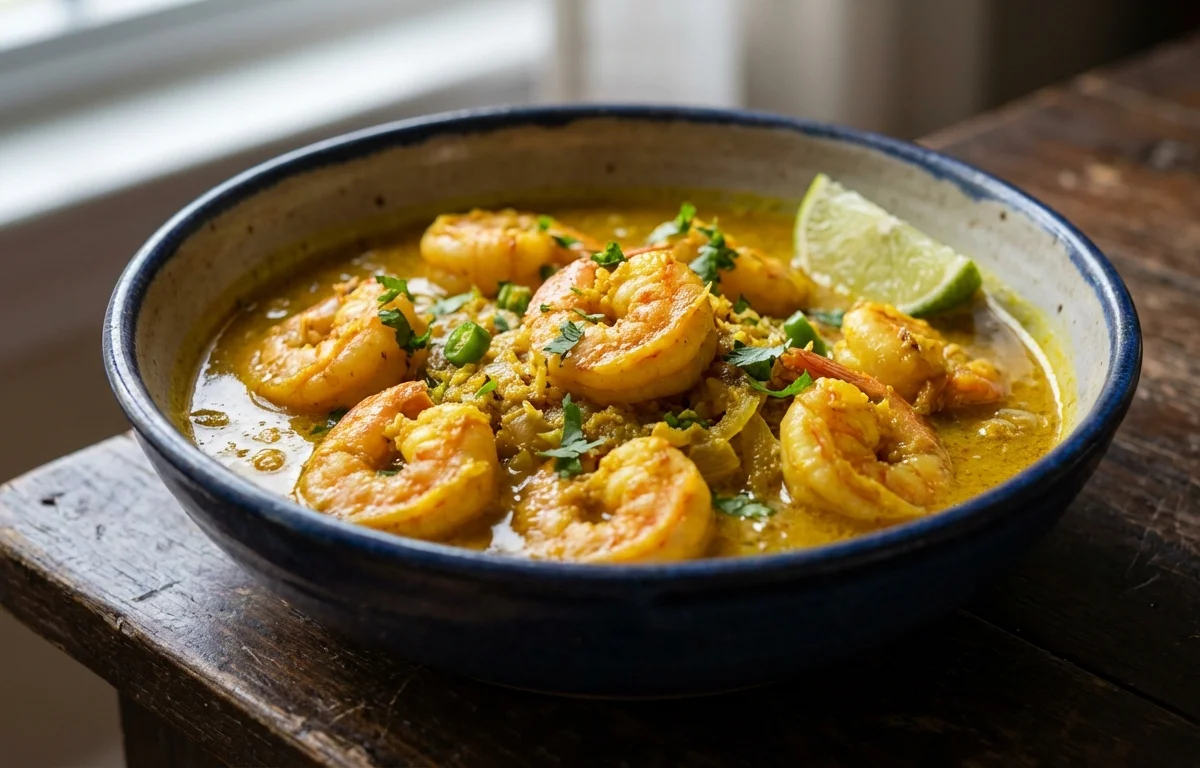
Prawn Hinga Udda
A light, fragrant Goan prawn curry with a unique flavor from asafoetida (hing) and tangy tamarind. This traditional Konkani dish, made with a fresh coconut base, is simple, quick to prepare, and tastes incredible with steamed rice. Its thin, soupy consistency is perfect for soaking up.
For 4 servings
4 steps. 15 minutes total.
- 1
Step 1
- a.Prepare the Coconut Masala Paste
- b.In a blender, combine the freshly grated coconut, green chilies, and turmeric powder.
- c.Add approximately 1/2 cup of water and grind to a very smooth, fine paste. Set this masala paste aside.
- 2
Step 2
- a.Sauté Aromatics and Cook Prawns
- b.Heat coconut oil in a medium-sized pot or kadai over medium heat.
- c.Add the finely chopped onion and sauté for 3-4 minutes until it becomes soft and translucent.
- d.Add the cleaned and deveined prawns. Sauté for 1-2 minutes until they just turn pink and begin to curl. Do not overcook them at this stage.
- 3
Step 3
- a.Simmer the Curry
- b.Pour the ground coconut masala paste into the pot with the prawns.
- c.Add the tamarind paste, salt, and 1 cup of water. Stir everything gently to combine.
- d.Bring the curry to a gentle simmer over medium-low heat. It is crucial not to let it come to a rolling boil, as this can cause the coconut base to split.
- 4
Step 4
- a.Add Hing and Finish
- b.In a small bowl, mix the hing (asafoetida) powder with 2 tablespoons of warm water to create a smooth slurry. This prevents lumps.
- c.Pour the hing slurry into the gently simmering curry and stir.
- d.Let the curry simmer for another 2-3 minutes on low heat to allow the flavors to meld together.
- e.Turn off the heat. Check for salt and adjust if necessary. Let it rest for 5 minutes before serving hot with steamed rice.
What to keep in mind.
5 tips from the recipe — small details that make a real difference to the final dish.
- 1For the best flavor and texture, always use fresh prawns.
- 2Never boil the curry vigorously after adding the coconut paste. Keep it at a gentle simmer to prevent it from curdling.
- 3Adding the hing slurry towards the end is key to preserving its distinct aroma and flavor.
- 4This curry is traditionally thin and soupy. If it seems too thick, add a little more warm water to reach the desired consistency.
- 5If you don't have tamarind paste, soak a small, lime-sized ball of tamarind in 1/4 cup of hot water for 10 minutes, then squeeze out the pulp and use the liquid.
Adapt it for your goals.
Seafood
Replace prawns with clams (tisreo), mussels, or firm white fish like kingfish or pomfret. Adjust cooking time accordingly.
Spice LevelSpice Level
Increase the number of green chilies or add a pinch of red chili powder along with the turmeric for extra heat.
VegetarianVegetarian
For a vegetarian version, use mushrooms, paneer, or mixed vegetables like carrots, beans, and potatoes instead of prawns.
Why this is on our healthy list.
Rich in Lean Protein
Prawns are an excellent source of high-quality, low-fat protein, which is essential for muscle repair, immune function, and overall body maintenance.
Anti-inflammatory Properties
The presence of turmeric, containing the active compound curcumin, provides powerful anti-inflammatory benefits that can help reduce inflammation in the body.
Aids Digestion
Hing (asafoetida) is a traditional remedy known for its carminative properties, which help in reducing bloating, gas, and improving overall digestion.
Source of Healthy Fats
Fresh coconut and coconut oil provide medium-chain triglycerides (MCTs), a type of healthy fat that is easily digested and can provide a quick source of energy.
Frequently asked questions
A single serving of Prawn Hinga Udda contains approximately 240-260 calories, making it a relatively light main course. The exact count can vary based on the size of the prawns and the amount of coconut used.