
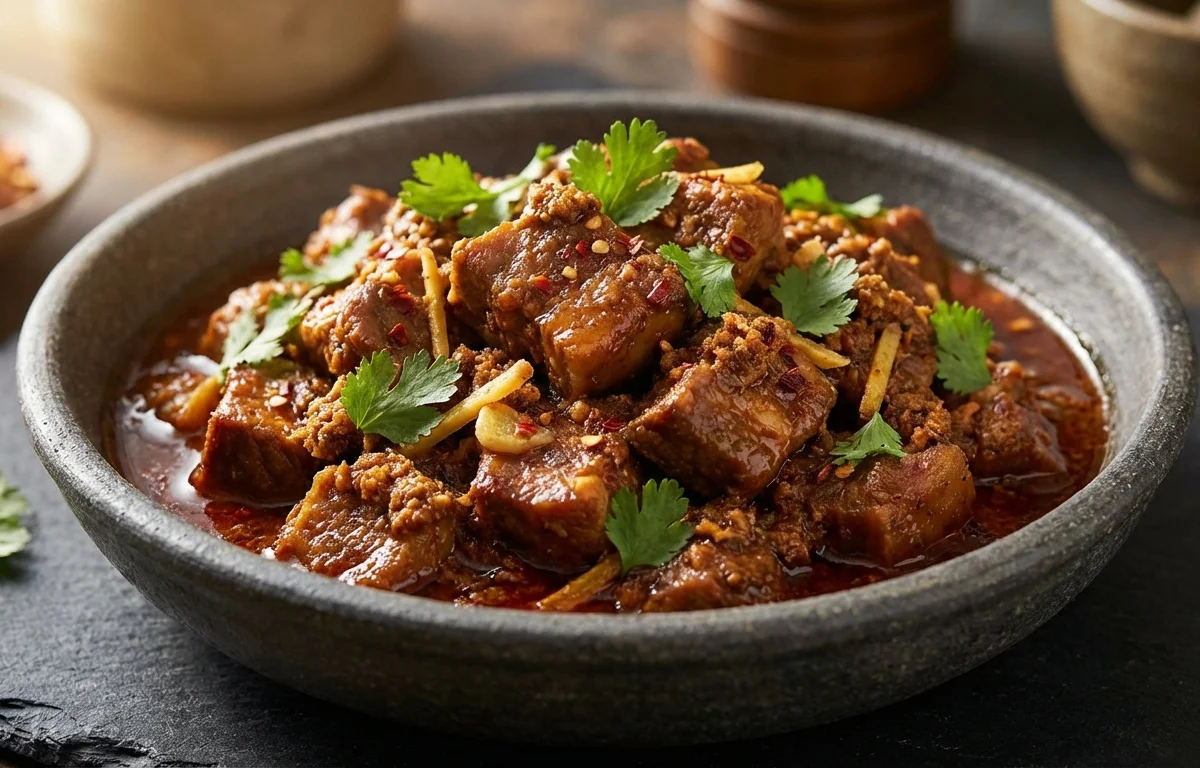
Pork with Axone Fry
A classic Naga delicacy featuring tender pork stir-fried with pungent, umami-rich fermented soybeans (axone) and fiery chilies. This dish is a flavor explosion, perfect for adventurous eaters who love bold tastes.
For 4 servings
Prepare Ingredients
- Wash the pork belly pieces thoroughly under running water.
- Using a mortar and pestle, roughly crush the ginger and garlic cloves together to make a coarse paste.
- Thinly slice the onion, finely chop the tomato, and slit the green chilies lengthwise.
Boil the Pork
- Place the pork pieces in a heavy-bottomed pot. Add 1 cup of water, 0.5 tsp of salt, and the turmeric powder.
- Bring to a boil over high heat, then reduce the heat to a medium-low simmer.
- Cover the pot and cook for about 25-30 minutes, or until the pork is tender and most of the water has evaporated. Set aside.
Create the Axone Base
- Heat the mustard oil in a wide pan or wok over medium heat until it's slightly smoking.
- Add the sliced onions and sauté for 3-4 minutes until they turn soft and translucent.
- Add the crushed ginger-garlic paste and the slit green chilies. Stir and fry for 1 minute until fragrant.
- Add the chopped tomato and cook for 4-5 minutes, stirring occasionally, until it breaks down into a soft pulp.
- Stir in the mashed axone paste and the optional red chili powder. Cook for 2-3 minutes, stirring continuously, to release its distinct aroma.
Combine and Finish
- Add the boiled pork pieces to the pan containing the axone masala.
- Increase the heat to medium-high. Stir everything together gently to ensure the pork is evenly coated.
- Continue to stir-fry for 5-7 minutes, allowing the pork fat to render and the flavors to meld together. The dish should become semi-dry.
- Taste for seasoning and add the remaining 0.5 tsp of salt if needed. Mix well.
Serve
- Remove from heat and let it rest for a few minutes.
- Serve hot with a side of steamed rice and simple boiled vegetables for a complete Naga meal.
What to keep in mind.
5 tips from the recipe — small details that make a real difference to the final dish.
- 1For the most authentic flavor, use pork belly or pork shoulder with a good fat-to-meat ratio. The rendered fat is key to the dish's richness.
- 2Ensure your kitchen is well-ventilated when cooking with axone, as it has a very strong and pungent aroma that can linger.
- 3If you can find it, use Raja Mircha (Naga King Chili) instead of green chilies for authentic heat, but use it sparingly as it is extremely spicy.
- 4Do not over-boil the pork. It should be tender but still hold its shape for the final stir-fry.
- 5This dish develops more flavor over time. It tastes even better the next day.
Adapt it for your goals.
With Smoked Pork
Substitute fresh pork with smoked pork for a deep, smoky flavor. You may need to boil the smoked pork a little longer to tenderize it.
With Bamboo ShootWith Bamboo Shoot
Add 1/2 cup of shredded fermented bamboo shoot along with the tomatoes. This adds a tangy, crunchy element that is very traditional in Naga cuisine.
With Naga BasilWith Naga Basil
Add a handful of fresh Naga basil (Napa) leaves in the last minute of cooking for a fresh, peppery aroma that complements the pork and axone.
Why this is on our healthy list.
Rich in Protein
Pork is an excellent source of high-quality protein, which is essential for building and repairing muscle tissue, as well as overall body function.
Gut-Friendly Probiotics
The fermentation process used to make axone creates beneficial probiotics. These live microorganisms can help improve gut health and support a healthy digestive system.
Source of B Vitamins
Pork is a good source of several B vitamins, including B6 and B12, which are crucial for energy metabolism, brain function, and the formation of red blood cells.
Metabolism Support
The capsaicin in the hot chilies used in this recipe can provide a temporary boost to your metabolism and may aid in fat oxidation.
Frequently asked questions
Axone (also known as Akhuni) is a fermented soybean product with a strong, pungent, umami flavor, central to Naga cuisine. You can typically find it in specialty stores that carry Northeast Indian ingredients or online.