
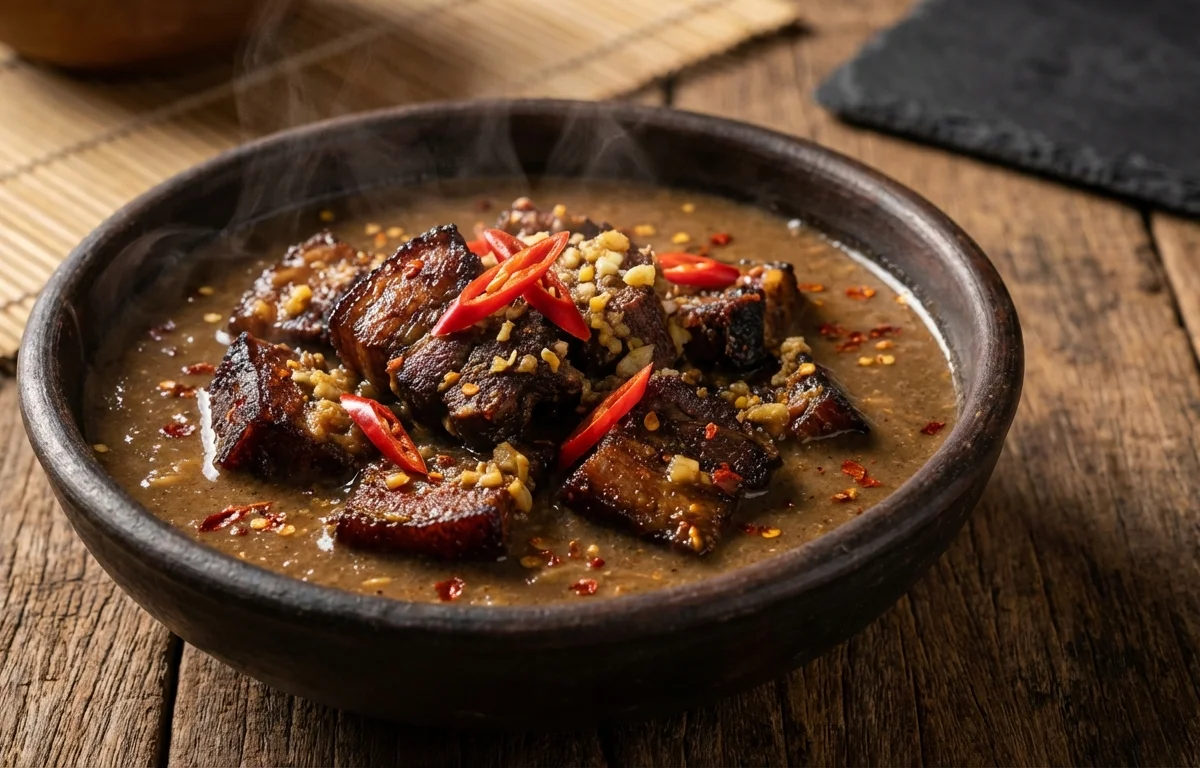
Pork with Axone
A classic dish from Nagaland, this pork curry is slow-cooked with pungent fermented soybeans (axone) and fiery Naga king chilies. A bold, umami-rich delicacy for the adventurous palate, best enjoyed with steamed rice.
For 4 servings
Prepare the Aromatic Paste
- Using a mortar and pestle or a small grinder, crush the ginger, garlic, and Naga king chilies into a coarse paste. Set aside.
Begin Cooking the Pork
- Place the pork pieces into a heavy-bottomed pot or Dutch oven. No oil is needed as the pork fat will render.
- Add the prepared ginger-garlic-chili paste and salt to the pot.
- Pour in 2 cups of water and stir well to combine all the ingredients.
- Place the pot over high heat and bring the mixture to a rolling boil. This should take about 5-7 minutes.
Simmer the Pork
- Once boiling, reduce the heat to a medium-low, cover the pot, and let it simmer for 30-40 minutes.
- The pork should be about 70% cooked and the fat should begin to render.
Incorporate the Axone
- In a small bowl, take the axone paste and mix it with 3-4 tablespoons of warm water from the pot. Stir until it forms a smooth, lump-free liquid.
- Pour the dissolved axone mixture into the pot. If using, add the fermented bamboo shoots at this stage.
- Stir everything gently to ensure the axone is well-distributed in the gravy.
Finish the Curry
- Continue to cook on low heat, uncovered, for another 15-20 minutes.
- Cook until the pork is completely tender, the fat has fully rendered and is visible on the surface, and the gravy has thickened to a rich consistency.
- Taste and adjust the salt if necessary.
Rest and Serve
- Turn off the heat and let the curry rest in the pot for at least 10 minutes. This allows the flavors to meld and deepen.
- Serve hot with plain steamed rice, which perfectly complements the intense flavors of the curry.
What to keep in mind.
7 tips from the recipe — small details that make a real difference to the final dish.
- 1Use pork with a generous layer of fat, like belly or shoulder. The rendered fat is essential for the authentic flavor and richness of the gravy.
- 2Do not add any oil. The dish relies entirely on the fat rendering from the pork.
- 3The aroma of axone is very strong and pungent. Ensure your kitchen is well-ventilated while cooking.
- 4Naga king chilies (Bhut Jolokia) are extremely spicy. Start with one or two and add more only if you desire intense heat.
- 5This curry tastes even better the next day as the flavors have more time to infuse into the meat.
- 6For a thicker gravy, you can mash a few pieces of tender pork against the side of the pot and stir them back in.
- 7Always dissolve the axone paste in warm water before adding it to the pot to prevent lumps and ensure even flavor distribution.
Adapt it for your goals.
Smoked Pork
For a deeper, smoky flavor, substitute the fresh pork with smoked pork. You may need to adjust the cooking time as smoked pork is often tougher.
With GreensWith Greens
Add a handful of mustard greens or shredded cabbage in the last 10 minutes of cooking for added texture and a slightly bitter contrast.
Milder VersionMilder Version
If you cannot handle the heat of Naga king chilies, substitute with a smaller quantity of red or green bird's eye chilies.
With Yam StemsWith Yam Stems
For a more traditional touch, add some dried yam stems (Anishi) along with the axone. They will rehydrate and add a unique texture and flavor.
Why this is on our healthy list.
Rich in Protein
Pork is an excellent source of high-quality protein, which is essential for muscle repair, growth, and overall body function.
Gut-Friendly Ferments
The use of fermented soybeans (axone) and optional fermented bamboo shoots introduces beneficial bacteria that can support a healthy gut microbiome.
Metabolism Booster
Naga king chilies contain high levels of capsaicin, a compound known to temporarily boost metabolism and aid in fat burning.
Frequently asked questions
Axone, also known as Akhuni, is a fermented soybean product with a strong, pungent smell and a deep umami flavor. It is a cornerstone ingredient in the cuisine of Nagaland and other parts of Northeast India.