
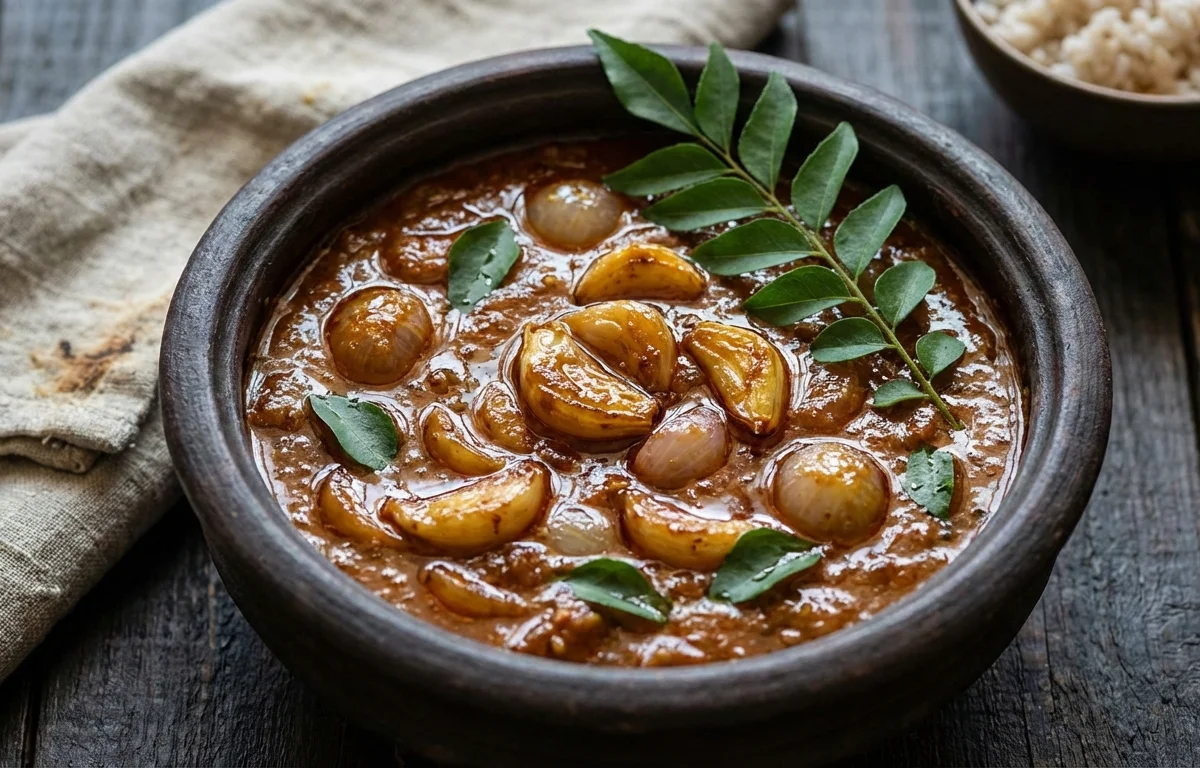
Poondu Kozhambu
A fiery and tangy South Indian curry where whole garlic cloves are simmered in a tamarind-based gravy. This traditional Tamil dish is packed with flavor and pairs perfectly with steamed rice and a dollop of sesame oil.
For 4 servings
6 steps. 30 minutes total.
- 1
Step 1
- a.Prepare Tamarind Extract
- b.Soak the tamarind in 1 cup of hot water for about 15 minutes until it becomes soft.
- c.Squeeze the softened tamarind thoroughly with your fingers to extract all the pulp.
- d.Strain the liquid through a fine-mesh sieve into a bowl, pressing the solids to get a thick extract. Discard the fibrous solids. Set the extract aside.
- 2
Step 2
- a.Temper the Spices
- b.Heat the gingelly oil in a heavy-bottomed pan or an earthen pot (kadai) over medium heat.
- c.Once the oil is hot, add the mustard seeds and allow them to splutter completely, which takes about 30 seconds.
- d.Add the fenugreek seeds and sauté for 15-20 seconds until they turn lightly golden and fragrant. Be careful not to burn them.
- e.Immediately add the curry leaves and hing, and sauté for another 10 seconds.
- 3
Step 3
- a.Sauté Aromatics
- b.Add the peeled whole garlic cloves and sambar onions to the pan.
- c.Sauté on medium heat for 6-8 minutes, stirring occasionally, until the onions are translucent and the garlic cloves have light golden-brown spots and are aromatic.
- 4
Step 4
- a.Cook Tomatoes and Spices
- b.Add the finely chopped tomato and cook for 3-4 minutes until it breaks down and becomes soft and mushy.
- c.Reduce the heat to low, then add the turmeric powder, red chili powder, and sambar powder.
- d.Stir continuously for 1 minute, ensuring the spices are well-coated with the aromatics and their raw smell disappears. Do not let them burn.
- 5
Step 5
- a.Simmer the Kozhambu
- b.Pour the prepared tamarind extract into the pan, followed by 2 cups of fresh water.
- c.Add the salt and powdered jaggery. Stir everything together well.
- d.Increase the heat and bring the mixture to a rolling boil.
- e.Once boiling, reduce the heat to low, partially cover the pan, and let it simmer for 15-20 minutes.
- f.The kozhambu is ready when the gravy has thickened slightly and you see a layer of oil separating and floating on top.
- 6
Step 6
- a.Rest and Serve
- b.Turn off the heat and let the kozhambu rest for at least 20-30 minutes before serving. This allows the flavors to meld and deepen.
- c.Serve hot with steamed rice, a drizzle of gingelly oil or ghee, and a side of appalam (papad).
What to keep in mind.
6 tips from the recipe — small details that make a real difference to the final dish.
- 1For the most authentic taste, use gingelly (Indian sesame) oil. It gives the dish its characteristic aroma and flavor.
- 2Sautéing the garlic until golden is key to mellowing its sharp taste and bringing out a sweet, nutty flavor.
- 3The small amount of jaggery is crucial; it balances the sourness of the tamarind and the heat of the spices.
- 4This kozhambu tastes even better the next day as the flavors mature overnight.
- 5If your gravy is too thin, mix 1 teaspoon of rice flour with 2 tablespoons of water to form a slurry and stir it into the simmering kozhambu. Cook for another 2-3 minutes.
- 6Cooking in a traditional earthen pot (man chatti) can enhance the flavor and aroma of the dish.
Adapt it for your goals.
Add Vegetables
You can add vegetables like drumsticks, brinjal (eggplant), or dried turkey berries (sundakkai vathal) along with the onions and garlic for added texture and nutrition.
Creamier VersionCreamier Version
For a richer, milder gravy, add 1/4 cup of thin coconut milk during the last 5 minutes of simmering. Do not let it boil vigorously after adding coconut milk.
With LentilsWith Lentils
Add 2 tablespoons of cooked toor dal (pigeon peas) along with the tamarind water to make the gravy thicker and more wholesome.
Spicier VersionSpicier Version
For extra heat, add 2-3 whole dried red chilies during the tempering step.
Why this is on our healthy list.
Boosts Immunity
Garlic is the star ingredient and is renowned for its high concentration of allicin, a compound that has potent antimicrobial and immune-boosting properties, helping the body fight off infections.
Aids Digestion
Tamarind acts as a natural laxative, while spices like asafoetida (hing) and fenugreek seeds help reduce bloating and improve overall gut health.
Heart Healthy
Garlic is known to help lower blood pressure and cholesterol levels. Additionally, the use of gingelly (sesame) oil provides healthy unsaturated fats, contributing to better cardiovascular health.
Anti-Inflammatory Properties
The blend of spices, particularly turmeric (containing curcumin) and garlic, offers powerful anti-inflammatory benefits that can help reduce inflammation in the body.
Frequently asked questions
Yes, Poondu Kozhambu is considered healthy. It is rich in garlic, which is known for its cardiovascular and immune-boosting benefits. The spices like turmeric and fenugreek have anti-inflammatory properties, and tamarind is a good source of antioxidants. It is also a plant-based dish.