
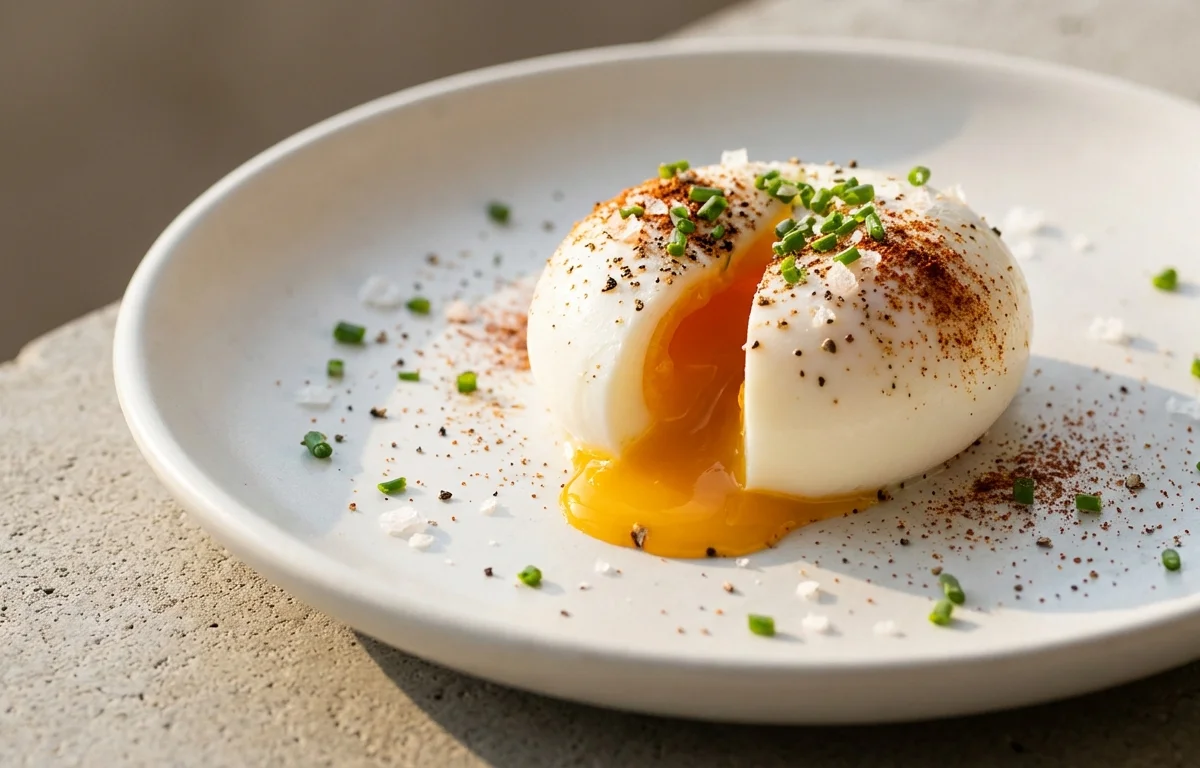
Poached Egg
Master the art of the perfectly poached egg with this foolproof guide. Achieve firm, delicate whites and a luxuriously runny yolk every time. This simple technique, enhanced with a splash of vinegar, creates a beautiful, classic egg ideal for topping toast, salads, or creating the perfect Eggs Benedict.
For 4 servings
6 steps. 12 minutes total.
- 1
Prepare the poaching liquid
- a.Fill a medium saucepan or pot with 3-4 inches of water. Add the white vinegar and 0.5 tsp of salt. Bring the water to a gentle simmer over medium heat, which should take about 4-5 minutes. Look for small, consistent bubbles rising from the bottom; the water should not be at a rolling boil.
- 2
Strain the egg
- a.For a perfectly shaped egg, crack one egg into a fine-mesh sieve set over a small bowl. Let the thin, watery part of the egg white drain away for 30-60 seconds. This crucial step removes excess liquid, preventing wispy whites. Gently transfer the strained egg into a small ramekin.
- 3
Create a vortex and add the egg
- a.Using a spoon, stir the simmering water to create a gentle whirlpool. Carefully and slowly slide the egg from the ramekin into the center of the vortex. This motion helps the egg white wrap around the yolk for a neat, spherical shape.
- 4
Poach the egg
- a.Cook the egg undisturbed, adjusting the heat as needed to maintain a gentle simmer. For a very runny yolk and set whites, cook for exactly 3 minutes. For a slightly firmer, jammy yolk, cook for 4 minutes.
- 5
Remove and drain
- a.Using a slotted spoon, carefully lift the poached egg out of the water. You can trim any wispy edges with the side of the spoon for a cleaner look. Gently blot the bottom of the spoon on a paper towel to remove excess water before plating.
- 6
Serve and repeat
- a.Season the poached egg immediately with a pinch of salt and freshly ground black pepper. Serve as desired. Repeat the process with the remaining eggs, ensuring the water returns to a simmer and creating a new vortex for each one.
What to keep in mind.
6 tips from the recipe — small details that make a real difference to the final dish.
- 1Use the freshest eggs you can find. Fresh eggs have tighter whites that hold their shape much better during poaching.
- 2The sieve trick is a game-changer for preventing wispy, messy egg whites in the water.
- 3Maintain a gentle simmer, not a rolling boil. Boiling water can agitate the egg and cause it to break apart.
- 4Poach one egg at a time for the best results, especially when you are learning. This gives each egg enough space and attention.
- 5To make poached eggs ahead of time, undercook them by 30 seconds, then immediately transfer them to an ice water bath. Store in the water in the fridge for up to 2 days. Reheat in simmering water for 30-60 seconds.
- 6A wider, shallower pan can make it easier to add and retrieve multiple eggs if you are comfortable poaching more than one at a time.
Adapt it for your goals.
Flavor Infusion
Instead of water, try poaching your eggs in a flavorful liquid like chicken broth, vegetable stock, or even a light tomato sauce (shakshuka-style) for an extra layer of taste.
Herbaceous TwistHerbaceous Twist
Add a bay leaf, a few peppercorns, or a sprig of thyme to the poaching water to subtly infuse the egg with aromatic flavors.
Spice it UpSpice it Up
Serve the poached egg with a sprinkle of smoked paprika, red pepper flakes, or a dash of your favorite hot sauce for a spicy kick.
Why this is on our healthy list.
High-Quality Protein Source
Eggs provide complete protein, containing all nine essential amino acids necessary for building and repairing muscles, tissues, and cells.
Brain Health Booster
Rich in choline, a nutrient vital for brain development, memory, and mood regulation. A single egg yolk contains a significant portion of your daily choline needs.
Nutrient-Dense
A great source of essential vitamins and minerals, including Vitamin D for bone health, Vitamin B12 for nerve function, and selenium, a powerful antioxidant.
Frequently asked questions
Yes, a poached egg is a very healthy choice. Poaching is a low-fat cooking method as it requires no oil or butter. Eggs are a fantastic source of high-quality protein, essential vitamins like D and B12, and minerals like selenium.