
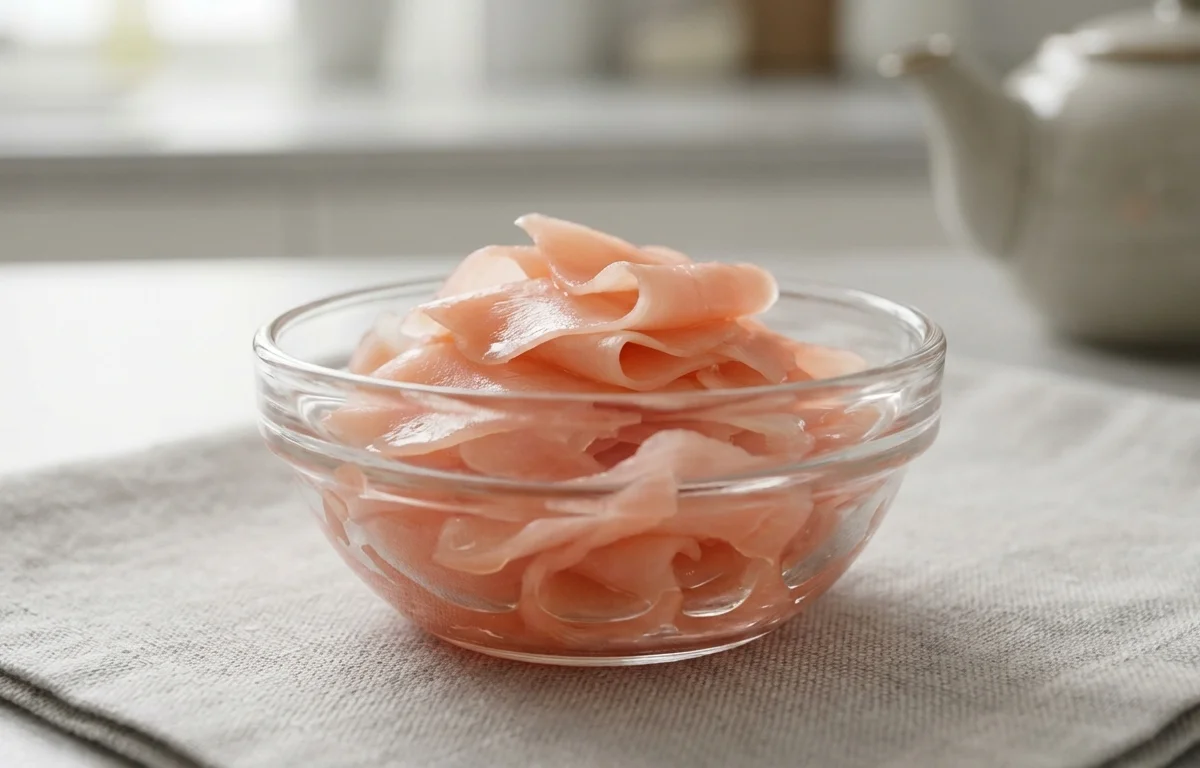
Pickled Ginger
Crisp, tangy, and slightly sweet, this homemade Japanese pickled ginger (Gari) is incredibly easy to make. It's the perfect zesty palate cleanser for sushi and a vibrant condiment for salads and sandwiches, ready with just a few simple ingredients.
For 8 servings
3 steps. 5 minutes total.
- 1
Step 1
- a.Prepare the Ginger
- b.Peel the young ginger using the edge of a spoon or a vegetable peeler.
- c.Using a mandoline slicer or a very sharp knife, slice the ginger paper-thin against the grain.
- d.Place the ginger slices in a non-metallic bowl and toss with 1 teaspoon of salt. Let it stand for 30 minutes. This step draws out excess moisture and tames its sharp bite.
- e.After 30 minutes, rinse the ginger thoroughly under cold running water to remove the salt. Gently squeeze the slices to remove as much water as possible, then pat completely dry with paper towels.
- 2
Step 2
- a.Make the Pickling Liquid
- b.In a small, non-reactive saucepan (such as stainless steel or enamel), combine the rice vinegar, granulated sugar, and the remaining 1/2 teaspoon of salt.
- c.Bring the mixture to a rolling boil over medium-high heat, stirring continuously until the sugar and salt are completely dissolved. This should take about 2-3 minutes.
- d.Once boiling and clear, remove the saucepan from the heat.
- 3
Step 3
- a.Pickle and Store
- b.Pack the dried ginger slices into a sterilized, heatproof glass jar. If using, tuck the thin slice of beet amongst the ginger.
- c.Carefully pour the hot pickling liquid over the ginger, ensuring all slices are fully submerged. Use a spoon to press down the ginger if needed.
- d.Let the jar cool to room temperature on the counter, uncovered, for about 1 hour.
- e.Once cool, seal the jar with a tight-fitting lid and transfer to the refrigerator. The pickled ginger is ready to eat after a few hours, but the flavor and color will deepen and improve significantly after 24-48 hours.
What to keep in mind.
6 tips from the recipe — small details that make a real difference to the final dish.
- 1Young ginger is essential for a tender, less fibrous result. It has a pinkish hue at the tips and a very thin, papery skin.
- 2A mandoline slicer is the best tool for achieving consistently paper-thin slices, which is key to the classic texture of Gari.
- 3The natural pink color develops from a chemical reaction between the ginger's anthocyanins and the vinegar. The beet slice is a shortcut for a more vibrant, consistent color.
- 4Always use a clean, sterilized glass jar to prevent spoilage and ensure the pickled ginger lasts longer.
- 5Do not skip the salting and rinsing step; it's crucial for achieving a crisp texture and mellowing the ginger's pungency.
- 6The pickling liquid can be reused once for a new batch of ginger. Simply strain it and bring it back to a boil before pouring over fresh ginger.
Adapt it for your goals.
Sweetener
For a refined sugar-free version, you can substitute the granulated sugar with an equal amount of honey or maple syrup. Note that this will alter the flavor profile slightly.
SpicySpicy
Add a few thin slices of red chili or a pinch of red pepper flakes to the pickling liquid for a spicy kick.
AromaticAromatic
Infuse the pickling liquid with a star anise or a few slices of lemon peel for an added layer of aroma and flavor. Remove the aromatics before pouring the liquid over the ginger.
Why this is on our healthy list.
Aids Digestion
Ginger is renowned for its ability to soothe the digestive system, alleviate nausea, and promote healthy digestion by stimulating digestive enzymes.
Potent Anti-Inflammatory
The active compound in ginger, gingerol, has powerful anti-inflammatory and antioxidant effects, which can help reduce inflammation and pain in the body.
Rich in Antioxidants
Ginger is packed with antioxidants that help protect your cells from damage caused by free radicals, contributing to overall health and well-being.
Frequently asked questions
A typical 2-tablespoon (50g) serving of homemade pickled ginger contains approximately 15-25 calories, primarily from the sugar used in the pickling liquid.