
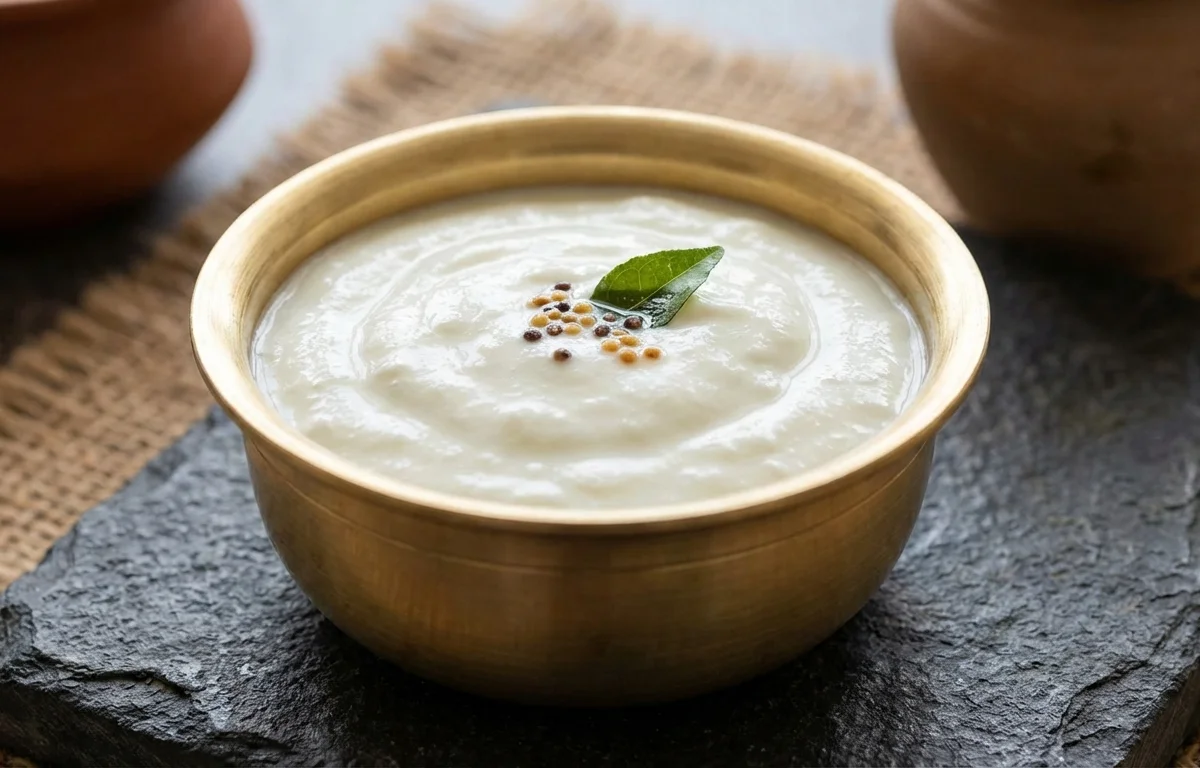
Perugu
Tangy homemade yogurt, a staple in every South Indian home. This simple recipe uses just two ingredients to create fresh, probiotic-rich curd perfect for raitas, curries, or enjoying on its own.
For 4 servings
Boil and Thicken the Milk
- Pour the whole milk into a heavy-bottomed pot.
- Bring the milk to a rolling boil over medium heat, stirring occasionally to prevent it from scorching at the bottom.
- Once boiling, reduce the heat to low and let it simmer for 5-7 minutes. This step is key to evaporating some water content, which results in a thicker, creamier curd.
Cool the Milk to the Correct Temperature
- Remove the pot from the heat and allow the milk to cool down until it is lukewarm. This can take 20-30 minutes.
- The ideal temperature is between 105-115°F (40-46°C). To test without a thermometer, dip a clean finger into the milk. It should feel comfortably warm, like a baby's bathwater, but not hot.
Inoculate the Milk
- In a small bowl, whisk the curd starter until it is smooth and lump-free.
- Add 2-3 tablespoons of the warm milk to the starter and mix well. This process, called tempering, prevents the starter from curdling when added to the larger pot.
- Pour the tempered starter mixture into the pot of warm milk. Stir gently just 2-3 times to ensure it's evenly distributed. Do not over-mix.
Set the Curd
- Pour the inoculated milk into a setting container, such as a traditional clay pot (manchatti), glass bowl, or stainless steel vessel.
- Cover the container with a lid and place it in a warm, dark, and draft-free place to set undisturbed.
- Allow it to ferment for 6 to 8 hours in a warm climate, or up to 12-16 hours in a colder climate. The curd is set when it is firm and doesn't jiggle like a liquid when gently tilted.
Chill and Serve
- Once the perugu has set perfectly, transfer the container to the refrigerator.
- Chill for at least 3-4 hours. Chilling halts the fermentation process (preventing it from becoming too sour) and helps the curd to firm up further.
- Serve chilled as a side with meals, or use it to make raita, buttermilk, or curries.
What to keep in mind.
6 tips from the recipe — small details that make a real difference to the final dish.
- 1The temperature of the milk is the most critical factor. Too hot, and the curd will curdle and become watery. Too cold, and it won't set at all.
- 2For an even thicker curd, you can add 1-2 tablespoons of milk powder to the milk before boiling.
- 3In colder weather, place the container in a warm spot like an insulated casserole dish, a pre-heated (and turned off) oven, or wrap it in a thick towel or blanket.
- 4Avoid moving or disturbing the container while the curd is setting, as this can break the structure and result in a watery texture.
- 5Always save 1-2 teaspoons of your current batch to use as a starter for the next one, ensuring a continuous supply of homemade curd.
- 6Use a clay pot for setting the curd. It absorbs excess water, resulting in a thicker curd, and maintains a more stable temperature.
Adapt it for your goals.
Thicker Curd (Greek Yogurt Style)
After the curd has set and chilled, scoop it into a cheesecloth or muslin-lined strainer set over a bowl. Let it drain in the refrigerator for 2-4 hours to remove the whey, resulting in a very thick, creamy yogurt.
Lower Fat VersionLower-Fat Version
You can use low-fat (2%) milk instead of whole milk. The resulting curd will be less creamy but still delicious and lower in calories.
Sweet Lassi BaseSweet Lassi Base
Once the perugu is set and chilled, blend it with a little milk, sugar, and a pinch of cardamom powder to create a refreshing sweet lassi.
Why this is on our healthy list.
Probiotic Powerhouse
Rich in live bacterial cultures that promote a healthy gut microbiome, aiding digestion, preventing bloating, and improving overall immunity.
Rich in Calcium and Phosphorus
Essential for developing and maintaining strong bones and teeth. Regular consumption can help in preventing conditions like osteoporosis.
Excellent Source of Protein
Provides high-quality protein that is crucial for muscle repair, growth, and maintaining satiety, which can aid in weight management.
Natural Body Coolant
In Ayurveda, yogurt is known to have a cooling effect on the body. It helps in staying hydrated and is perfect to consume with spicy meals or during hot weather.
Frequently asked questions
Yes, Perugu is very healthy. It is an excellent source of probiotics for gut health, rich in calcium for strong bones, and provides high-quality protein for muscle maintenance. It's also a natural coolant for the body.