
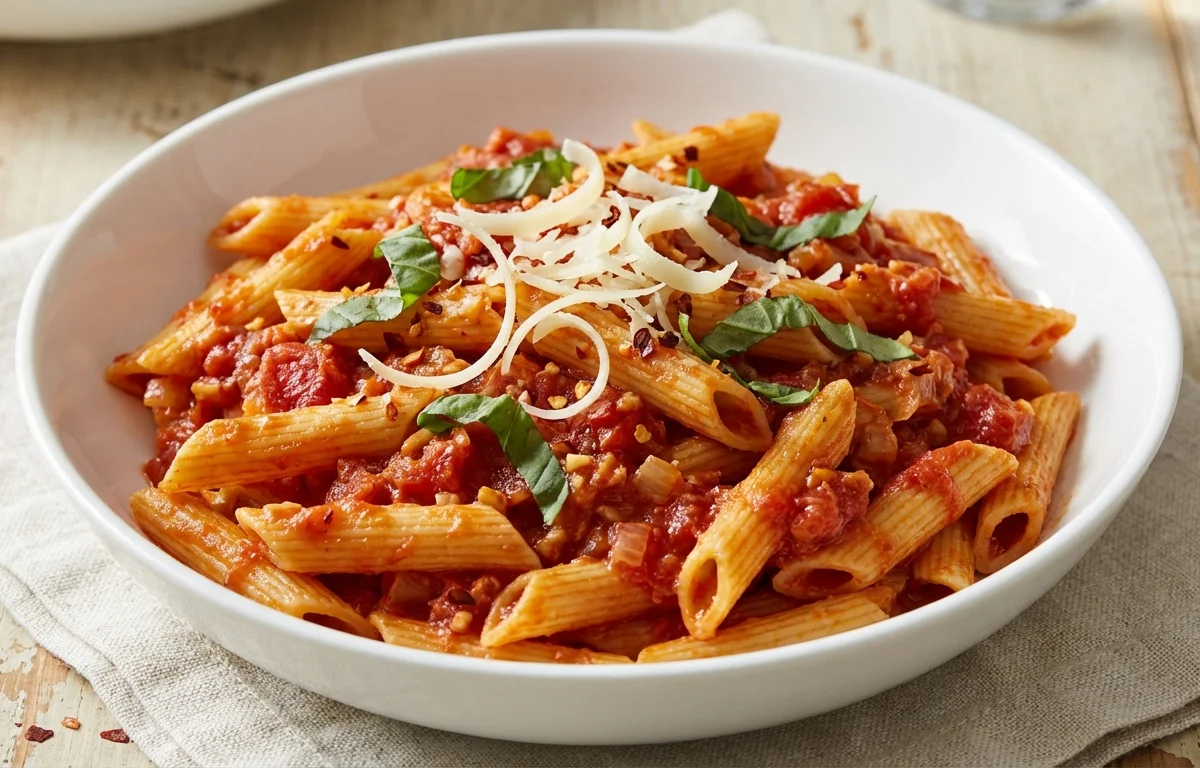
Penne with Marinara Sauce
A timeless Italian-American classic, this simple penne with marinara sauce is pure comfort food. Al dente pasta tossed in a rich, flavorful tomato and garlic sauce, ready in under 30 minutes.
For 4 servings
Cook the Pasta
- Fill a large pot with 4-5 quarts of water and bring to a rolling boil. Add 1 tablespoon of salt.
- Add the penne pasta to the boiling water and cook according to package directions until al dente, typically 10-12 minutes. Stir occasionally to prevent sticking.
- Before draining, carefully reserve 1 cup of the starchy pasta water. This is key to a perfect sauce consistency.
- Drain the pasta in a colander. Do not rinse it.
Sauté Aromatics
- While the pasta cooks, heat the olive oil in a large skillet or Dutch oven over medium heat.
- Add the finely chopped onion and sauté for 5-7 minutes, until it becomes soft, translucent, and slightly sweet.
- Add the minced garlic and optional red pepper flakes. Cook for another 60 seconds until fragrant, stirring constantly to prevent the garlic from burning.
Simmer the Marinara Sauce
- Pour the crushed tomatoes into the skillet. Stir in the dried oregano, sugar, 1 teaspoon of salt, and black pepper.
- Bring the sauce to a gentle simmer, then reduce the heat to low. Cover the skillet and let it simmer for at least 15-20 minutes. This allows the flavors to meld and deepen.
- Taste the sauce and adjust seasoning if necessary. It might need a pinch more salt or sugar depending on the acidity of your tomatoes.
Combine and Finish
- Add the drained penne directly to the skillet with the marinara sauce.
- Toss everything together over low heat for 1-2 minutes, until the pasta is thoroughly coated.
- If the sauce is too thick, stir in a splash of the reserved pasta water (start with 1/4 cup) until you reach your desired consistency. The starch in the water will help the sauce cling to the pasta beautifully.
Serve
- Divide the pasta among four serving bowls.
- Garnish generously with fresh chopped basil and freshly grated Parmesan cheese.
- Serve immediately and enjoy.
What to keep in mind.
5 tips from the recipe — small details that make a real difference to the final dish.
- 1Don't rinse the pasta after draining. The starch on its surface helps the sauce cling better.
- 2Always salt your pasta water generously. It's the only chance you get to season the pasta itself. The rule of thumb is for it to taste like the sea.
- 3Reserve more pasta water than you think you'll need. It's liquid gold for adjusting sauce consistency.
- 4For the best flavor, use high-quality canned tomatoes, such as San Marzano. They are less acidic and have a richer taste.
- 5Let the sauce simmer for the full 20 minutes, or even longer if you have time. A longer, slower simmer develops a much deeper flavor.
Adapt it for your goals.
Spicy Arrabbiata
Increase the red pepper flakes to 1 teaspoon (or to your taste) for a fiery 'angry' sauce.
Protein PackedProtein-Packed
Brown 1 lb of Italian sausage or ground beef with the onions, or add cooked meatballs or grilled chicken to the finished sauce.
Veggie DelightVeggie Delight
Sauté 1 cup of chopped vegetables like zucchini, bell peppers, or mushrooms along with the onion for added nutrients and texture.
Creamy Rosé SauceCreamy Rosé Sauce
Stir in 1/4 cup of heavy cream or mascarpone cheese at the very end of cooking for a richer, creamier sauce.
Why this is on our healthy list.
Rich in Lycopene
Tomatoes are an excellent source of lycopene, a powerful antioxidant linked to a reduced risk of certain chronic diseases and improved heart health.
Source of Healthy Fats
Extra virgin olive oil provides monounsaturated fats, which are known to support cardiovascular health by helping to lower 'bad' LDL cholesterol levels.
Provides Sustained Energy
The complex carbohydrates in pasta are broken down slowly, providing a steady release of energy that helps you feel full and fueled for longer.
Frequently asked questions
A typical serving of this recipe contains approximately 450-550 calories. This is an estimate and can vary based on the exact ingredients used, such as the type of pasta and the amount of cheese.