
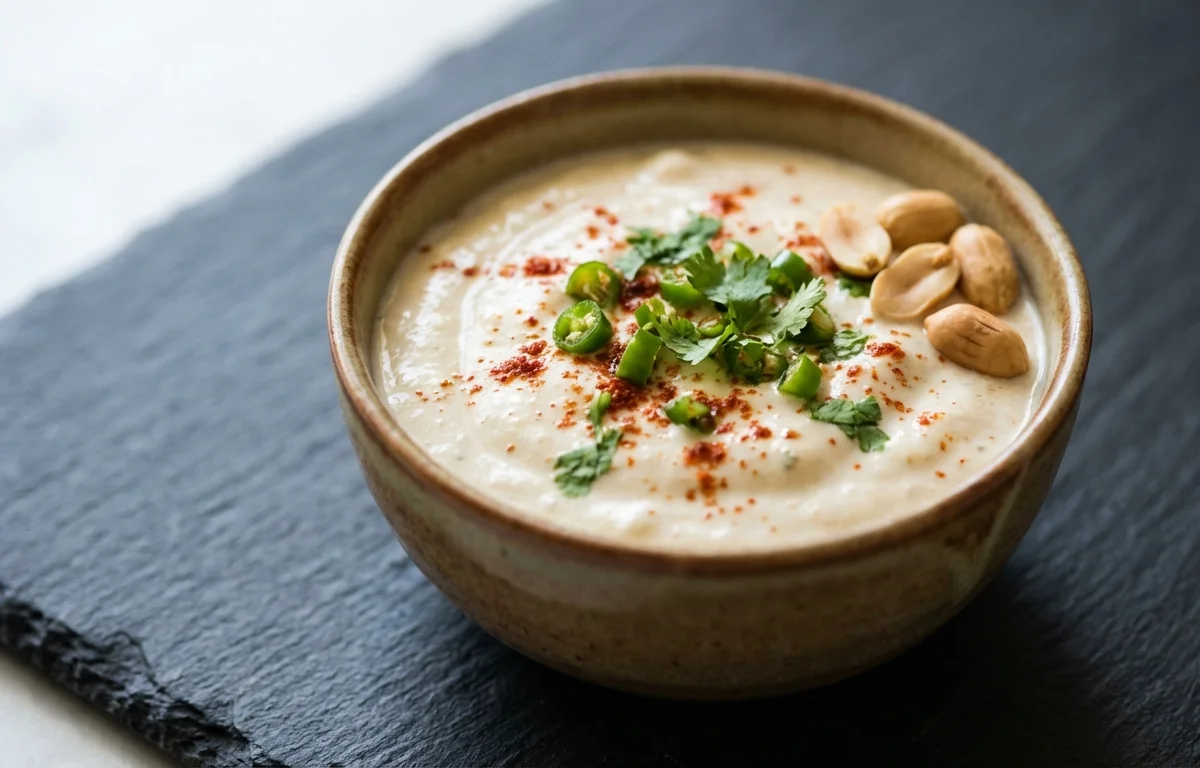
Peanut Curd
Discover a creamy, tangy, and completely dairy-free alternative to traditional yogurt. This homemade peanut curd is surprisingly easy to make, offering a delicious nutty flavor and probiotic benefits. It's the perfect plant-based accompaniment for Indian meals or a healthy snack on its own.
For 4 servings
7 steps. 5 minutes total.
- 1
Step 1
- a.Soak the Peanuts (8-10 hours)
- b.Rinse 1 cup of raw peanuts thoroughly. Place them in a large bowl and cover with at least 3 cups of water.
- c.Let them soak for 8-10 hours or overnight. This step is crucial for softening the peanuts to yield a creamier milk.
- 2
Step 2
- a.Prepare Peanut Milk (3-4 minutes)
- b.Drain the soaking water and give the peanuts another good rinse.
- c.Transfer the soaked peanuts to a high-speed blender along with 4 cups of fresh water.
- d.Blend on the highest setting for 2-3 minutes until the mixture is completely smooth and milky, with no gritty texture.
- 3
Step 3
- a.Strain the Milk (5 minutes)
- b.Line a large bowl with a nut milk bag or a double layer of fine muslin cloth.
- c.Pour the blended peanut mixture into the cloth.
- d.Gather the edges of the cloth and squeeze firmly to extract all the liquid. The leftover pulp (okara) can be saved for other recipes like rotis or veggie patties.
- 4
Step 4
- a.Warm and Culture the Milk (5 minutes)
- b.Pour the strained peanut milk into a clean, heavy-bottomed pot.
- c.Heat over a low-medium flame, stirring occasionally, for about 4-5 minutes until it becomes lukewarm (around 40-45°C or 105-115°F).
- d.Test the temperature with a clean finger; it should feel comfortably warm, not hot. Do not boil, as this will prevent the curd from setting.
- 5
Step 5
- a.Set for Fermentation (8-16 hours)
- b.Select a clean, dry glass, ceramic, or food-grade steel container for setting the curd.
- c.Place the 2 whole green chilies, with their stems intact, at the bottom of the container.
- d.Gently pour the lukewarm peanut milk over the chilies. Do not stir the mixture.
- 6
Step 6
- a.Ferment in a Warm Place
- b.Cover the container with a lid, placing it loosely without sealing it airtight, or use a small plate.
- c.Keep the container in a warm, dark, and undisturbed place, such as inside a turned-off oven or a kitchen cupboard, for 8 to 16 hours.
- d.The fermentation time will vary significantly based on the ambient temperature.
- 7
Step 7
- a.Check, Chill, and Serve
- b.After 8 hours, gently tilt the container to check if the curd has set. It should be thick and wobbly like a soft pudding, not liquid.
- c.If it's still runny, allow it to ferment for a few more hours, checking every 2 hours.
- d.Once perfectly set, remove and discard the green chilies. Gently stir in the salt, if using.
- e.Refrigerate for at least 4 hours before serving. Chilling will help it thicken further and develop its flavor.
What to keep in mind.
6 tips from the recipe — small details that make a real difference to the final dish.
- 1Temperature is key: The milk must be lukewarm, not hot. Overheating will kill the natural bacteria needed for fermentation.
- 2Climate Matters: In warm climates, curd sets faster (6-8 hours). In colder weather, it can take up to 16 hours. Placing it in a turned-off oven with the light on can create a warm environment.
- 3Use a Good Starter: The stems of green chilies contain lactobacilli that help in fermentation. For your next batch, use 2-3 tablespoons of this set peanut curd as a starter for a more reliable result.
- 4Avoid Reactive Metals: Always use glass, ceramic, or food-grade stainless steel containers for setting the curd. Avoid aluminum or copper.
- 5For a Milder Flavor: If you find the peanut taste too strong, try using blanched, skinless peanuts.
- 6Don't Disturb: Avoid moving or shaking the container while the curd is setting, as this can disrupt the process.
Adapt it for your goals.
Starter Variation
Instead of green chilies, you can use 2 tablespoons of a previous batch of peanut curd, store-bought vegan yogurt culture, or the liquid from water-packed chilies (refrigerated section) as a starter.
Nut VariationNut Variation
This method also works well with cashews or almonds. Cashew curd is creamier and milder, while almond curd has a more subtle flavor. Soaking times may vary.
Flavor InfusionFlavor Infusion
After the curd is set, you can stir in a pinch of sugar for a milder taste, or temper it with mustard seeds, curry leaves, and asafoetida (hing) for a savory South Indian 'thayir'.
Why this is on our healthy list.
Excellent Dairy-Free Alternative
Perfect for those with lactose intolerance or following a vegan diet, it provides a creamy texture and tangy flavor without any dairy.
Rich in Healthy Fats
Peanuts are a great source of monounsaturated and polyunsaturated fats, which are beneficial for heart health and can help lower bad cholesterol levels.
Promotes Gut Health
As a fermented food, peanut curd is a natural source of probiotics. These beneficial bacteria support a healthy gut microbiome, aiding digestion and boosting immunity.
Good Source of Plant-Based Protein
This curd provides a significant amount of protein, which is essential for muscle repair, growth, and overall body function.
Frequently asked questions
The most common reasons are: the milk was too hot or too cold when you added the starter, the starter wasn't active, the container was disturbed during fermentation, or the ambient temperature was too low. Ensure the milk is just lukewarm and keep it in a consistently warm place.