
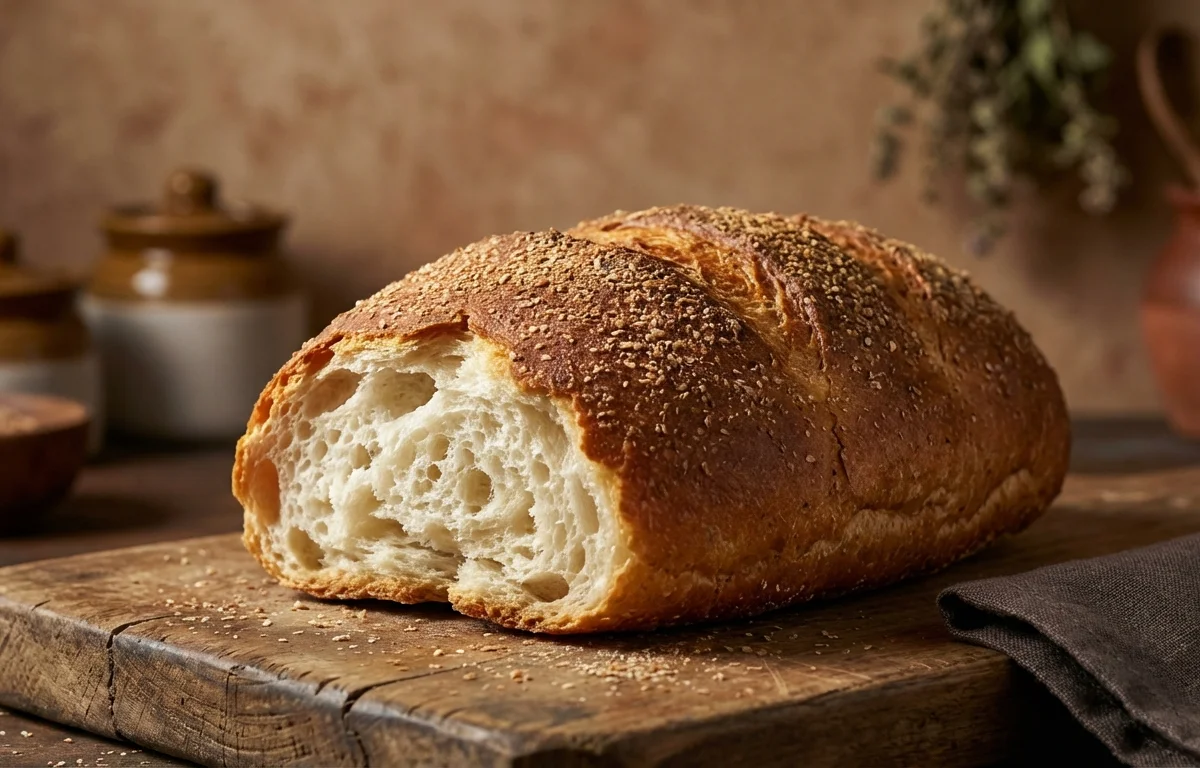
Pauruti
Experience the authentic taste of Goa with Pauruti, a traditional Goan bread. Known for its soft, airy interior and a distinct, rustic crust dusted with wheat bran, this bread is the perfect companion for sopping up rich Goan curries like Vindaloo or Sorpotel. Simple to bake at home, it brings the warmth of a Goan bakery right to your kitchen.
For 4 servings
7 steps. 105 minutes total.
- 1
Step 1
- a.Activate the Yeast
- b.In a small bowl, combine the warm water, sugar, and active dry yeast.
- c.Stir gently and let the mixture stand for 5-10 minutes until it becomes frothy and bubbly. This confirms the yeast is active and ready to use.
- 2
Step 2
- a.Prepare and Knead the Dough
- b.In a large mixing bowl, whisk together the atta, maida, and salt.
- c.Create a well in the center and pour in the activated yeast mixture.
- d.Mix with a spoon or your hands until a shaggy dough forms.
- e.Transfer the dough to a lightly floured surface and knead for 10-12 minutes until it is smooth, soft, and elastic. It should spring back when gently pressed with a finger.
- 3
Step 3
- a.First Rise (Bulk Fermentation)
- b.Lightly grease a clean bowl with oil.
- c.Place the kneaded dough in the bowl, turning it once to coat the surface with oil.
- d.Cover the bowl with a damp cloth or plastic wrap.
- e.Let it rise in a warm, draft-free place for 60-90 minutes, or until it has doubled in size.
- 4
Step 4
- a.Shape the Pauruti
- b.Gently punch down the risen dough to release the air.
- c.Divide the dough into 8 equal portions.
- d.Roll each portion into a smooth ball, then flatten it into a square or round disc about 4 inches across and 1/2 inch thick.
- 5
Step 5
- a.Second Rise (Proofing)
- b.Place the shaped dough on a baking sheet lined with parchment paper, leaving some space between each piece.
- c.Generously sprinkle the tops with wheat bran.
- d.Cover loosely with a clean cloth and let them rest for another 30 minutes. They will become slightly puffy.
- 6
Step 6
- a.Bake the Pauruti
- b.During the last 10 minutes of the second rise, preheat your oven to 220°C (425°F).
- c.For a crispier crust, place a tray of hot water on the bottom rack of the oven to create steam.
- d.Bake the pauruti for 12-15 minutes, until they are puffed up and have a deep golden-brown color.
- 7
Step 7
- a.Cool and Serve
- b.Transfer the baked pauruti to a wire rack to cool slightly.
- c.They are best enjoyed warm with your favorite Goan curry, stew, or simply with butter.
What to keep in mind.
5 tips from the recipe — small details that make a real difference to the final dish.
- 1Ensure your water is lukewarm, not hot. Water that is too hot can kill the yeast, preventing the dough from rising.
- 2Kneading is crucial for developing gluten, which gives the bread its characteristic soft and chewy texture. Don't cut this step short.
- 3The steam from a water tray in the oven helps the bread to rise rapidly (oven spring) and develops a crispier crust.
- 4To check if the bread is fully baked, tap the bottom of a loaf. It should sound hollow.
- 5If using a stand mixer, use the dough hook attachment and knead on low speed for 8-10 minutes.
Adapt it for your goals.
Healthier
For a 100% whole grain version, replace the maida with atta. You may need to add an extra tablespoon or two of water as whole wheat flour absorbs more liquid.
SeededSeeded
Add 2 tablespoons of mixed seeds like sesame, flax, or sunflower seeds into the dough during the kneading stage for added texture and nutrients.
Slightly SweetSlightly Sweet
For a version that pairs well with tea or coffee, add an extra tablespoon of sugar or 1 tablespoon of powdered jaggery to the dough.
Why this is on our healthy list.
Rich in Dietary Fiber
The use of whole wheat flour and a wheat bran coating makes Pauruti a good source of dietary fiber, which aids digestion, promotes a feeling of fullness, and helps maintain stable blood sugar levels.
Provides Sustained Energy
As a source of complex carbohydrates from whole grains, Pauruti provides a steady and sustained release of energy, making it a fulfilling accompaniment to any meal.
Supports Gut Health
The fermentation process involved in making yeast-leavened bread can contribute to a healthier gut microbiome by introducing beneficial microorganisms and making nutrients more bioavailable.
Frequently asked questions
One serving of Pauruti, which consists of two pieces, contains approximately 350-370 calories. The calories primarily come from the carbohydrates in the flour.