
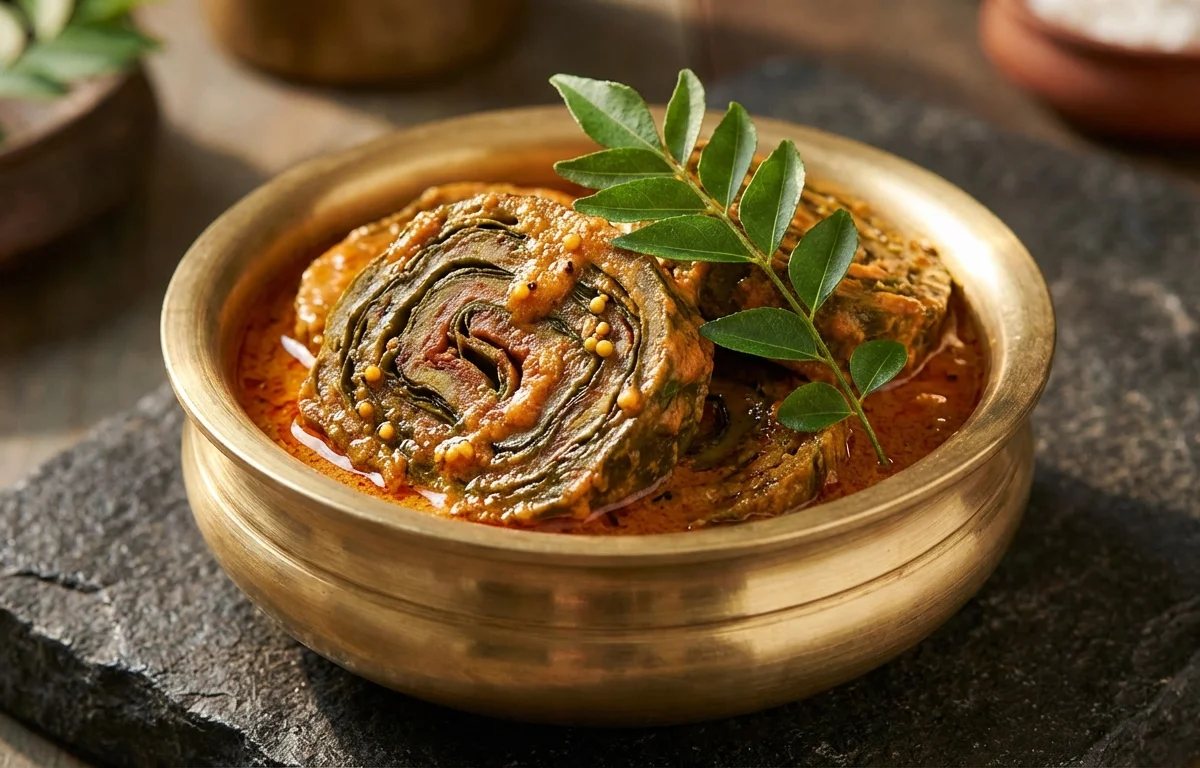
Pathrode Gassi
A classic Mangalorean delicacy where steamed colocasia leaf rolls, stuffed with a spiced rice batter, are simmered in a rich, tangy, and aromatic coconut curry. A unique and flavorful dish.
For 4 servings
6 steps. 40 minutes total.
- 1
Step 1
- a.Prepare the Pathrode Batter
- b.Wash the rice and dals thoroughly. Soak them together in water for at least 4 hours, then drain completely.
- c.In a grinder, combine the soaked rice-dal mixture, 3/4 cup grated coconut, 6 Byadgi red chillies, 1 tbsp coriander seeds, 1 tsp cumin seeds, 1 tbsp tamarind paste, jaggery, hing, and 1 tsp salt.
- d.Grind to a thick and slightly coarse paste, adding a few tablespoons of water only if necessary. The batter must be thick enough to spread without dripping.
- 2
Step 2
- a.Prepare and Steam the Pathrode Rolls
- b.Carefully wash the colocasia leaves. Place them glossy-side down and use a knife to shave off the thick central vein from the back of each leaf to prevent itchiness.
- c.Lay the largest leaf down and spread a thin, even layer of the batter over its surface.
- d.Place another leaf on top and repeat, stacking 3-4 leaves.
- e.Fold the sides of the stack inwards, then roll it tightly from the bottom up to form a compact log.
- f.Place the rolls in a steamer and steam for 20-25 minutes. A toothpick inserted into the center should come out clean.
- g.Remove the rolls and allow them to cool completely before handling.
- 3
Step 3
- a.Prepare the Gassi Masala
- b.In a small pan over low heat, dry roast the remaining 5 red chillies, 0.5 tbsp coriander seeds, and 0.5 tsp cumin seeds for 1-2 minutes until fragrant. Let them cool.
- c.In a grinder, combine the roasted spices, the remaining 1 cup of grated coconut, garlic cloves, 0.5 tbsp tamarind paste, and turmeric powder.
- d.Add about 1/2 cup of water and grind to a very smooth paste.
- 4
Step 4
- a.Cook the Gassi
- b.Heat 1 tbsp of coconut oil in a heavy-bottomed pan over medium heat. Add the chopped onion and sauté for 5-6 minutes until golden brown.
- c.Add the ground gassi masala and sauté for 5-7 minutes, stirring continuously, until the raw aroma disappears and oil begins to separate from the masala.
- d.Pour in 2 cups of water and the remaining 1 tsp of salt. Stir well and bring the gravy to a gentle boil.
- 5
Step 5
- a.Combine and Simmer
- b.Once the steamed pathrode rolls are completely cool, slice them into 1-inch thick rounds.
- c.Gently place the pathrode slices into the simmering gassi. Be careful not to overcrowd the pan.
- d.Reduce the heat to low and let the curry simmer for 5-6 minutes, allowing the pathrode to absorb the flavors. Avoid vigorous stirring to prevent the slices from breaking.
- 6
Step 6
- a.Temper and Serve
- b.In a small tempering pan, heat the remaining 1 tbsp of coconut oil. Add the mustard seeds and let them splutter.
- c.Add the curry leaves and let them sizzle for a few seconds.
- d.Pour the hot tempering over the Pathrode Gassi and give it a very gentle stir.
- e.Serve hot with steamed rice.
What to keep in mind.
6 tips from the recipe — small details that make a real difference to the final dish.
- 1Ensure colocasia leaves are fresh and tender. Older leaves are more likely to cause throat irritation.
- 2Removing the central vein is crucial to prevent itchiness. Shave it down until it's flush with the leaf.
- 3The pathrode batter must be thick. A runny batter will drip off the leaves and not form proper rolls.
- 4Allowing the steamed rolls to cool completely is essential for clean, neat slices that don't crumble.
- 5Be very gentle when adding pathrode slices to the curry and while stirring to prevent them from breaking apart.
- 6The balance of tangy tamarind and sweet jaggery is key to the authentic taste of this dish. Adjust to your preference.
Adapt it for your goals.
Serving Suggestion
For a richer taste and firmer texture, shallow fry the steamed pathrode slices in a little coconut oil until golden brown on both sides before adding them to the gassi.
Ingredient SubstitutionIngredient Substitution
If you cannot find colocasia leaves, you can make a similar curry using steamed taro root (arbi) or yam (suran) cubes instead of pathrode rolls.
Dietary PreferenceDietary Preference
To make this recipe Jain-friendly, omit the onion and garlic. The flavor profile will still be delicious due to the rich blend of spices and coconut.
Why this is on our healthy list.
Rich in Fiber
Colocasia leaves and lentils are excellent sources of dietary fiber, which aids digestion, promotes gut health, and helps in maintaining stable blood sugar levels.
Good Source of Plant-Based Protein
The combination of rice and three types of lentils (urad, chana, toor) creates a complete protein profile, making this dish a great option for vegetarians and vegans.
Provides Essential Vitamins and Minerals
Colocasia leaves are packed with Vitamin A and C, crucial for vision and immunity. Spices like turmeric and coriander offer anti-inflammatory and antioxidant benefits.
Contains Healthy Fats
The use of fresh coconut and coconut oil provides medium-chain triglycerides (MCTs), which are easily digestible fats that can serve as a quick source of energy for the body.
Frequently asked questions
Pathrode are traditional steamed rolls made from colocasia (taro) leaves that are smeared with a spiced rice and lentil batter. They can be eaten on their own, shallow-fried as a snack, or added to a curry like this gassi.