
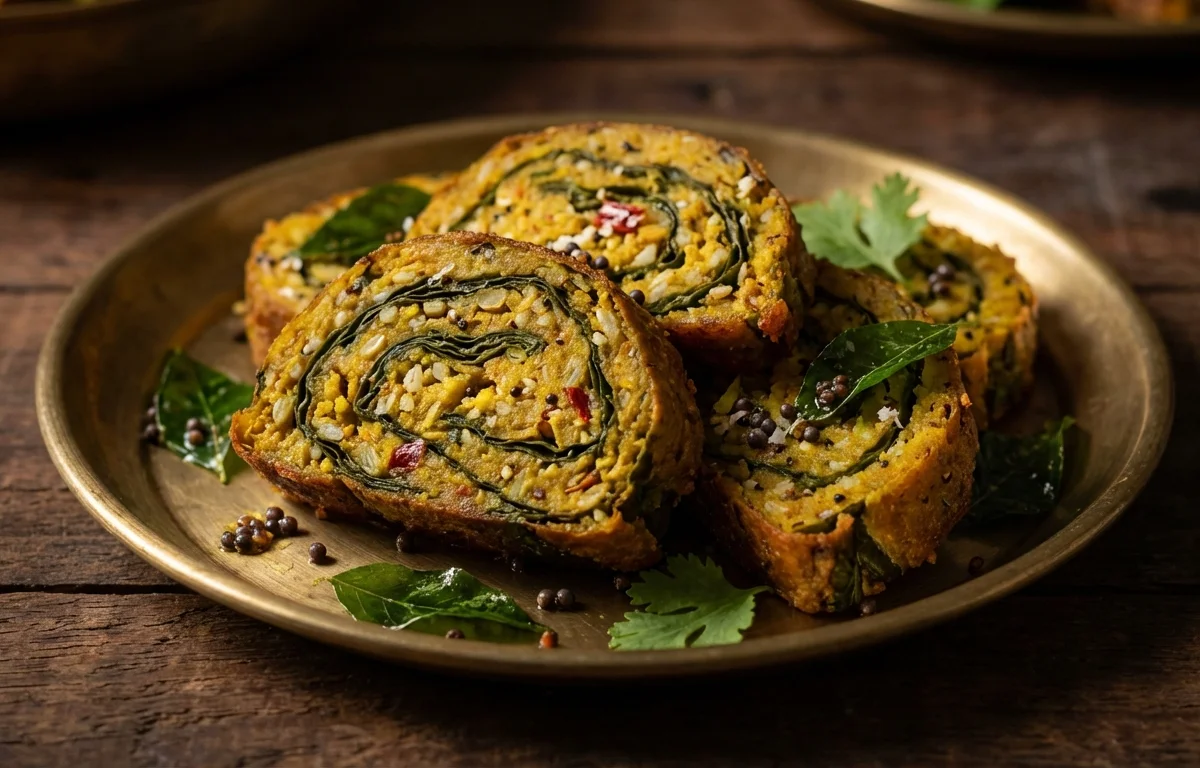
Pathrode Fry
A classic Mangalorean snack where tender colocasia leaves are layered with a tangy rice and lentil batter, steamed, and then pan-fried to crispy perfection. A delightful mix of savory, sweet, and tangy flavors.
For 4 servings
6 steps. 45 minutes total.
- 1
Step 1
- a.Soak Rice and Dals
- b.Wash the rice, urad dal, and toor dal thoroughly under running water.
- c.Soak them together in a bowl with enough water to cover for at least 4 hours, or overnight.
- 2
Step 2
- a.Prepare the Batter
- b.Drain the soaked rice and dals completely.
- c.In a wet grinder or a powerful blender, combine the drained rice-dal mixture, dried red chilies, grated coconut, coriander seeds, cumin seeds, turmeric powder, and hing.
- d.Squeeze the juice from the soaked tamarind into the grinder, discarding the pulp.
- e.Add the jaggery and salt.
- f.Grind everything into a thick, slightly coarse paste. Add water sparingly, 1 tablespoon at a time, only if needed. The batter must be thick like a paste to spread easily without dripping.
- 3
Step 3
- a.Prepare the Colocasia Leaves
- b.Rinse the colocasia leaves well and pat them completely dry with a kitchen towel.
- c.Place a leaf with the vein-side up on a clean, flat surface.
- d.Using a sharp knife, carefully shave off the thick central vein and any other prominent veins. This step is crucial to prevent throat irritation.
- 4
Step 4
- a.Assemble the Pathrode Rolls
- b.Take the largest prepared leaf and place it vein-side up.
- c.Spread a thin, even layer of the batter all over the leaf's surface.
- d.Place another leaf on top, alternating the direction of the stem, and apply another layer of batter.
- e.Repeat this process, stacking 4-5 leaves.
- f.Fold the sides of the leaf stack inwards by about an inch.
- g.Starting from the bottom (wider end), roll the stack up tightly to form a firm, compact log.
- 5
Step 5
- a.Steam the Rolls
- b.Lightly grease a steamer plate or basket.
- c.Carefully place the prepared rolls on the plate, ensuring they don't touch each other.
- d.Steam on medium-high heat for 25-30 minutes.
- e.To check for doneness, insert a toothpick or knife into the center of a roll; it should come out clean.
- f.Once cooked, remove the rolls from the steamer and let them cool down completely on a wire rack. This can take up to an hour but is essential for clean slicing.
- 6
Step 6
- a.Slice and Fry the Pathrode
- b.Once the steamed rolls are completely cool, use a sharp knife to cut them into 1/2-inch thick slices.
- c.Heat coconut oil in a wide, heavy-bottomed pan or tawa over medium heat.
- d.Add the mustard seeds. Once they begin to splutter, add the curry leaves and sauté for a few seconds.
- e.Carefully arrange the pathrode slices in a single layer in the pan.
- f.Shallow fry for 4-5 minutes on each side, until they are golden brown and crisp.
- g.Remove from the pan and serve immediately.
What to keep in mind.
6 tips from the recipe — small details that make a real difference to the final dish.
- 1Always use fresh, tender colocasia leaves. Older, tougher leaves can be fibrous and are more likely to cause throat irritation.
- 2The most critical step to prevent itchiness is to meticulously trim the thick veins from the leaves and use enough tamarind and jaggery in the batter.
- 3The batter consistency is key. It must be a thick, spreadable paste. A runny batter will ooze out during steaming and the rolls won't hold their shape.
- 4Do not slice the steamed rolls while they are warm. They will crumble. Complete cooling is mandatory for firm, clean slices.
- 5For an extra crispy texture, you can lightly coat the slices in fine semolina (rava) before shallow frying.
- 6Fry the slices on medium heat to ensure they become crispy without burning.
Adapt it for your goals.
Healthier Option
For a lower-oil version, you can bake the pathrode slices. Arrange them on a baking sheet, lightly brush with oil, and bake at 200°C (400°F) for 15-20 minutes, flipping halfway, until crisp.
Extra CrispyExtra Crispy
After slicing the steamed rolls, coat each slice in a thin layer of fine semolina (rava) or rice flour before pan-frying for an exceptionally crunchy exterior.
Gravy VersionGravy Version
Instead of frying, the steamed pathrode slices can be added to a traditional Mangalorean coconut-based curry, known as 'Pathrode Gassi'.
Why this is on our healthy list.
Rich in Dietary Fiber
Colocasia leaves and lentils are excellent sources of dietary fiber, which aids digestion, promotes gut health, and helps in maintaining stable blood sugar levels.
Good Source of Plant-Based Protein
The combination of rice and two types of dal (urad and toor) creates a complete protein profile, making this a nutritious snack for vegetarians and vegans.
Provides Essential Vitamins and Minerals
Colocasia leaves are packed with Vitamin A, Vitamin C, and essential minerals like potassium and iron, which support vision, immunity, and blood health.
Digestive Aid
The inclusion of traditional Indian spices like hing (asafoetida) and cumin seeds helps in preventing bloating and aids in better digestion.
Frequently asked questions
The itchiness is caused by calcium oxalate crystals present in colocasia leaves. To prevent this, always use tender leaves, meticulously remove the thick veins, and use a sufficient amount of a souring agent like tamarind, which helps neutralize the crystals.