
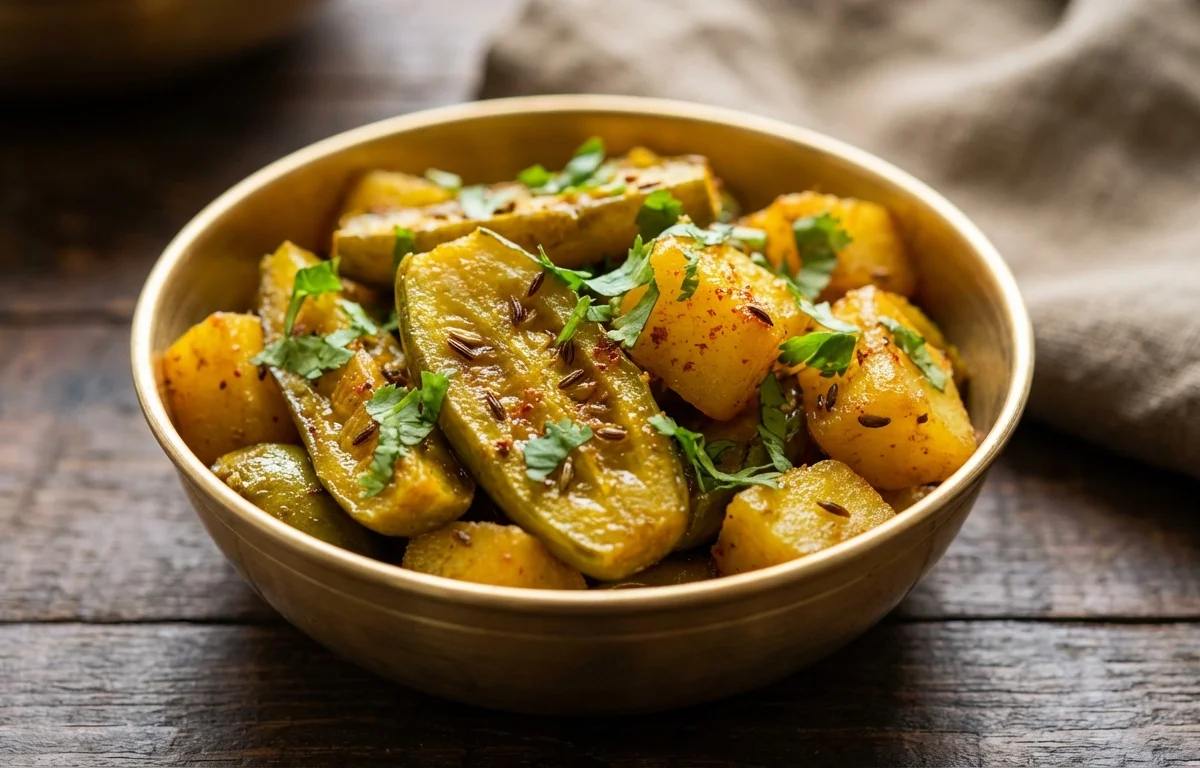
Parwal Bhujia
A simple and delicious North Indian stir-fry made with thinly sliced pointed gourd and potatoes. This quick, everyday side dish is lightly spiced and pairs perfectly with dal and roti.
For 4 servings
3 steps. 20 minutes total.
- 1
Step 1
- a.Prepare the Vegetables
- b.Wash the parwal thoroughly. Trim both ends and use a knife to lightly scrape the outer skin; do not peel it completely.
- c.Slice the parwal into thin rounds, about 2-3 mm thick.
- d.Peel the potato and slice it into thin half-moons, matching the thickness of the parwal.
- e.Thinly slice the onion and slit the green chilies lengthwise.
- 2
Step 2
- a.Sauté and Cook the Bhujia
- b.Heat mustard oil in a heavy-bottomed pan or kadai over medium-high heat until it is slightly smoky. This step is crucial to remove the oil's raw pungency.
- c.Reduce the heat to medium, add the cumin seeds, and let them splutter for about 30 seconds.
- d.Add the asafoetida, followed by the sliced onions and green chilies. Sauté for 2-3 minutes until the onions become soft and translucent.
- e.Add the sliced parwal and potatoes to the pan.
- f.Sprinkle turmeric powder, red chili powder, coriander powder, and salt over the vegetables. Mix everything thoroughly to ensure the vegetables are evenly coated with spices.
- g.Cover the pan, reduce the heat to low, and let it cook for 10-12 minutes. Stir every 3-4 minutes to prevent sticking. The vegetables will cook in their own steam; do not add water.
- h.Remove the lid and check if the vegetables are tender by pressing a piece of potato with a spatula. If not, cover and cook for another 2-3 minutes.
- 3
Step 3
- a.Crisp, Garnish, and Serve
- b.Once the vegetables are tender, increase the heat to medium-high. Cook uncovered for 4-5 minutes, stirring frequently, until any excess moisture evaporates and the vegetables get slightly browned and crispy at the edges.
- c.Turn off the heat. Sprinkle the amchur powder over the bhujia and give it a final mix.
- d.Garnish with freshly chopped coriander leaves.
- e.Serve hot with roti, paratha, or as a side dish with dal and rice.
What to keep in mind.
6 tips from the recipe — small details that make a real difference to the final dish.
- 1Slicing the vegetables thinly and uniformly is key to ensuring they cook quickly and evenly.
- 2Do not add any water. The bhujia should cook in its own moisture, which concentrates the flavor.
- 3Using mustard oil gives this dish its authentic, pungent flavor. If you don't have it, you can use any vegetable oil.
- 4For a crispier texture, make sure to cook the bhujia uncovered for the last few minutes.
- 5Lightly scraping the parwal skin instead of peeling it retains more nutrients and adds to the texture.
- 6Add amchur (dry mango powder) at the very end, after turning off the heat, to retain its tangy flavor.
Adapt it for your goals.
No Potato Version
For a lighter version, you can omit the potatoes entirely and increase the amount of parwal to 400g. The cooking time might be slightly shorter.
Bengali StyleBengali Style
For a Bengali touch, use 1 tsp of panch phoron (five-spice blend) instead of just cumin seeds and add a pinch of sugar to balance the flavors.
With GarlicWith Garlic
For a different flavor profile, add 2-3 cloves of minced garlic along with the onions.
Spicier VersionSpicier Version
Increase the amount of red chili powder to 1 tsp and use 3-4 green chilies for extra heat.
Why this is on our healthy list.
Rich in Fiber
Parwal is an excellent source of dietary fiber, which aids digestion, prevents constipation, and helps maintain a healthy gut microbiome.
Good for Blood Purification
In traditional Ayurvedic medicine, parwal is known for its blood-purifying properties, helping to cleanse the blood and tissues from toxins.
Boosts Immunity
The presence of Vitamin C and various antioxidants in parwal helps strengthen the immune system and protect the body against common infections.
Low in Calories
This dish is relatively low in calories, making it a great choice for those managing their weight. The fiber content also promotes a feeling of fullness, reducing overall calorie intake.
Frequently asked questions
Yes, it's a very healthy everyday dish. Parwal is low in calories and rich in fiber, vitamins A, and C. Using minimal oil and cooking with potatoes makes it a balanced and nutritious side dish.