
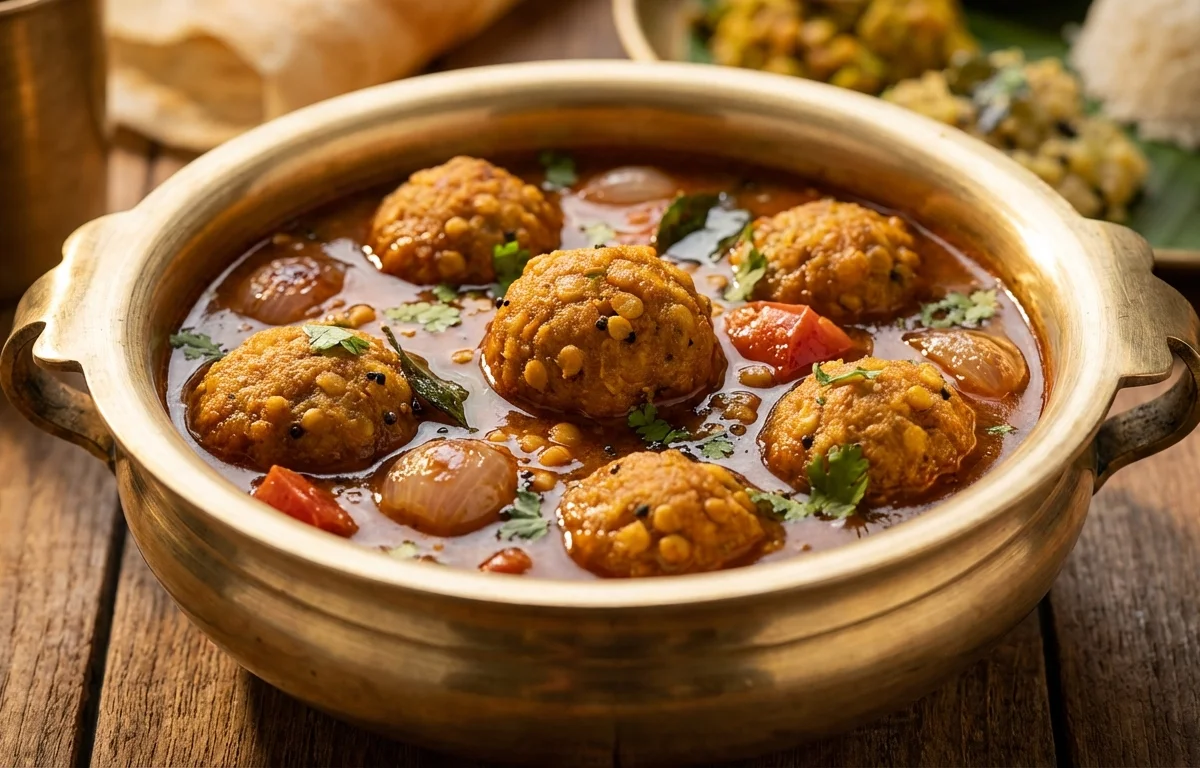
Paruppu Urundai Kulambu
Tender, steamed lentil dumplings simmered in a tangy and spicy tamarind gravy. This classic Tamil dish is a hearty and flavorful main course, best enjoyed with hot steamed rice.
For 4 servings
Soak the Lentils
- Wash the toor dal and chana dal under running water until the water runs clear.
- Soak them together in ample water for at least 2 hours. Do not over-soak, as it can make the dumplings too soft.
- After 2 hours, drain the water completely. Let the dals sit in a colander for 5-10 minutes to remove all excess water.
Prepare the Urundai (Dumpling) Mixture
- In a blender or mixie jar, combine the drained dals, dried red chillies, 1 tsp of fennel seeds, and asafoetida.
- Grind the mixture into a coarse, thick paste without adding any water. Pulse a few times to get the right texture. If absolutely necessary, add 1-2 teaspoons of water.
- Transfer the paste to a mixing bowl. Add the finely chopped onion, coriander leaves, and 0.75 tsp of salt. Mix well to combine.
Steam the Urundais
- Grease an idli plate or a steamer tray with a little oil.
- Take small portions of the lentil mixture and shape them into firm, lime-sized balls.
- Arrange the urundais on the greased plate, ensuring they don't touch each other.
- Steam for 10-12 minutes over medium heat. The urundais are cooked when they feel firm and a toothpick inserted into the center comes out clean. Set aside.
Prepare the Gravy Base
- In a bowl, mix the tamarind paste with 1 cup of warm water until fully dissolved. Set aside.
- In a small blender jar, add the grated coconut and the remaining 0.5 tsp of fennel seeds. Add about 1/4 cup of water and grind to a very smooth, fine paste.
Cook the Kulambu
- Heat the gingelly oil in a heavy-bottomed pan or kadai over medium heat.
- Add the mustard seeds and let them splutter. Then, add the fenugreek seeds and sauté for a few seconds until they turn golden.
- Add the curry leaves, peeled sambar onions, and crushed garlic. Sauté for 3-4 minutes until the onions turn soft and translucent.
- Add the chopped tomato and cook for 4-5 minutes until it becomes soft and mushy.
- Reduce the heat to low. Add the turmeric powder and sambar powder. Stir continuously for 1 minute until the raw smell disappears, being careful not to burn the spices.
Simmer the Gravy
- Pour in the prepared tamarind water and add 2 more cups of fresh water. Add the remaining 1 tsp of salt and mix well.
- Bring the gravy to a rolling boil, then reduce the heat and let it simmer for 10-12 minutes. This step is crucial to cook out the raw flavor of the tamarind and masalas.
- Stir in the ground coconut paste. Continue to simmer for another 5-7 minutes, until the gravy thickens and you see a thin layer of oil separating on the surface.
Combine and Finish
- Gently slide the steamed urundais one by one into the simmering kulambu.
- Allow them to cook in the gravy on low heat for 5-7 minutes, which helps them absorb the flavors. Avoid vigorous stirring to prevent them from breaking.
- Turn off the heat. Let the kulambu rest for at least 15 minutes before serving to allow the flavors to meld together.
Serve
- Garnish with fresh coriander leaves if desired. Serve hot with steamed rice, idli, or dosa.
What to keep in mind.
6 tips from the recipe — small details that make a real difference to the final dish.
- 1For the best texture, ensure the lentil paste for the urundais is coarse and not too smooth.
- 2Steaming the urundais before adding them to the gravy is a foolproof method to prevent them from dissolving.
- 3Gingelly (Indian sesame) oil provides the most authentic and traditional flavor for this kulambu.
- 4If your lentil mixture becomes watery, add a tablespoon of rice flour to help bind it.
- 5The kulambu tastes even better the next day as the flavors deepen and meld together.
- 6Adjust the amount of tamarind and sambar powder to suit your preferred level of tanginess and spice.
Adapt it for your goals.
Vegetable Addition
Add vegetables like drumsticks, brinjal (eggplant), or yellow pumpkin to the gravy along with the tomatoes for a more wholesome dish.
No Onion/Garlic VersionNo-Onion/Garlic Version
For a sattvic version, you can skip the onions and garlic. The flavor will be different but still delicious.
Direct Cooking MethodDirect Cooking Method
For a quicker, more traditional (but riskier) method, you can drop the raw urundais directly into the boiling kulambu. Ensure the gravy is at a rolling boil to prevent them from dissolving.
Richer GravyRicher Gravy
For a creamier and richer gravy, you can grind 5-6 soaked cashews along with the coconut and fennel seeds.
Why this is on our healthy list.
Rich in Plant-Based Protein
Lentils are an excellent source of protein, which is essential for muscle repair, building tissues, and overall body function, making this a great meal for vegetarians and vegans.
High in Dietary Fiber
The combination of toor dal and chana dal provides a significant amount of dietary fiber, which aids digestion, prevents constipation, promotes gut health, and helps in managing blood sugar levels.
Source of Essential Minerals
This dish is a good source of minerals like iron, magnesium, and potassium from the lentils and spices, which are vital for energy production, nerve function, and maintaining heart health.
Anti-inflammatory Properties
Spices like turmeric (containing curcumin) and fenugreek have well-known anti-inflammatory properties that can help reduce chronic inflammation in the body.
Frequently asked questions
This usually happens for two reasons: the lentil paste was too smooth or watery, or the urundais were added to the gravy raw when it wasn't boiling hot enough. Steaming the urundais beforehand, as this recipe suggests, is the best way to prevent them from dissolving.