
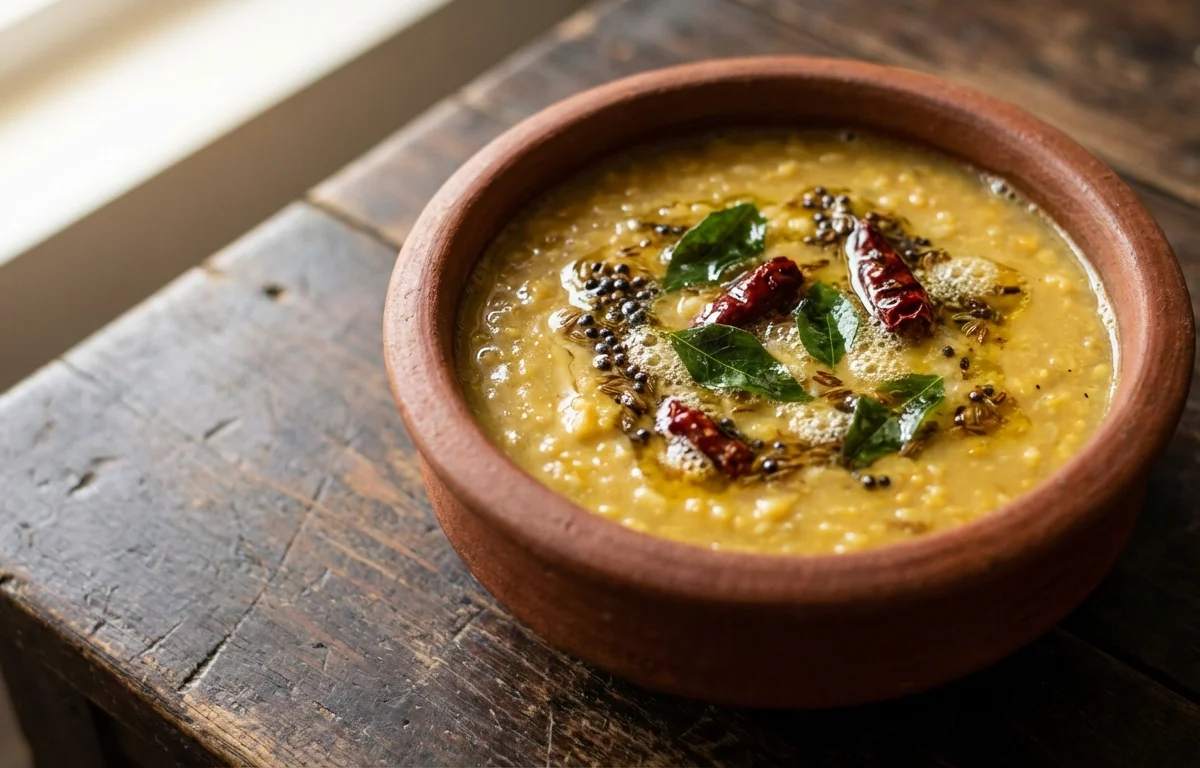
Paruppu
A simple and comforting South Indian dal made from soft-cooked moong dal with a fragrant ghee tempering. This wholesome dish is a staple in Tamil households, perfect with hot rice and a dollop of ghee.
For 4 servings
Pressure Cook the Dal
- Rinse the moong dal under cold running water until the water runs clear. This removes excess starch.
- Transfer the rinsed dal to a 2 or 3-liter pressure cooker. Add 3 cups of water and the turmeric powder.
- Secure the lid and cook on medium heat for 4-5 whistles, or approximately 15 minutes.
- Turn off the heat and allow the pressure to release naturally. This ensures the dal is perfectly soft.
- Once the pressure has subsided, open the cooker. Use a whisk or the back of a ladle to mash the dal into a smooth, creamy consistency.
Season and Simmer
- Place the pot with the mashed dal back on the stove over low heat.
- Stir in the salt. Check the consistency; if it's too thick, add 1/2 to 1 cup of hot water and mix well until you reach a smooth, pourable gravy.
- Let the dal come to a gentle simmer and cook for 2-3 minutes for the flavors to meld. Turn off the heat.
Prepare the Tempering (Tadka)
- In a small pan (tadka pan), heat the ghee over medium heat until it melts and is hot but not smoking.
- Add the mustard seeds. Wait for them to pop and splutter completely, which should take about 30 seconds.
- Add the cumin seeds and sauté for a few seconds until they sizzle.
- Add the broken dried red chillies and asafoetida. Stir for about 10-15 seconds until the chillies darken slightly.
- Finally, add the fresh curry leaves. Stand back as they will splutter. Sauté for another 10 seconds until they turn crisp and aromatic.
Combine and Serve
- Immediately pour the hot, sizzling tempering over the cooked dal.
- Cover the pot with a lid for 1-2 minutes to allow the aroma of the tempering to infuse into the dal.
- Stir gently to combine. Serve the Paruppu hot with steamed rice, a dollop of ghee, and a side of appalam (papad) or poriyal (stir-fried vegetables).
What to keep in mind.
5 tips from the recipe — small details that make a real difference to the final dish.
- 1For a creamier texture, soak the moong dal in water for 30 minutes before cooking.
- 2Always use hot water to adjust the dal's consistency. Using cold water can cause lumps and affect the taste.
- 3Do not overheat the ghee for tempering, as spices like cumin and asafoetida can burn quickly and become bitter.
- 4For an authentic flavor, use fresh curry leaves. They add an aroma that dried leaves cannot replicate.
- 5This dal thickens as it cools. When reheating, add a splash of hot water to bring it back to the desired consistency.
Adapt it for your goals.
Add Garlic
For a different flavor profile, add 2-3 cloves of finely chopped garlic to the tempering along with the cumin seeds and sauté until golden.
Add TomatoAdd Tomato
For a slightly tangy taste, add one finely chopped tomato to the pressure cooker along with the dal.
Mixed DalMixed Dal
You can make this recipe with a mix of moong dal and toor dal (split pigeon peas) in equal proportions for a different texture and taste.
Add CoconutAdd Coconut
For a richer, coastal flavor, stir in 2 tablespoons of freshly grated coconut into the dal after simmering and before adding the tempering.
Why this is on our healthy list.
Rich in Plant-Based Protein
Moong dal is an excellent source of protein, which is essential for muscle repair, cell generation, and overall body function, making this dish great for vegetarians and vegans.
Easy to Digest
Among all lentils, moong dal is known to be the lightest and easiest to digest. This makes Paruppu a comforting and suitable meal for all ages, including children and when recovering from illness.
Good Source of Fiber
The dietary fiber in moong dal aids in digestion, promotes gut health, and helps maintain stable blood sugar levels, contributing to a feeling of fullness.
Frequently asked questions
Yes, Paruppu is very healthy. It is made from moong dal, which is an excellent source of plant-based protein, dietary fiber, and essential nutrients. It's light on the stomach, easy to digest, and low in fat, making it a wholesome part of a balanced diet.