
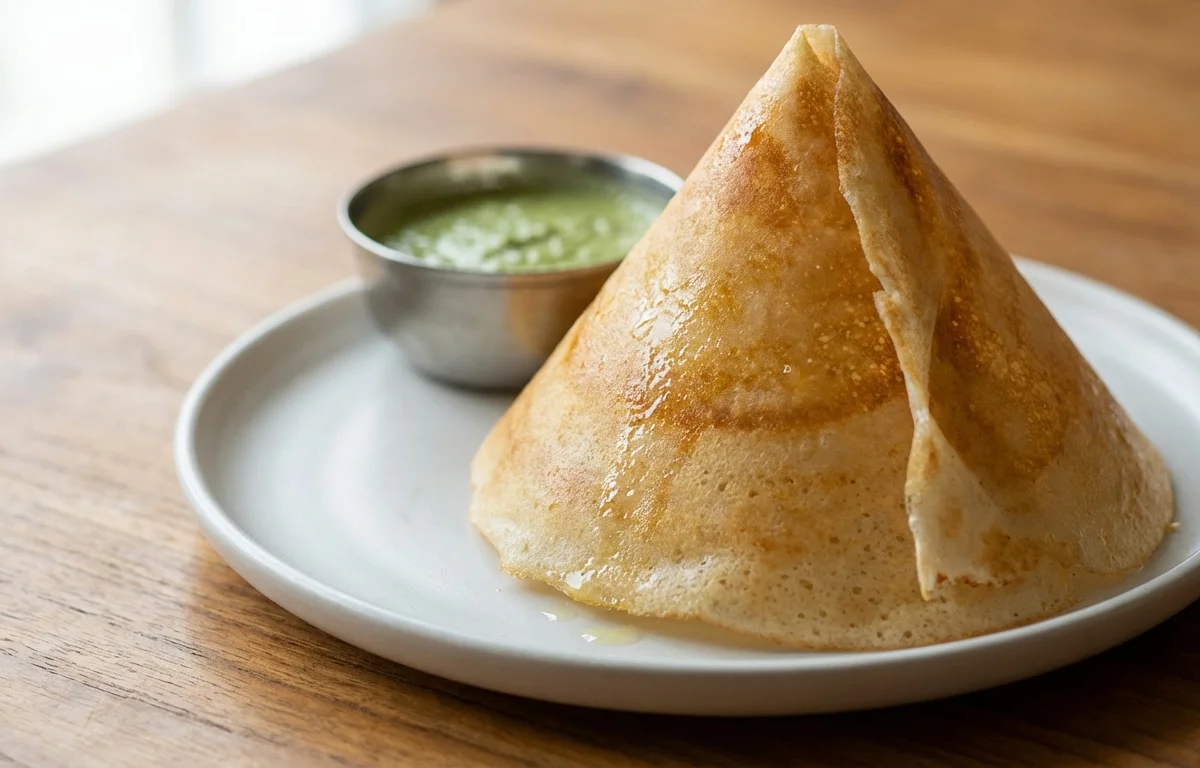
Paper Dosa
Experience the ultimate crispy delight with this paper-thin, golden-brown dosa. Made from a perfectly fermented rice and lentil batter, it's incredibly light, satisfying, and a true South Indian classic, best enjoyed with sambar and coconut chutney.
For 4 servings
5 steps. 30 minutes total.
- 1
Step 1
- a.Soak Lentils and Rice (4-6 hours)
- b.In a large bowl, rinse the Idli Rice and Chana Dal together 3-4 times until the water runs clear. Add fresh water to cover them by at least 2 inches and let them soak for 4 to 6 hours.
- c.In a separate medium bowl, rinse the Urad Dal and Fenugreek Seeds. Cover with fresh water and also soak for 4 to 6 hours.
- d.About 20 minutes before you plan to grind, rinse the Thick Poha and soak it in just enough water to cover it.
- 2
Step 2
- a.Grind the Batter (25-30 minutes)
- b.Drain the water from the Urad Dal and Fenugreek Seeds. Transfer them to a wet grinder or a high-speed blender.
- c.Grind to a very smooth, light, and fluffy batter, adding about 1 cup of cold water gradually. Grinding with cold water prevents the blender from overheating. This should take about 15 minutes. Transfer the batter to a large, non-reactive bowl or pot.
- d.Next, drain the water from the rice, chana dal, and poha. Add them to the same grinder.
- e.Grind to a smooth paste that is slightly granular, like the texture of fine semolina. Add about 1 to 1.5 cups of cold water as needed. This will take about 10-12 minutes.
- f.Pour the rice batter into the same pot with the urad dal batter.
- 3
Step 3
- a.Ferment the Batter (8-12 hours)
- b.Add salt to the combined batters. Mix everything thoroughly with your clean hands for a minute. The natural warmth and microbes from your hands help kickstart the fermentation process.
- c.Ensure the container is only half-full to allow room for the batter to rise.
- d.Cover the container with a lid (not airtight) and place it in a warm, draft-free place like an oven (with the light on) or a cupboard to ferment for 8 to 12 hours, or overnight.
- e.The batter is perfectly fermented when it has doubled in volume, looks airy and bubbly, and has a pleasant, tangy aroma.
- 4
Step 4
- a.Prepare for Cooking (5 minutes)
- b.Once fermented, gently stir the batter. Do not overmix, as this will deflate the air pockets.
- c.Add the sugar and mix gently. For paper dosa, the batter needs to be thinner than idli batter. Add a few tablespoons of water to reach a smooth, pourable consistency, similar to that of heavy cream.
- 5
Step 5
- a.Cook the Paper Dosas (25-30 minutes)
- b.Heat a cast-iron or non-stick tawa (griddle) over medium-high heat. To check if it's ready, sprinkle a few drops of water; they should sizzle and evaporate immediately.
- c.Reduce the heat to medium-low. Lightly grease the tawa with ghee or oil using a paper towel or half an onion.
- d.Pour a ladleful of batter (about 1/2 cup) onto the center of the tawa.
- e.Working quickly, use the back of the ladle to spread the batter in a continuous spiral motion, from the center outwards, to form a large, very thin circle.
- f.Increase the heat back to medium-high. Drizzle about 1/2 tsp of ghee over the surface and around the edges of the dosa.
- g.Cook for 2-3 minutes, or until the bottom turns a crisp golden-brown and the edges begin to lift from the tawa. There is no need to flip a paper dosa.
- h.Once crisp, use a spatula to fold the dosa in half or roll it into a cylinder. Serve immediately with sambar and chutneys.
What to keep in mind.
6 tips from the recipe — small details that make a real difference to the final dish.
- 1For the crispiest dosa, maintain the right tawa temperature. It should be hot when you pour the batter, then cooked on medium heat.
- 2The batter consistency is crucial. It must be thin and easily spreadable. Adjust with water, one tablespoon at a time.
- 3Using a cast-iron tawa yields the best results, as it distributes and retains heat evenly, creating a perfect crisp.
- 4Do not add salt before fermentation if you live in a cold climate, as it can slow down the process. Add it just before making the dosas.
- 5To prevent the batter from sticking, wipe the tawa with a damp cloth or a slice of onion before making each dosa. This cools the surface slightly and helps in spreading the batter thin.
- 6Store leftover batter in an airtight container in the refrigerator for up to 3 days. Bring it to room temperature before use.
Adapt it for your goals.
Masala Dosa
Add a filling of spiced potato masala in the center of the dosa before folding. This turns it into a complete meal.
Ghee RoastGhee Roast
Be more generous with the ghee while cooking to create an extra rich, fragrant, and crispy Ghee Roast Dosa.
Cheese DosaCheese Dosa
Sprinkle a handful of grated mozzarella or cheddar cheese over the dosa after spreading the batter. A favorite among kids.
Podina DosaPodina Dosa
Spread a thin layer of mint chutney (pudina chutney) on the inside of the dosa while it's cooking for a fresh, herby flavor.
Why this is on our healthy list.
Promotes Gut Health
The fermentation process creates beneficial probiotics, which help maintain a healthy balance of gut bacteria, aiding digestion and improving overall gut health.
Good Source of Protein
The combination of rice and urad dal provides a complete protein profile, containing all essential amino acids necessary for muscle repair and growth.
Provides Sustained Energy
Dosa is rich in complex carbohydrates, which are broken down slowly by the body, providing a steady and sustained release of energy without spiking blood sugar levels.
Easily Digestible
Fermentation breaks down the complex starches and proteins in the lentils and rice, making the nutrients more bioavailable and easier for the body to digest and absorb.
Frequently asked questions
Yes, Paper Dosa is generally healthy. It's made from fermented rice and lentils, making it a good source of protein, carbohydrates, and probiotics which are great for gut health. It is also naturally gluten-free. To keep it healthy, be mindful of the amount of ghee or oil used for cooking.