
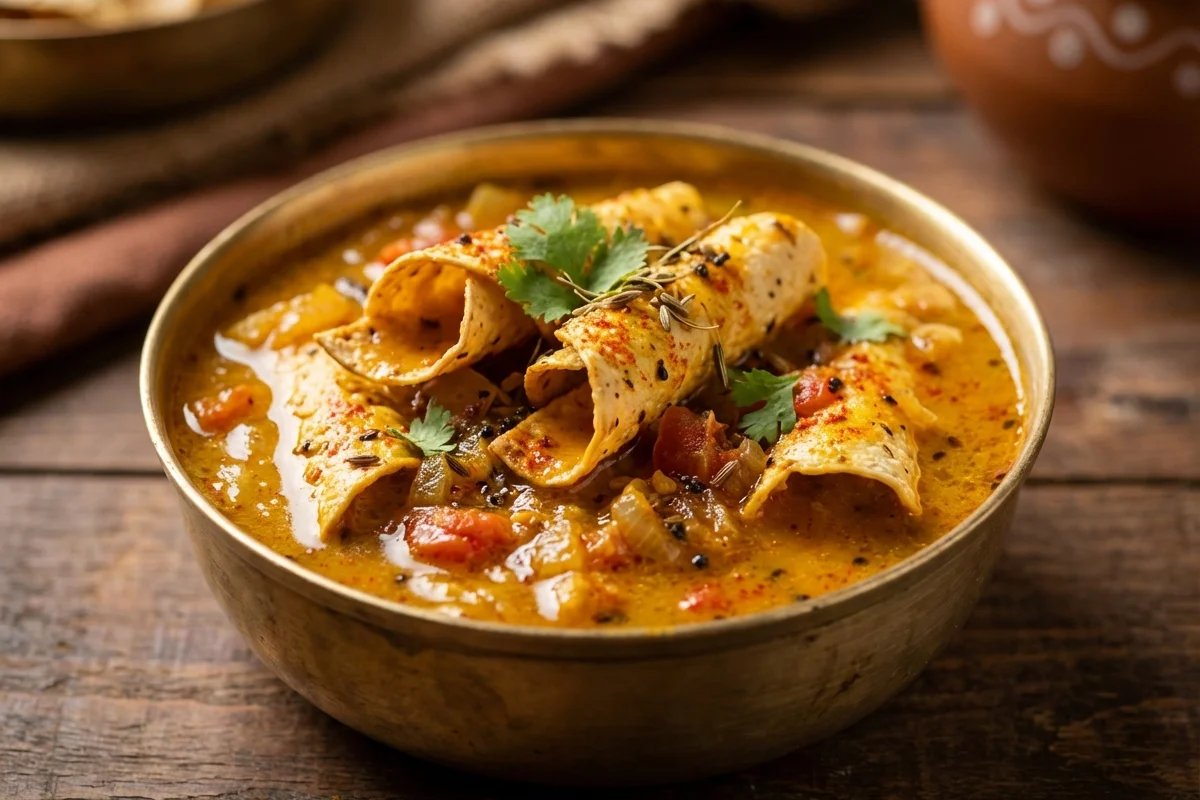
Papad ki Sabzi
A quick and tangy Rajasthani curry made with crispy papad simmered in a yogurt-based gravy. This traditional dish is a lifesaver when you're out of fresh vegetables and comes together in under 30 minutes, offering a unique blend of savory and sour flavors.
For 4 servings
4 steps. 15 minutes total.
- 1
Step 1
- a.Prepare Papad & Yogurt Slurry
- b.Roast the papads one by one over an open flame using tongs until crisp and lightly browned. Alternatively, microwave for 30-45 seconds.
- c.Once cooled, break the roasted papads into rough 1-2 inch pieces. Set aside.
- d.In a medium bowl, whisk together the curd and besan until no lumps remain.
- e.Add turmeric powder, red chili powder, and coriander powder to the curd mixture. Whisk well to combine.
- f.Pour in 1/2 cup of water and whisk again to create a smooth, thin slurry.
- 2
Step 2
- a.Sauté the Aromatics
- b.Heat ghee in a kadai or deep pan over medium heat. Once hot, add mustard seeds and cumin seeds.
- c.When the seeds begin to splutter (about 30 seconds), add the asafoetida.
- d.Immediately add the finely chopped onion, green chilies, and ginger-garlic paste. Sauté for 3-4 minutes until the onions become soft and translucent.
- e.Add the finely chopped tomato and cook for another 4-5 minutes, stirring occasionally, until it turns soft and the ghee starts to separate from the masala.
- 3
Step 3
- a.Cook the Gravy
- b.Reduce the heat to low. Slowly pour the yogurt-besan slurry into the pan, stirring continuously and vigorously with a whisk or spoon. This is crucial to prevent the curd from splitting.
- c.Continue stirring and cook on low-medium heat for 5-6 minutes until the gravy comes to a gentle boil and thickens slightly. You'll notice a glossy sheen on the surface.
- d.Add the remaining 1 cup of water and salt. Mix well. Bring the gravy back to a simmer and cook for another 2-3 minutes.
- 4
Step 4
- a.Finish and Serve
- b.Turn off the heat. Crush the kasuri methi between your palms and sprinkle it into the gravy, followed by the garam masala. Stir to combine.
- c.Just before serving, add the broken papad pieces to the hot gravy. Gently mix and let them soak for only 30-60 seconds. They should soften slightly but retain a slight bite.
- d.Garnish with fresh chopped coriander leaves. Serve immediately with hot phulkas, bajra roti, or steamed rice.
What to keep in mind.
6 tips from the recipe — small details that make a real difference to the final dish.
- 1To prevent the yogurt from curdling, ensure it's at room temperature and you stir the gravy continuously on low heat after adding the yogurt slurry.
- 2Papads are inherently salty. Taste the gravy before adding salt and adjust accordingly.
- 3For the most authentic flavor, use slightly sour curd (yogurt).
- 4Add the papad pieces only when you are ready to serve. If left in the gravy for too long, they will become mushy and disintegrate.
- 5You can roast the papad in a microwave for a quick, oil-free option. Place it in the microwave for 30-45 seconds until crisp.
- 6Using ghee for tempering provides a richer, more traditional flavor compared to oil.
Adapt it for your goals.
Jain/Sattvic Version
Omit the onion and ginger-garlic paste for a no-onion, no-garlic version. The flavor will still be excellent due to the spices and yogurt.
Creamier GravyCreamier Gravy
For a richer, creamier texture, stir in 1-2 tablespoons of fresh cream (malai) at the end, after turning off the heat.
With MangodiWith Mangodi
Add a handful of fried or boiled moong dal mangodi (sun-dried lentil dumplings) along with the tomatoes to add extra protein and a delightful texture.
Spicier KickSpicier Kick
For extra heat, add a pinch of black pepper powder along with the garam masala or use a spicier variety of red chili powder.
Why this is on our healthy list.
Promotes Gut Health
The use of curd (yogurt) makes this dish a good source of probiotics, which are beneficial bacteria that support a healthy digestive system.
Good Source of Protein
Both besan (chickpea flour) and curd are excellent sources of plant-based protein, which is essential for muscle repair and overall body function.
Aids Digestion
Spices like cumin, asafoetida (hing), and ginger are traditionally known in Ayurveda to aid digestion, reduce bloating, and improve metabolism.
Frequently asked questions
One serving of Papad ki Sabzi contains approximately 210-250 calories, depending on the type of papad used and the amount of ghee. It's a relatively light main course.